
Seller's Guide
Can You Buy a House Before Selling Yours in Laval?
Yes. In Laval, you can buy before selling with a bridge loan once the sale of your house is signed, with a home …
Seller's Guide
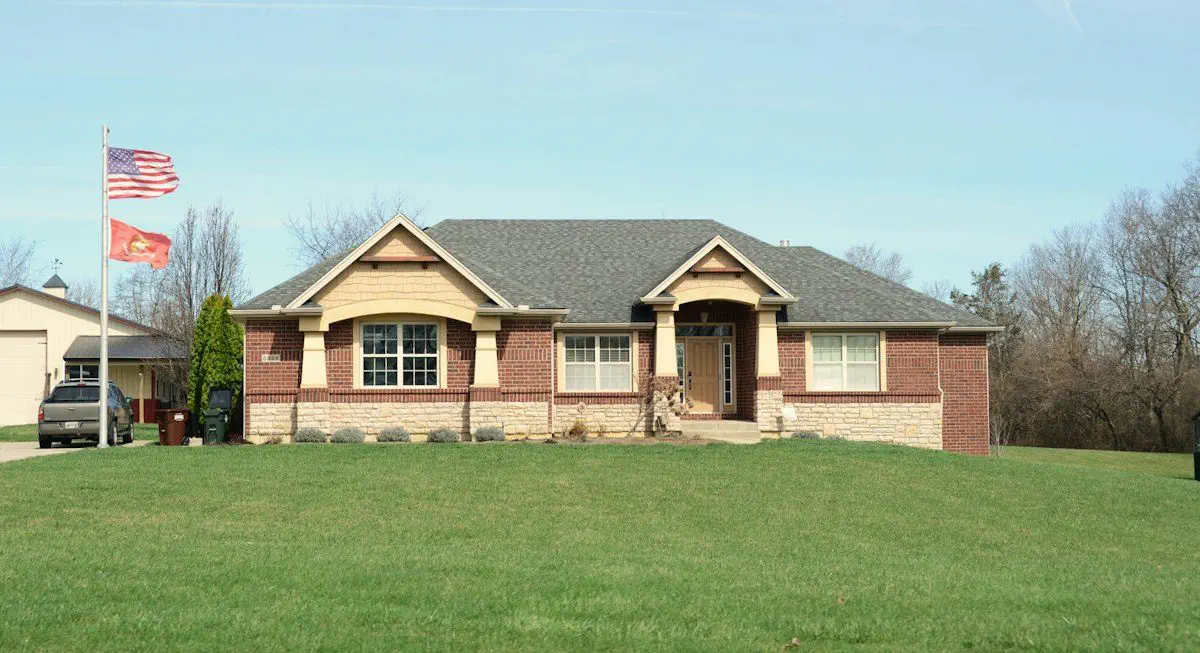
Selling a house in Laval follows a precise chain: set the price using comparable sales, gather your titles and an up to date certificate of location, fill out the seller’s declarations, market the property and hold showings, review every promise to purchase, let the conditions run their deadlines, then sign at the notary’s. The figures that frame that chain in Laval are known: in the third quarter of 2026, Centris counts 547 single-family sales, a median price of $630,000, up 5% over one year, and 36 days on market. The rest of this article covers each link, with what the documents cost, what the City of Laval publishes, and where the delays hide.
Nine moves, in this order. The first three happen before a single photo is taken.
The full legal sequence, form by form, is covered in the home selling process in Quebec. What follows is the Laval version, with the local figures.
The list does not depend on your broker, it depends on what the buyer and the notary will require. Prepare it first: a complete file shortens a sale more reliably than a price cut.
| Document | Why you will be asked for it |
|---|---|
| Deed of acquisition | Clause 10.3 of the OACIQ promise to purchase |
| Certificate of location reflecting the current physical condition of the premises | Clause 10.3. A new one is required if it is more than ten years old |
| Déclarations du vendeur sur l’immeuble | OACIQ form. The seller records what they know to the best of their knowledge, which minimizes the risk of lawsuits against them |
| Mortgage statement and the amount of the penalty | Clause 10.4: the costs of repaying and discharging the mortgage are yours, including any penalty |
| Consent of a married or civil union spouse | Clause 10.6, for a family residence, failing a judgment |
| Municipal and school tax bills | Apportionment of prepaid taxes on the day of signing |
| Invoices and permits for work done | They support what you declare on the DV form |
| Declaration of co-ownership, financial statements, minutes | For a condominium only, and the buyer will read them |
| Leases and notices of renewal | If a unit is rented |
| Transferable warranties, compliance certificate for a septic system or a well | Depending on the property |
The DV form deserves a careful reading rather than a quick signature: it is covered box by box in the article on the seller’s declarations.
For the certificate of location, the calendar is the real issue. The OACIQ counts 4 to 6 weeks on average to produce one, the cost falls to the seller, and the notary will require a new one if yours is more than ten years old, because of the ten-year prescription in article 2917 of the Civil Code. A seller who orders it the day the promise is accepted has just added a month to the transaction.
For the third quarter of 2026, Centris publishes a Laval median of $630,000 for single-family homes, $439,999 for condominiums and $890,000 for 2 to 5 unit plexes. But the city is not a unit of price.
| Neighbourhood | Single-family median, Q3 2026 | Days on market |
|---|---|---|
| Duvernay | $735,000 (+7%) | 27 |
| Sainte-Dorothée | $728,400 (+5%) | 48 |
| Vimont | $700,000 (+22%) | 31 |
| Sainte-Rose | $670,000 (+2%) | 39 |
| Auteuil | $640,000 (+2%) | 31 |
| Chomedey | $640,000 (+3%) | 34 |
| Fabreville | $560,000 (0%) | 30 |
| Saint-François | $542,500 (+1%) | 43 |
| Laval, overall | $630,000 (+5%) | 36 |
Source: Centris real estate statistics for Laval, third quarter of 2026, changes over one year. Laval-des-Rapides, Laval-Ouest, Laval-sur-le-Lac, Pont-Viau and Saint-Vincent-de-Paul have no published median for the quarter, because there were not enough transactions; all thirteen neighbourhoods appear in the Laval real estate market by sector.
Read the table both ways. The gap between Duvernay and Saint-François, $192,500, is twenty times the annual rise in the Laval median. In other words, picking the wrong reference neighbourhood costs far more than picking the wrong year.
Two mistakes come up every time a seller sets a price alone.
The first is starting from the assessment roll. Laval’s current roll, 2025-2026-2027, uses July 1, 2023 as its market reference date, and the City itself writes that the assessment does not necessarily reflect current market value. That is not a cautious approximation, it is a snapshot of a different market.
The second is comparing two figures that do not compare. The City puts the average value of a Laval single-family home at $622,000 on the roll, Centris publishes a median sale price of $630,000, and the temptation is to conclude that the market is $8,000 above the roll. The arithmetic does not hold. An average is not a median, the set of homes on the roll is not the sample of homes sold in three months, and the two reference dates are three years apart. Three methodological errors in a single subtraction.
What produces a price is comparable sales: same sector, same type, similar size and condition, sold recently. The method is described in how to read comparables and applied to Laval in how much is my house worth in Laval. For a first order of magnitude in two minutes, there is the value estimator.
Thirty-six days for half the single-family homes sold in the third quarter of 2026, according to Centris. The figure doubles from one neighbourhood to another: 27 days in Duvernay, 48 in Sainte-Dorothée. Condominiums are slower than houses, at 57 days, and so are plexes, at 58 days.
Those days count the time between listing and an accepted promise. They do not count the deadlines of the buyer’s conditions, financing and inspection first among them, nor the time until the deed of sale set in clause 11.1. Between the sign going up and the notary’s cheque, plan for more than the median. The two periods are broken down in how long it takes to sell a house in Laval, and the reasons a timeline stretches are in why my house is not selling.
On the seller’s side, four items, only one of which is negotiable.
The certificate of location is at your expense, as the OACIQ points out. So are the costs of repaying and discharging the mortgage, including any penalty, under clause 10.4 of the promise: ask your lender for the exact amount before you agree to a signing date, because a prepayment penalty often runs into thousands of dollars. Preparing the house costs whatever you decide to put into it. And the broker’s remuneration, if you are represented, is a negotiated percentage owed only if the sale closes; it is broken down in how much a real estate broker charges in Laval. The full inventory, notary fees and moving included, is in the real cost of selling a house in Quebec.
One item is not yours, and is still worth knowing: transfer duties, the welcome tax, are paid by the buyer. In 2026 Laval applies rates of 0.5%, 1% and 1.5% on the brackets up to $500,000, then 3% from $500,001, calculated on the highest of the price paid, the amount stated in the deed, or the roll value multiplied by the comparative factor of 1.03. In the City’s published example, a property bought for $650,000 and entered on the roll at $650,000 is taxed on $669,500, which is $10,695.50. That is cash your buyer must have at signing, on top of their down payment. It is one of the reasons an offer is harder to finance than it is to write.
One decision outweighs all the others combined: the asking price. The first weeks concentrate the showings, and a property that goes through them without an offer loses its novelty advantage. Correcting a price that was set too high then takes longer than setting it right would have.
Then come four moves that cost almost nothing. Make the house available, evenings and weekends included: a refused showing does not always come back. Prepare the premises, which means decluttering and cleaning before renovating, the order of priorities being set out in preparing your house for sale and in renovating before selling. Order the certificate of location before listing, not after the promise is accepted. And have your answers ready: the age of the roof, the last heating bill, the permit number for the work done.
One warning, because the question “how do I sell quickly” often hides another one. Selling fast and selling high do not always go together. If your real constraint is a date, a purchase you have already signed for instance, say so from the start: the pricing strategy is not the same, and neither is the right time to sell.
You can sell on your own: sections 1 and 2 of the Real Estate Brokerage Act govern the paid intermediary, not the owner who sells their own property. What changes is the workload and the risk, not the right. The numbers, protections included, are compared in selling your house yourself in Laval and in selling with or without a broker in Quebec.
My own view, since it is mine you are reading: if you already have the buyer, a notary is enough. Otherwise the question is not the percentage, it is who will set the price on comparable sales, fill out the DV form with you, check the buyer’s ability to pay, and answer for their own mistakes.
Selling in Laval and want to know where your house stands before deciding anything? I prepare a free comparative market analysis, with the recent sales in your sector, and you keep the document. Write to me or see the real estate broker in Laval page. Service in French, English and Arabic.

Residential Real Estate Broker · RE/MAX DU CARTIER INC.
Contact Georges Leave a Google reviewYes. In Laval, you can buy before selling with a bridge loan once the sale of your house is signed, with a home …
You type “best real estate agent in Blainville”, “best real estate broker in Blainville” or …
You type “best real estate agent in Lanaudière”, “best real estate broker in Lanaudière” or …
 Free consultation
You will pick the day and time next. Free, no commitment.
Service in French, English and Arabic.