Practical Guide
Home Maintenance Costs in Quebec: The Replacement Calendar
The rule is everywhere: set aside 1 to 3 % of your home’s value every year for maintenance. It gives you an …
Practical Guide
A wood fireplace is not a simple amenity. It is an appliance that gets declared to the city, an emission rate you prove with a plate, a line in your insurance file and two questions on the mandatory seller’s form. Here is what the text actually requires in Montreal, what Laval does differently, and the papers to gather before you sell or buy.
The Règlement concernant les appareils et les foyers permettant l’utilisation d’un combustible solide (15-069), the by-law on solid fuel burning appliances and fireplaces, was adopted at the August 17, 2015 sitting and applies to the 19 boroughs of the Ville de Montréal. The related cities of the agglomeration adopt their own text.
The prohibition on use. Section 5 prohibits using or allowing the use of a solid fuel burning appliance unless it has been recognized by a body listed in schedule B, as part of a certification process, as having an emission rate equal to or below 2.5 g/h of fine particulate. Schedule B names the American EPA and the laboratory that attests to the CSA/B415.1-10 process. That section only took effect on October 1, 2018, under section 11.
Smog. Section 6 prohibits use during a smog warning issued by Environment Canada for a region that includes Montreal, in whole or in part. Even a certified appliance.
The outage. Section 7 sets aside the prohibitions in sections 5 and 6 when a power outage affecting the building has lasted more than 3 hours. It is the only exception in the by-law.
The fines. Section 10 provides, for a natural person, $100 to $500 for a first offence, $500 to $1,000 for a first repeat offence and $1,000 to $2,000 for any additional repeat offence.
The by-law obliges no one to remove a non-compliant appliance: it prohibits using it, and the city specifies that for such an appliance, “the prohibition is in force at all times.” No filter and no eco-log makes a non-compliant appliance compliant. For a masonry fireplace, the only route to compliance is installing a compliant insert. The reason is quantified: in the agglomeration’s 2014 emissions inventory, residential wood burning accounted for 701 tonnes of fine particulate, or 39% of the total, behind transportation.
Sections 3 and 4 require the owner to declare the appliance within 120 days of its installation, and to declare any replacement or removal within 120 days of that work.
The procedure the city publishes goes further than the text, and this is the point buyers miss. It sets the deadline at “120 days (4 months) following the installation, replacement or removal of the appliance, or within 120 days following the purchase of the house if you are a new owner.” It adds that an old appliance you no longer use still has to be declared.
Installation, replacement and removal also require a borough renovation permit, and the standards are not the same everywhere. In Ahuntsic-Cartierville, the city writes that “only the installation of an EPA or CAN/CSA-B415.1 certified pellet appliance is authorized,” stricter than the 2.5 g/h rule, and publishes fees of $9.80 per $1,000 of work, with a minimum of $167.40 in residential. Call your borough permit counter before you buy the appliance.
By-law L-12792, in force since May 10, 2021 and amended by by-law L-13039 on January 15, 2024, does not copy Montreal.
| Item | Montreal (15-069) | Laval (L-12792) |
|---|---|---|
| Installation | Certified, 2.5 g/h at most | Certified, 2.5 g/h at most (s. 5) |
| Use | Prohibited above 2.5 g/h since 2018 | Prohibited above 7.5 g/h on October 1, 2026 (s. 6) |
| Declaration | 120 days | 160 days (s. 3.1) |
| Smog | Prohibited (s. 6) | Prohibited (s. 7) |
| Outage over 3 h | Allowed (s. 7) | Allowed (s. 8) |
| Fines, natural person | $100 to $2,000 (s. 10) | $100 to $2,000 (s. 12) |
Two clarifications. An appliance installed before May 10, 2021 had to be declared no later than October 18, 2021 (section 3), and the declaration must state the make, the model, the installation date, the manufacturing date, the rate in g/h and the certification (section 4.1). Laval also provides no deadline triggered by the purchase of the property: if the declaration was never made, it is already late, and the current owner is the one in default.
I have verified only those two texts. Both are adopted under sections 4, 19 and 85 of the Loi sur les compétences municipales, the municipal powers act: the rule is municipal, not provincial. Terrebonne, Longueuil or Rosemère may have another threshold, another date or no by-law at all. Never transpose the Montreal rule to another address. The rest of the Laval checks are in buying in Laval.
Laval’s Service de l’environnement et de l’écocitoyenneté publishes an identification guide that settles the question in three eras.
| Year of manufacture | What Ville de Laval concludes |
|---|---|
| Before 1990 | No certification plate, so the appliance is not certified |
| 1990 to 2010 | Certification recommended to manufacturers, not mandatory |
| 2010 onward | Every appliance must be EPA or CSA certified, the plate exists |
Where to look for the plate, per the guide: on the side or at the back for a boiler or a furnace, under the bottom grille for a prefabricated fireplace, at the back for a freestanding stove, on the side or behind the metal face for an insert. Photograph it.
Two useful visual clues during a showing. An open masonry fireplace, built brick by brick, with no solid door and no plate, is not certified. And a non-certified appliance often has a 7 or 8 inch flue, against 6 inches for a certified one.
The Bureau d’assurance du Canada, the insurance industry’s national association, places the wood stove among the seven factors that set your premium, and it is blunt: “Improperly installed or maintained, wood stoves and fireplaces can cause fires and carbon monoxide poisoning. Consult your insurer before buying or renting a house with a wood stove. The insurer could require an inspection. Wood heating appliances have an impact on the availability and affordability of home insurance.”
The risk is not theoretical. According to the ministère de la Sécurité publique, chimney fires accounted on average for 5.4% of fires reported in Quebec in 2021 and in 2022, and chimney fires with no loss were more numerous from December to April, averaging five a day.
Sweeping frequency. Montreal applies the Code national de prévention des incendies, the national fire code, through its Règlement sur la prévention des incendies (12-005). I was not able to open the text of the Code, so I will not give you a numbered frequency presented as an obligation. What the Montreal fire service does publish is clear: “Sweeping is required every two cords of wood burned, or as soon as there is a creosote deposit of more than 3 mm on the walls.” The same service recommends notifying your insurer and installing a carbon monoxide alarm.
The installation standard. For solid fuel burning appliances, the Régie du bâtiment du Québec, Quebec’s building board, refers to standard CAN/CSA-B365, the installation code for solid fuel burning appliances and equipment. That is the reference to name when you ask for the installer’s invoice.
The consequence of an omission. Éducaloi points out that in the case of false declarations, your insurer will not have to compensate you if it shows that you deliberately lied or that it would have refused the risk, and that the indemnity is reduced in other cases. Same consequence if you fail to report an aggravation of the risk.
The mandatory Déclarations du vendeur sur l’immeuble form, the seller’s declarations on the property, asks the questions for you. Question D12.1 asks for the energy source of the main heating system, and wood is one of the choices. Question D12.9 targets the auxiliary appliance in seven sub-questions: the type, stove or fireplace; the energy source, including wood and pellets; the documents attesting to its characteristics and its year of installation; the year of installation; the frequency of use; problems that have already occurred; and finally g) “Does it comply with the applicable regulations?”
Question D12.10 covers the chimney: the date of the last sweeping, the frequency of sweepings, the documents attesting to its characteristics and its year of installation, its compliance with the applicable regulations.
Three other questions matter here: D2.12, on a notice of non-compliance received from an insurance company, the municipality or the government; D2.13, on a refusal to insure the property; D2.15, on a contravention of environmental quality regulations. A ticket issued under the municipal wood heating by-law falls squarely within those three questions. The rest of the form is in the seller’s declaration form.
The file to demand from the seller comes down to five pieces: the photo of the certification plate with the make, the model and the rate in g/h; proof of the declaration to the city; the permit obtained for the installation; the last sweeping invoice; and answers D12.9 and D12.10 on the form, obtained before you draft the promise to purchase, not after.
If the appliance is non-compliant, price out the replacement and the permit before the offer. Those amounts add to the price like the other outlays on the notary’s day, which the closing costs calculator helps you frame. The pre-purchase inspection answers a different question: it describes the condition of the appliance and the chimney, not their regulatory status. See the pre-purchase inspection checklist.
My fireplace is not certified. Do I have to remove it? No. In Montreal, the by-law prohibits use, not possession, and the city imposes neither replacement nor removal. You do have to declare it, though, even if it is no longer used. In Laval, the prohibition on using an appliance that is not certified or that exceeds 7.5 g/h comes into force on October 1, 2026.
I bought a house in Montreal this year, with a stove. Do I have anything to do? Yes. The city asks for a declaration within 120 days following the purchase if you are a new owner. The form can be completed online, by mail or by email with the Service de l’environnement.
Can I light a fire during a Hydro-Québec outage? Yes, after three hours. Section 7 of the Montreal by-law and section 8 of the Laval by-law set aside the prohibitions when the outage affecting the building has lasted more than 3 hours, certified or not.
The seller has no sweeping invoice. Is that serious? It is a hole in the file, not a dead end. A sweeping done before signing costs less than a conversation with an insurer after a loss. Ask for the proof of declaration to the city at the same time.
To go further, read what makes a home hard to insure and the seller’s declaration form.
A wood fireplace in the house you are eyeing, and no paperwork to back it up? Write to me before you file your promise: we draw up the list of documents to demand from the seller together.

Residential Real Estate Broker · RE/MAX DU CARTIER INC.
Contact GeorgesThe rule is everywhere: set aside 1 to 3 % of your home’s value every year for maintenance. It gives you an …
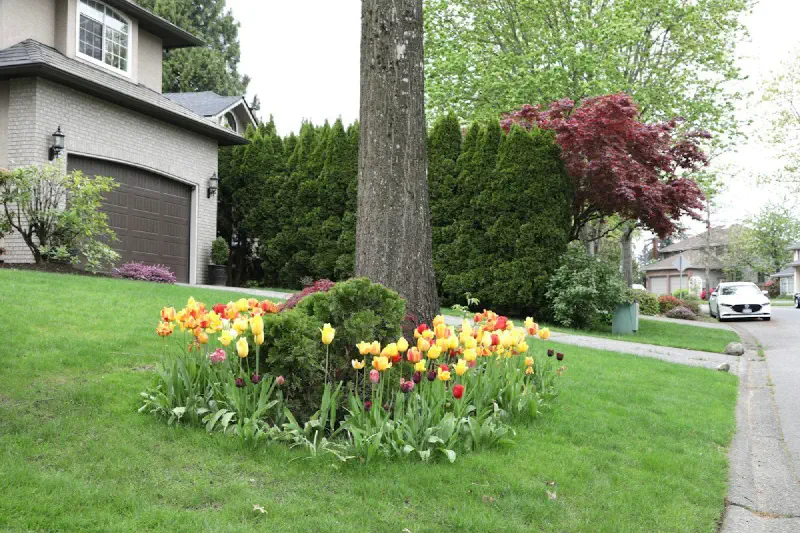
A forty year old maple in the back yard sells a photograph. It does not push a price up by a percentage I could …
In the third quarter of 2026, Centris recorded 211 residential sales in Chomedey, close to a quarter of all sales …