
Practical Guide
Home Infestation in Quebec: Your Real Recourses
Black ants coming out of the basement door frame in May. The real question is not which product to buy: it is who …
Practical Guide
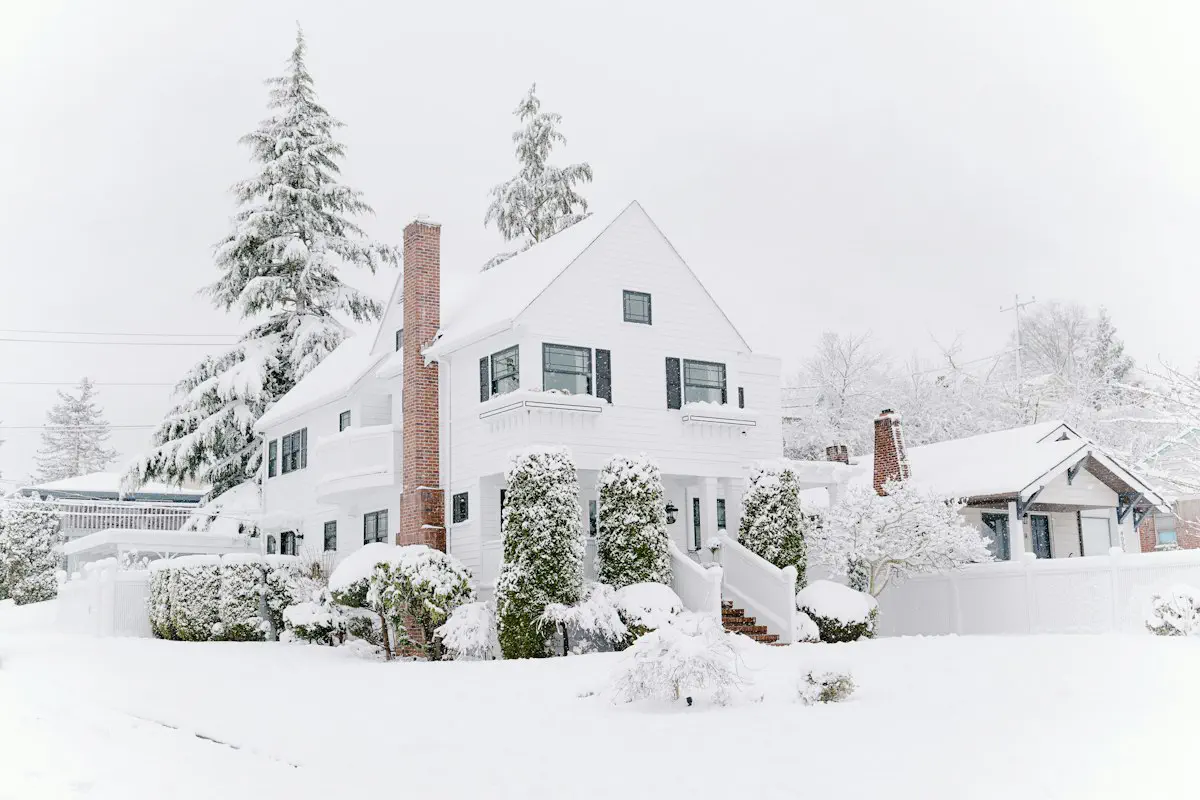
A list of good winter habits does not stand up to a claims adjuster. What does stand up is the small number of obligations written down somewhere: in the insurance contract, or in a by-law of your city. There are few of them, they come with numbers, and each one has a precise consequence when it is not met. Here they are.
Article 2464 of the Code civil du Québec sets the starting point, and it surprises people. The insurer is bound to repair the injury resulting from superior force “or from the fault of the insured, unless an exclusion is expressly and restrictively stipulated in the policy.” Your negligence, on its own, therefore takes nothing away from you. What takes something away is a written clause, and only one thing is never covered: intentional fault.
That consequence turns the logic of advice lists upside down. The question is not whether you were a reasonable owner, but which conditions appear in black and white in the policy, and which standards the city already imposes on the building.
A second article governs what follows. Article 2471 requires the insured, at the insurer’s request, to disclose “all the circumstances surrounding the loss, including its probable cause,” to provide supporting documents and to attest under oath to the truth of the information provided. The cause you declare decides the file, and it gets documented before the loss.
In its brochure on insurance and water damage, the Insurance Bureau of Canada publishes the only winter rule in the industry that comes with a number. It is presented as an either-or, and that is what summaries leave out.
First option: if you leave the house for several days during the winter, you must shut off the water and drain the pipes. Second option: you must ask someone to check on your property every day when you are away for more than seven days, among other things to make sure the heating system is working. If you do neither, the IBC writes, “damage resulting from frozen pipes will not be covered.”
Seven days, then, and a daily visit, not a weekly one. The same document adds the basic winter instruction: heat properly so the pipes do not split or get damaged by frost. And for the fall: shut off the water to the outdoor faucets and drain the garden hoses.
Do not confuse these seven days with the 30 days in the Code civil. Article 2468 only says that a vacancy of no more than 30 consecutive days is not an aggravation of risk that must be declared. It does not describe your coverage and does not cancel any condition of your contract, as explained in sorting out what is covered and what needs an endorsement.
Read the wording of the water endorsements. The one for ground water and sewers covers “sudden and accidental infiltration of ground or surface water” and the “sudden and accidental” backup of sewer connections. The one for above ground water covers “sudden and accidental infiltration of rain or snow.” Three times the same adjective, and it is not decorative.
The IBC closes the door in the same brochure: “gradual and repeated water damage is never covered.” Its list is short and precise: humidity, condensation, rot, mould and gradual deterioration.
The example it gives itself is the one that costs the most in winter. Your roof has reached the end of its useful life and you put off replacing it. Water gets in and causes humidity and mould on the ceiling and interior walls. Published verdict: not covered. The same organization recommends having any roof more than 20 years old inspected by a professional.
A sudden loss can be claimed. A slow deterioration is absorbed. The date of your roof therefore decides which box your file falls into. The official figures by component are in the lifespan of a roof and windows in Quebec.
In Montreal as in Laval, the minimum indoor temperature of a dwelling is set by municipal by-law, and that by-law does not only speak to owners of rented units.
| City | By-law | Minimum required | Condition |
|---|---|---|---|
| Montreal | 03-096, section 37 | 21 °C in habitable spaces | until the outside drops below -23 °C |
| Montreal | 03-096, section 38 | 15 °C in a vacant dwelling or a non-habitable space | at all times |
| Laval | L-12519, section 12 | 22 °C in occupied spaces | when the outside is above -25 °C |
| Laval | L-12519, section 12 | 19 °C in the same spaces | when the outside is below -25 °C |
Both cities require the same measuring method: in the centre of the room, one metre above the floor. Laval adds a requirement few owners check: the water heater must be able to keep hot water at no less than 50 degrees Celsius at the outlet of the plumbing system.
These by-laws reach further than people think. By-law 03-096 applies to the entire territory of the City and to every building used for residential purposes, accessory buildings included: garage, carport, shed. Laval’s housing code applies to “all existing dwellings on the territory.” The bungalow you live in yourself is covered, just like a fourplex.
An empty house is the scenario where the two worlds meet. In Montreal, section 38 of by-law 03-096 requires a permanent heating installation that keeps a vacant dwelling at 15 °C. This is not a prevention suggestion: it is an enforceable maintenance standard.
In Laval, the most direct rule exists, but its reach is narrow and that has to be said. By-law L-12950 provides that in a vacant building intended for habitation, “the main water supply must be shut off,” unless the heating system requires a water supply, and it sets a minimum of 14 degrees Celsius. But this by-law only targets heritage buildings listed in schedule I of by-law L-12507. For other buildings in Laval, no by-law consulted requires shutting off the water supply of an empty house. Your contract will do it.
A property left before the sale closes becomes exactly that empty house. The seller’s guide gives the order of the steps.
A cottage follows another regime. To insure a secondary residence like a principal residence, the insurer sets published conditions: occupy it on a regular basis, for example twice a month year round, have a road passable at all times, and not rent it out more than 30 days a year. Otherwise, the contract becomes seasonal, and theft and vandalism are never covered there without an express request.
Article 1910 of the Code civil requires the lessor to deliver a dwelling in good habitable condition and to keep it that way for the entire term of the lease. A stipulation by which the tenant acknowledges that condition is without effect.
Article 1912 builds the bridge to the city, and it is what gives teeth to Montreal’s 21 °C and Laval’s 22 °C. Any failure by the lessor to meet “the minimum requirements fixed by law with respect to the maintenance, habitability, safety and sanitation of immovables comprising a dwelling” gives rise to the same recourses as a breach of the lease.
The Tribunal administratif du logement (Quebec’s rental board) completes the picture. No law sets the date on which heating must start, and a lease clause announcing that date “may have no effect,” because it is the indoor temperature that decides. In case of a breakdown, the TAL is clear: a delay, even of 24 hours, can become unacceptable, and the landlord should provide auxiliary heating while repairs are made. A tenant who cannot reach the landlord can carry out the urgent and necessary repair, get reimbursed, and if needed withhold the amount from the rent. How the other winter tasks are shared is covered in snow removal and the owner’s liability.
Four pieces of evidence are enough, and they cost almost nothing to put together.
Without these pieces, article 2471 turns against you: you will be asked for the probable cause of the loss, under oath.
I am going to Florida for two weeks. Is turning the thermostat down to 15 °C enough? No, not under the rule published by the Insurance Bureau of Canada. Beyond seven days away, you must either shut off the water and drain the pipes, or have the property checked every day. The 15 °C is Montreal’s municipal minimum for a vacant dwelling, a separate requirement, and it does not replace the contract’s condition.
Is a frozen pipe covered or not? It depends on what you did beforehand. Freezing during a prolonged absence without the required measures is expressly excluded. A sudden burst while the occupants are home falls under damage caused by a plumbing installation or by a broken pipe, generally included in the base contract. Have the exact wording confirmed by your damage insurance representative.
My landlord does not heat enough. Which number do I cite? Your city’s: 21 °C in Montreal, section 37 of by-law 03-096, and 22 °C in Laval, section 12 of by-law L-12519, as long as the outside stays above -25 °C. Article 1912 of the Code civil turns that failure into a breach of the lease, and the recourse is taken before the Tribunal administratif du logement.
How much does full winter maintenance cost? No official source publishes a rate for clearing snow off a roof or draining a plumbing system, and I will not put one forward. What I see in practice is the gap between a house whose owner has dated invoices and another whose history is told from memory.
To go further, read the calendar of home maintenance costs and spring melt and basement water infiltration.
Leaving a property for the winter, or putting it up for sale before you move? Write to me. We check the city’s by-law and what your contract requires before the house sits empty. I am a broker, not an insurer: the wording of your policy is confirmed with your damage insurance representative.

Residential Real Estate Broker · RE/MAX DU CARTIER INC.
Contact GeorgesBlack ants coming out of the basement door frame in May. The real question is not which product to buy: it is who …

Your mother wants to stay in her house. The three front steps have become an obstacle, and so has the bathtub. The …
In the third quarter of 2026, Centris recorded 211 residential sales in Chomedey, close to a quarter of all sales …