Finance
Homeowner Tax in Quebec: What Actually Gets Deducted
Selling your house tax free, deducting your mortgage interest, running a renovation through your expenses: three …
Finance
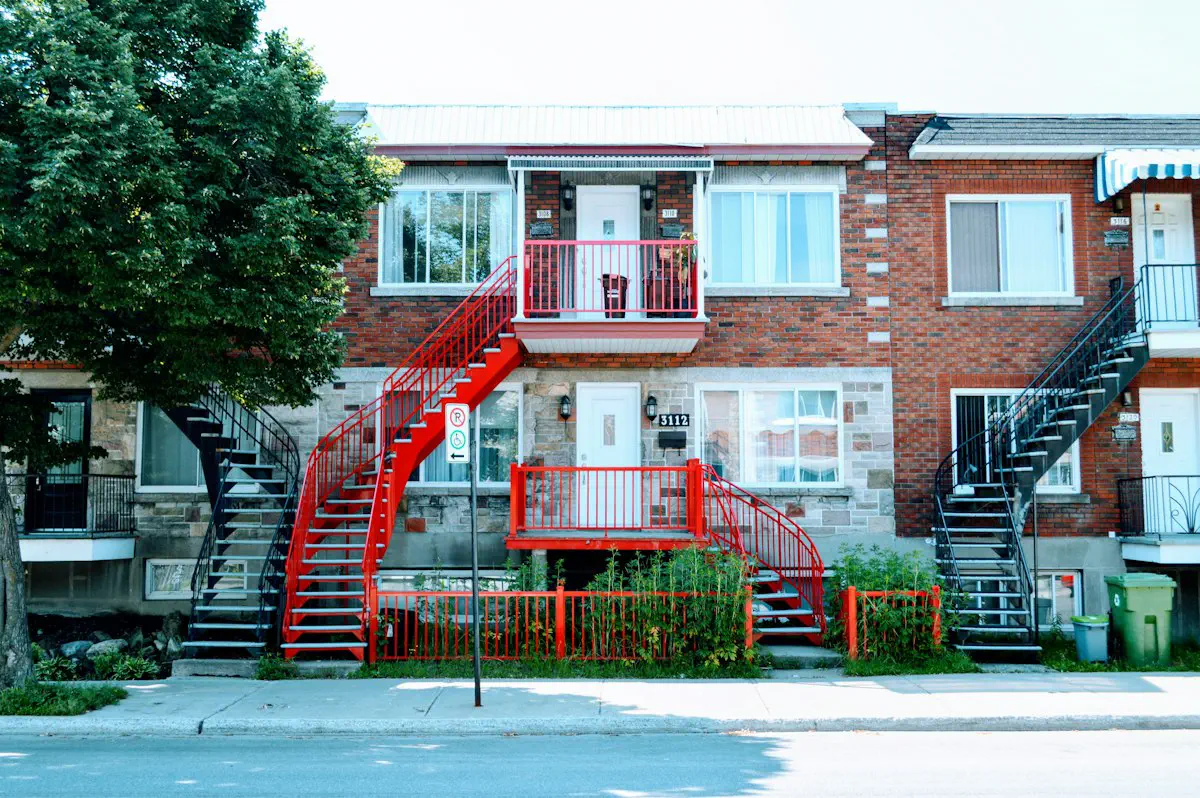
You visit a 4 1/2 in the Plateau, listed $80,000 below a comparable condo two streets away. The listing says “undivided”. That is not a discount. It is a different legal product, with a different way of being financed and a different pool of buyers when you resell. Here is what changes, and what you need to have read before you file a promise to purchase.
Indivision was not born of a trend. It is the consequence of a prohibition.
Section 51 of the Loi sur le Tribunal administratif du logement (Quebec’s rental board) sets the rule in three steps. First paragraph: an immovable that contains, or has contained in the 10 years preceding the application, at least one dwelling cannot be converted into divided co-ownership without the authorization of the Tribunal. Third paragraph: conversion “is prohibited in the urban agglomeration of Montreal provided for in section 4 of the Loi sur l’exercice de certaines compétences municipales dans certaines agglomérations, except by way of an exemption granted under section 54.12 by resolution of the council of the municipality”.
The Ville de Montréal adds a warning many sellers forget: “An exemption granted by the borough does not constitute an authorization to convert. Only the Tribunal administratif du logement can authorize a conversion.” And the exemption itself does not exist everywhere. Le Plateau-Mont-Royal and Côte-des-Neiges Notre-Dame-de-Grâce grant none at all. Lachine considers only residential buildings of 2 or 3 dwellings. Ahuntsic-Cartierville requires, among other conditions, that at least half the dwellings be occupied by their owners.
The result: in the central neighbourhoods, the owner of a triplex who wants to sell his dwellings separately has no right to create three cadastral fractions. So he sells shares of a building that has stayed a single whole. You are not buying the second floor. You are buying a percentage of the entire building, with the right to occupy the second floor.
One detail in that same paragraph is worth reading twice: the prohibition “does not apply to an immovable all of whose dwellings are occupied by undivided co-owners”. That is the way out for some undivided buildings, and it is why the actual occupancy of the dwellings by the co-owners is a fact to verify, not an anecdote.
The OACIQ puts it bluntly: in an undivided co-ownership, “none of these owners owns a private portion of the immovable, but all hold a percentage of the immovable in its entirety and enjoy exclusive rights of use”.
The Civil Code fills in the rest. Article 1015 presumes equal shares and gives each undivided co-owner, in respect of his share, the rights of an exclusive owner: he may alienate it, hypothecate it, and his creditors may seize it. Article 1016 frames the use: each may use the undivided property provided he affects neither its destination nor the rights of the others. Éducaloi points out what silence produces: “the law presumes you are owners in equal shares, even if your down payments and your contributions to the mortgage payments are unequal”.
| Divided co-ownership | Undivided co-ownership | |
|---|---|---|
| What you buy | A cadastral fraction | A percentage of the immovable |
| Governing document | Declaration of co-ownership | Convention d’indivision |
| Legal person | Syndicate (art. 1039) | None |
| Property assessment | Separate entity (art. 1050) | No equivalent rule |
| Duration of the framework | Indefinite | 30 years maximum, renewable (art. 1013) |
The line on property assessment is not cosmetic. Article 1050 creates a separate entity for property assessment and taxation purposes only for the fraction of a divided co-ownership. Nothing equivalent exists for an undivided share: municipal and school taxes, says the OACIQ, “are shared by all the co-owners, according to their respective share”. What you are really buying in the divided case is set out in this guide on condos and houses.
This is where buyers get surprised, and this is where precision matters.
What the law allows. Article 1015 authorizes a hypothec on an undivided share. The arrangement is neither illegal nor exotic.
What cools lenders down. Two articles explain their caution. Article 1035 provides that the creditors of an undivided co-owner, “even hypothecary creditors”, may not demand partition, except by way of an oblique action where the co-owner could demand it himself. Article 1021 adds that a partition occurring before the term set in the agreement may not be set up against a creditor holding a hypothec on an undivided share, unless he consented to it. Security whose realization you cannot trigger on your own is less liquid security. The price of that illiquidity is paid in down payment.
What I cannot tell you. CMHC publishes its eligibility criteria for an owner-occupied loan: a minimum down payment of 5% on the first $500,000 and 10% on the remainder, a value below $1,500,000, gross debt service capped at 39% and total debt service at 44%, and a home meant to be occupied by the borrower. No public CMHC document I was able to consult announces a mortgage loan insurance product covering an undivided share. So I cannot quote you a written rule that sets your down payment at 20%, and I will not. What I can tell you: have the exact amount, and the list of lenders that accept indivision, confirmed by a mortgage broker before you make an offer, not after. Borrowing power is calculated differently when loan insurance is not available.
The collective loan. In many undivided buildings, it is not your share that is hypothecated but the entire immovable, through a single loan the co-owners repay together. The OACIQ’s mandatory brokerage contract accounts for this: it requires the seller to provide “all documents relating to loans pertaining to the IMMOVABLE and the deeds of loan and hypothecary security including any penalties that may be associated with them”. Ask for those deeds. They will tell you whether your neighbour’s default can reach your roof. On down payments in general, read also the 20% myth.
Article 1013 lets the undivided co-owners postpone partition in writing, for a term that may not exceed 30 years, renewable. Article 1014 requires that an indivision by agreement bearing on an immovable be published in order to be set up against third persons, and states what the publication covers: the term agreed on, the identification of the shares, the pre-emptive rights granted, and the attribution of a right of use or of exclusive enjoyment of part of the property.
Without that agreement, the suppletive rules apply, and they do not resemble life in a building. Article 1025 provides that the undivided co-owners administer the property jointly. Article 1026 divides it up: decisions of administration are taken by a majority of the co-owners, in number and in shares, but alienating the property, partitioning it, charging it with a real right, changing its destination or making substantial alterations to it requires unanimity. A single holdout blocks a refinancing or a major transformation. Article 1027 allows the administration to be entrusted to a manager.
The Chambre des notaires lists what the agreement may cover: the term, the rights and obligations relating to enjoyment of the premises, the sharing of maintenance and renovation obligations, the sharing of expenses, ownership of improvements, restrictions on sale, the rules of administration and the rules of partition when the indivision ends. It adds that an agreement usually contains a pre-emptive right, which “requires an undivided co-owner who wants to sell to first offer his share to his co-owners”.
That pre-emptive right is not a matter of courtesy. Article 1022 gives every undivided co-owner a right of redemption of 60 days against a purchaser who is a stranger to the indivision, except where pre-emptive rights have been stipulated in the agreement and published. Put plainly, your purchase can be undone if the paperwork was not done properly.
Article 1019 is the default rule: the undivided co-owners are liable, “in proportion to their share”, for the costs of administration and the other common charges. Proportion, not solidarity. But an agreement may provide otherwise, and above all a single loan charging the immovable creates a very real shared exposure.
So ask the question out loud before the offer: if the ground-floor co-owner stops paying his share of the loan or of the taxes, who pays in his place, within what time, and with what recourse against him? The answer has to be written into the agreement. If it is not there, it will cost you dearly the day the situation comes up. The principle is the same as for a purchase among relatives, set out in buying property together in Quebec.
On work done to the building, article 1020 gives a right to reimbursement of the necessary disbursements made to preserve the property, and to an indemnity at the time of partition for the other authorized disbursements. The word “authorized” does all the work. You ask first, and you ask in writing.
What you will resell is not a dwelling. It is a share. The OACIQ’s mandatory form carries that exact name: exclusive brokerage contract, “share of a chiefly residential immovable held in undivided co-ownership”. That form requires the seller to obtain from the other undivided co-owners a written waiver of their pre-emptive right or of their right of redemption under article 1022, and to hand it to the broker.
Two consequences for your price. First, the buyer pool is limited to those who have the required down payment and who find a lender that accepts indivision. Second, every sale goes through the consent, or at least the waiver, of people who are not parties to your transaction.
No public source lets me put a number on the price gap between an undivided share and a comparable divided co-ownership in Montreal. QPAREB does not publish that breakdown. Be wary of any percentage quoted without a source, including an upward one.
Article 1031 offers the collective exit: three quarters of the undivided co-owners, representing 90% of the shares, may terminate the indivision of an immovable used chiefly as a residence in order to establish divided co-ownership. That said, the authorization of the Tribunal administratif du logement is still required in the cases covered by section 51, and the declaration of co-ownership has to be registered within the year of the authorization, failing which the authorization becomes without effect.
The OACIQ’s mandatory brokerage contract already sets out the list the seller has to provide. Ask for all of it, before your examination period runs out.
Three professionals, three roles. The notary reads the agreement and, where needed, has it amended: the Chambre des notaires points out that a legal professional can advise you and help you draft it. The mortgage broker confirms which lender will take the file and on what terms. The real estate broker uses the right form and obtains the waivers. None of the three replaces the other two. The full sequence through to the keys is described in the notary process in Quebec.
Is indivision legally weaker than a condo? No. It is a right of ownership provided for in articles 1012 and following of the Civil Code. What changes is the object of the right, a percentage rather than a cadastral fraction, and the way lenders treat it.
Can I rent out my dwelling in an undivided building? That depends on the convention d’indivision and on your deed of loan, not on a general rule of the Civil Code. Have both documents read before you buy if renting is part of your plan.
Can another co-owner force me to sell? Article 1030 provides that no one is bound to remain in indivision and that partition may always be demanded, unless it has been postponed by agreement. A published and current agreement is therefore your main protection. Check its expiry date: it cannot exceed 30 years.
Can my undivided building become divided one day? Perhaps, never automatically. You need three quarters of the undivided co-owners representing 90% of the shares (article 1031), the authorization of the Tribunal administratif du logement where it is required, and compliance with the borough’s by-law. Buy the building as it is, not as it might become.
To go further, read what you are actually buying in a co-ownership and buying property together in Quebec.
Hesitating over an undivided share in a central neighbourhood? Write to me: we read the convention d’indivision and the deeds of loan before we talk about price.

Residential Real Estate Broker · RE/MAX DU CARTIER INC.
Contact GeorgesSelling your house tax free, deducting your mortgage interest, running a renovation through your expenses: three …
A lender offers you a full percentage point below your current rate. Before you say yes, one number is still …

A seller tells you his co-ownership has neither a maintenance logbook nor a contingency fund study. In 2026 he is …