
Practical Guide
Spring Melt and Water Infiltration in a Montreal Basement
In March, snow piled against a foundation melts faster than frozen ground can absorb it. The water then takes the …
Practical Guide

The installation price of a pool gets negotiated once. The rest gets paid every year, and that is the part almost nobody puts a number on before digging. Here is what the official sources let us establish, and what they do not let anyone say about resale.
Financially, a pool is six recurring items and two expenses that land all at once. Recurring: opening, closing, chemicals, electricity, water, insurance. One off: replacing the liner and, one day, the fate of the structure itself.
Two of those items are not costed officially anywhere. Seasonal opening and closing are a private service: no public body publishes a rate for them. Same for chemicals. What the Quebec government does publish is the target to maintain and how to maintain it without hurting yourself: a chlorine concentration of 0.8 to 3 mg/L in a pool, a ban on mixing two different chemical products, and storage of liquid containers below powder containers, away from any acidic product. The budget itself gets asked of two suppliers, not of an article.
| Annual item | What an official source lets us say |
|---|---|
| Opening and closing | Nothing published, private service |
| Chemicals | Target of 0.8 to 3 mg/L of chlorine, cost not published |
| Electricity | Costed by Hydro-Québec, see below |
| Water for filling | No volume rate in Montreal or in Laval |
| Insurance | Endorsement required, amount specific to each contract |
| Permit | $84 in Laval, varies by borough in Montreal |
A pool therefore belongs on the maintenance calendar, not in the unforeseen column. Home maintenance costs in Quebec get planned component by component, and the pool is one of them.
This is the only recurring item an official source really costs. Hydro-Québec writes that filtering and heating the water of a pool account for up to 20% of a household’s annual electricity costs.
The published assumptions are worth more than an average. For its savings calculations, Hydro-Québec takes an in-ground pool of 16 ft by 32 ft fitted with a single speed pump and motor set with an absorbed electrical power of 1,390 W, running 150 days, 24 hours a day. For an above ground pool 24 ft in diameter, it is 735 W. Do the multiplication for the in-ground one: 5,004 kWh per season, or about $445 at the price of 8.89 ¢/kWh that Hydro-Québec uses in those calculations, for filtration alone. On your bill, Rate D as shown in the pool calculator is 7.065 ¢/kWh for the first tier and 11.142 ¢/kWh for the second, taxes extra: a pool pushes summer consumption toward the more expensive tier.
The published savings, again per summer and on the same assumptions:
| Measure | Above ground 24 ft | In-ground 16 x 32 ft |
|---|---|---|
| Timer | up to $110 | up to $140 |
| Two speed pump | up to $170 | up to $330 |
| Variable speed pump | not published | up to $375 |
| Solar blanket on a heated pool | up to $180 | up to $230 |
Heating changes the nature of the calculation. Hydro-Québec indicates that a pool heat pump transfers 3.5 to 5 kWh of heat for every kilowatt hour of electricity consumed, and that it reduces water heating costs by up to 75% compared with electric resistance heating. Lowering the thermostat by two degrees takes off up to 25% more. One caution, though: if the pool is heated, the timer becomes counterproductive, because the pump has to run whenever the pool heater is operating. The solar blanket figures above assume a heat pump, a 27 °C setpoint and a season running from 21 May to 15 September.
A dated note for anyone buying a pump this year: the LogisVert program pays $125 for a two speed pump and $300 for a variable speed pump, but the measure will be withdrawn on 30 November 2026 and the application has to be sent no later than 1 March 2027.
Neither Montreal nor Laval publishes a volume rate for the water that fills a residential pool. What both of them regulate is the timing and the manner. In Montreal, filling a pool is prohibited between 6 a.m. and 8 p.m., except between 1 April and 15 May or at the time a new pool is installed. So filling happens at night, or in the spring.
In Laval, the rule targets the leaking pool directly. By-law L-12778 on the consumption and use of water prohibits, at its section 17, making up for a defect in a pool’s water treatment system using municipal water main water, and maintaining the water level of a pool that is not watertight with that same water. A punctured liner therefore stops being a simple maintenance problem: the hose compensating for the leak becomes an offence. The fines set out in the by-law run from $100 to $1,000 for a natural person, and from $250 to $2,000 for a repeat offence. For the rest of the Laval framework, see the page on the real estate broker in Laval.
The Insurance Bureau of Canada is blunt on its consumer information site: your pool or your spa is not automatically protected by your home insurance contract. An endorsement has to be added, covering the pool or spa located outside the house, the maintenance equipment, and the deck attached to it without being attached to the house. The IBC adds that the protection offered can vary from one insurer to the next.
Two practical consequences. The cost first: no official source publishes the premium for a pool endorsement, because it depends on the contract and on the insurer. Acceptance next: a pool gets added to the file at renewal as at sale, and hard to insure homes in Quebec are a reminder that the answer is never uniform.
Supervision, for its part, cannot be bought. The drowning report of the Société de sauvetage (Quebec’s lifesaving society), Quebec 2024 edition, establishes on 2016 to 2020 data that 17% of drownings occur in a pool, 71% between May and September, and fewer than 1% in a setting supervised by a lifeguard. In a private backyard, the supervisor is you.
No official Quebec source publishes the service life of a pool liner or that of an in-ground structure. So I cannot give you a number of years, and be wary of anyone who does without a reference. What is documented is the exit: in Montreal, demolishing an in-ground pool requires a permit in several boroughs and not in others, with published fees ranging from a minimum of $74 in Montréal-Nord to $479 in Saint-Laurent and $495 in Saint-Léonard. The City requires that all the components of the pool be removed before backfilling the void, with fill that respects the composition of the existing soil.
Hold on to the shape of the expense rather than the amount: a pool gets paid for in small regular sums over years, then in one large sum the day the liner gives out. Before buying a house that has one, ask for the year of the last liner and the invoice. If you are weighing what that changes for your property, the home value estimator gives a starting point, to be validated against real comparables.
The Règlement sur la sécurité des piscines résidentielles (Quebec’s residential pool safety regulation) requires a compliant enclosure, a gate that closes and locks on its own, and a municipal permit to install or replace a pool. Any installation existing before 1 November 2010 must comply no later than 30 September 2027, and the detail of the standards is in the article on the pool regulation and the 2027 deadline.
One clarification that saves a pointless phone call. The Régie du bâtiment du Québec oversees pools and wading pools accessible to the public, as well as beaches operated for swimming. Your backyard pool is not within its remit: the Quebec government entrusts the municipalities with applying the residential regulation. Your contact is the City.
The permit costs $84 in Laval, with an announced processing time of 20 days, and it covers in-ground and above ground pools, the initial installation of a demountable one and any spa over 2,000 litres. In Montreal, the fee belongs to the borough: $150 plus taxes in Anjou, $465 taxes included in Côte-des-Neiges-Notre-Dame-de-Grâce, a calculation based on the amount of the work elsewhere.
No official Quebec source lets anyone put a number on what a pool adds to or takes off the selling price of a house. No percentage, no range. A broker is in any case required to be able to demonstrate what he asserts.
What does exist is a valuation principle recognized by the government. The Manuel d’évaluation foncière du Québec (Quebec’s property assessment manual), in its section on the principle of contribution, writes that the contribution to the selling price can be nil or negative for elements providing little or no utility, and gives this precise example: an excavated pool on the site of a low end residence is a situation of imbalance relative to the aspirations of that market.
Three variables decide, and none of them is in the pool. The pool of buyers: a family with young children and a couple in their seventies do not react to the same backyard. The appetite for maintenance: someone who has already opened a pool knows what he is buying, someone who never has discounts the unknown. Compliance, finally: an enclosure that does not meet the standards translates into a priced quote in the negotiation, and it is the only one of those three factors the seller controls entirely before going to market.
On the tax side, the pool is part of the immovable entered on the roll. If the entry strikes you as disconnected from the market, follow the procedure for contesting a municipal assessment and its strict deadlines.
How much does a pool cost per year in Quebec? One single item is costed by an official source: electricity. Hydro-Québec’s assumptions give 5,004 kWh per season for the filtration of a 16 ft by 32 ft in-ground pool with a single speed pump. The rest varies too much to be announced without a quote.
Is my pool covered by my home insurance? Not automatically. The Insurance Bureau of Canada indicates that an endorsement is necessary, and that the protection varies from one insurer to the next. Ask for confirmation in writing beforehand, not after a claim.
Does a pool raise my municipal assessment? It is part of the immovable being assessed. The Manuel d’évaluation foncière does point out, however, that the contribution of a component can be nil or negative depending on the market.
Can I fill my pool whenever I want? No. In Montreal, filling is prohibited between 6 a.m. and 8 p.m., except from 1 April to 15 May or when a new pool is installed. In Laval, it is prohibited to maintain the level of a pool that is not watertight with municipal water main water.
To round this out, read the seller’s declaration in Quebec and the residential pool regulation.
Are you buying or selling a property with a pool? Write to me. We check the permits, the compliance of the enclosure and the year of the liner before we talk price.

Residential Real Estate Broker · RE/MAX DU CARTIER INC.
Contact GeorgesIn March, snow piled against a foundation melts faster than frozen ground can absorb it. The water then takes the …
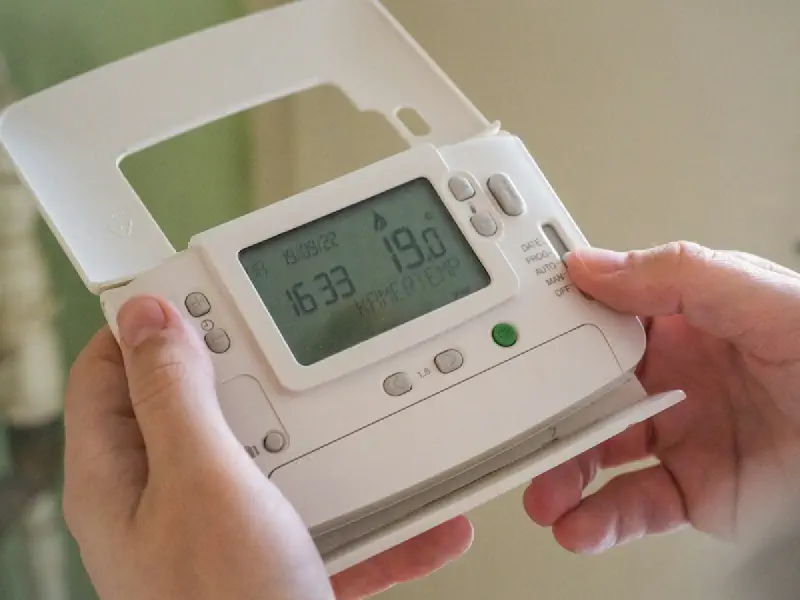
Two houses of the same age, on the same street in Laval, can show a gap of several hundred dollars per winter. It …
You are preparing your property for “the buyer”. That generic buyer does not exist. The household that …