Investment
Should You Invest in Rental Property in Quebec?
In the third quarter of 2026, a plex of 2 to 5 units sold for a median of $890,000 in Laval and $902,500 on the …
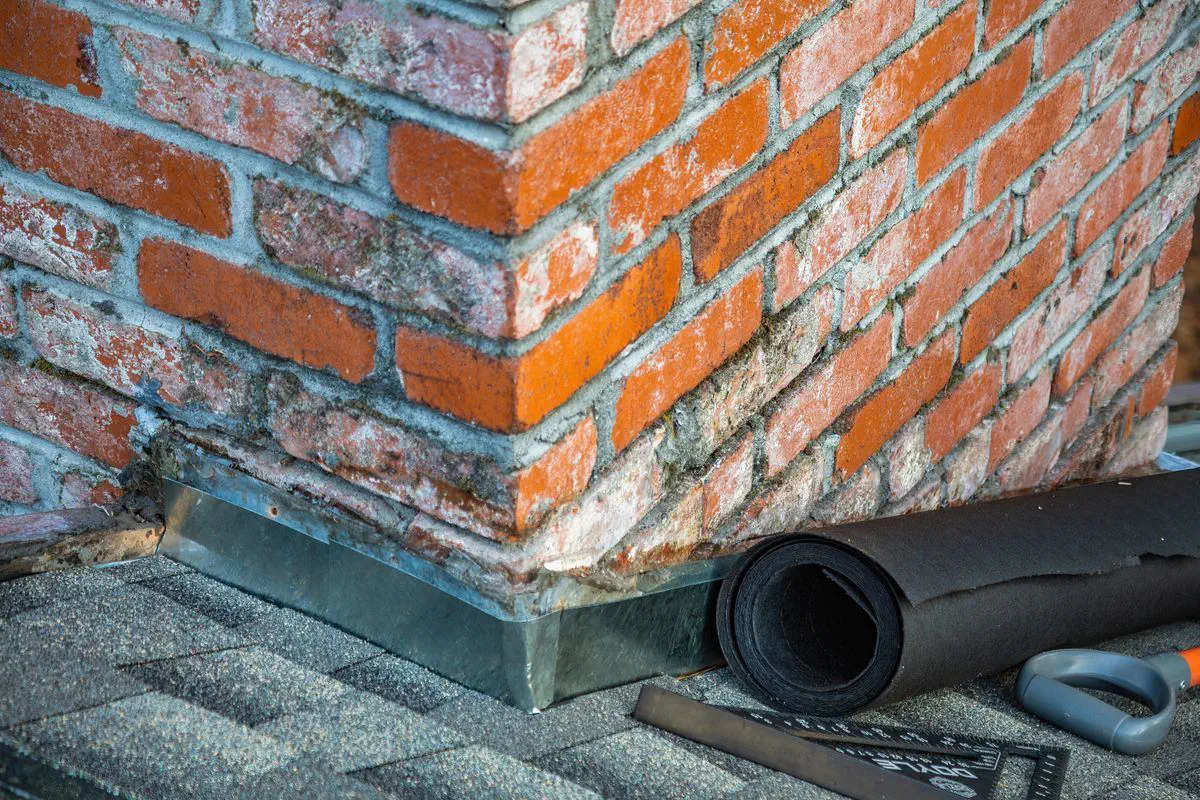
As of November 18, 2026, the owner of a duplex or triplex in Montreal or Laval can obtain four public grants to renovate, and each one has its own calendar. Rénoclimat, from the Quebec government, pays for insulation and windows once the work is done. LogisVert, from Hydro-Québec, pays for the heat pump within nine months of installation. RénoPlex, in Montreal, pays for the envelope and the systems, but only if the City confirmed the grant before the work began. Laval pays for removing oil heating, once the work is finished. The permit is obtained before starting, the order that protects value runs from the roof and the envelope to the systems, then to the finishes, and tenants in place receive a written notice. General information: amounts change without notice, and your file is confirmed with each program.
Here is what the official pages showed on November 18, 2026 for a building of 2 or 3 dwellings.
| Program | What it pays in a duplex or triplex | The deciding condition |
|---|---|---|
| Rénoclimat, Quebec | Roof $5,000, walls $11,000, foundations $3,500, windows $300 each up to $6,000 | Work after October 1, 2026, by a licensed contractor |
| LogisVert, Hydro-Québec | Heat pump: $50 or $120 per 1,000 BTU/h at -8 °C | Application no later than 9 months after installation |
| RénoPlex, Montreal | Up to $52,000 for 2 to 5 dwellings | City confirmation before the work |
| Laval | $1,400 per dwelling to leave oil heating | Work finished before the application |
This version of Rénoclimat, in force since October 1, 2026, ends on March 31, 2029. The energy evaluation before work is no longer mandatory, and assistance of up to $500 covers it if you have one done. The participant guide limits the building to three storeys above ground and a footprint of no more than 600 m², built and occupied for at least five years. The contractor must hold the Régie du bâtiment (Quebec’s building authority) licences that correspond exactly to the work and sign the attestation of conformity form. The application is filed no later than 12 months after the work ends. On November 18, 2026, the program page still announced an application portal under development: keep the invoices and the attestation.
The September 15, 2026 LogisVert guide accepts the multiplex for the heat pump: $50 per 1,000 BTU/h at -8 °C for an ENERGY STAR certified unit, $120 if it is a cold climate model, without exceeding the cost before taxes.
Two details change the calculation. The $1,500 grant for roof insulation applies only to houses heated mainly by electricity: for a plex, Rénoclimat covers the roof. A Multilogements bonus raises the grant to $220 per 1,000 BTU/h for a cold climate wall-mounted heat pump, among other conditions in a building from 1995 or earlier, located in an energy poverty zone designated by Hydro-Québec, with one meter per dwelling. Hydro-Québec also issues a relevé 27 (Quebec government payments slip) for a grant received on a rental property: show it to your accountant.
RénoPlex covers buildings of 1 to 5 dwellings. For blocks 1 and 3, the building value on the assessment roll, divided by the floor area, does not exceed $3,860/m². Block 2, the one for roofing, envelope and openings, covers buildings of 2 to 5 dwellings under a threshold that varies by borough. The amount is fixed per type of work. In the grid updated August 18, 2026: $1,350 per dwelling to replace oil or gas with a central heat pump, $410 per window, $150 per square metre of brick, $1,300 for an electrical panel of at least 200 A.
The rule that costs a lot: wait for confirmation that the application is accepted before starting the work, otherwise the right to the grant may be lost. The City announces 3 to 4 months for that confirmation, then allows 18 months for the work. The flood protection side is in climate-resilient renovations.
Laval pays up to $1,400 per eligible dwelling in a duplex or triplex that replaces heating fuelled exclusively by oil with an electric or renewable energy system, $700 for a dual-energy system. Propane and natural gas are excluded, and the tank is dismantled by a company holding a Régie du bâtiment licence. By-law L-12964 also imposes, since the 2024 fiscal year, an annual tax of $100 per oil system that has not been dismantled.
The Chauffez vert grant to convert oil heating has not been offered since March 31, 2026. On October 8, 2026, the federal government announced heat pump grants starting in 2027, with no details known yet according to Hydro-Québec. It is better to leave them out of a renovation budget.
What my clients say
We had an excellent experience with George for the sale of our house. He was attentive, available and always listening to our needs. He took the time to answer all our questions and accompanied us throughout the process with professionalism. We recommend him without hesitation!
Not for the same work. The Rénoclimat guide prohibits combining it with other assistance from the governments of Quebec and Canada or from a municipal entity, and LogisVert commits you not to request any other government grant for the equipment it paid for.
So you sort, measure by measure. In Montreal, a window is worth $410 in RénoPlex and $300 in Rénoclimat, but RénoPlex requires approval before the work and a value threshold, while Rénoclimat is applied for afterwards. Run the numbers with the quote in hand, and if a municipal grant and LogisVert target the same heating change, get the answer in writing from both programs before signing.
Yes, as soon as the work affects the structure, the walls or the division of rooms. In Montreal, a permit is required for work affecting a dwelling’s walls or foundations, or changing the dimensions, division or use of rooms; painting, floors or cabinets do not need one. The City no longer issues permits for interior plumbing, electrical or heating work, which the Régie du bâtiment governs, and each borough adds its own rules. Laval publishes a table by type of work. The delays and fees are in renovation permits in Montreal and Laval, and adding a dwelling in the accessory dwelling unit.
From the outside in, and from what protects to what shows. I am an engineer, but this article gives no technical opinion on a specific building: the condition of your building is established with an inspector or an engineer you hire.
| Rank | Work | Why at this rank |
|---|---|---|
| 1 | Roof, drainage, foundations | Water that gets in damages whatever is done next |
| 2 | Brick, windows, insulation | The envelope sets the heating load |
| 3 | Electrical, plumbing, heating | They run inside the walls before they are closed |
| 4 | Kitchens, bathrooms, floors | A finish installed too early gets redone |
Putting the envelope before heating is my engineer’s judgement. A heat pump is sized on the heating load; insulating and changing the windows after installing it reduces that load, and the unit becomes oversized. The LogisVert grant, calculated per 1,000 BTU/h, follows the installed capacity: it says nothing about proper sizing.
I am myself an owner-occupant of a triplex. Before buying it, I analysed the maintenance already done, what remained to be done and its expenses. Since then, I have fully renovated the second-floor unit: a completely redone bathroom, the floors of the whole unit sanded and re-stained, the unit and its doors fully repainted. I also replaced the front balcony floor. The next work: replacing the sealed glass units (thermos) of several windows and redoing the building’s exterior caulking.
I keep a maintenance log, as if the building were a condo, to organize my expenses and plan them ahead. That log, work done and work to come, is the first document to prepare before asking for a quote.
The calendar matters too: with a 3 to 4 month wait for RénoPlex, a roof planned for the summer is applied for the winter before.
Yes, with a written notice. Article 1922 of the Code civil prohibits a non-urgent major improvement or repair before notifying the tenant and, if an evacuation is planned, before offering an indemnity equal to the reasonable expenses the tenant will have to bear. Under article 1923, the notice states the nature of the work, its start, its estimated duration, the evacuation period and the indemnity; it is given at least 10 days before the work, or at least three months before an evacuation of more than one week.
For routine work, article 1931 requires 24 hours’ notice. The Tribunal administratif du logement (TAL, Quebec’s rental board) points out that during a lease, the rent cannot be raised on the grounds of major work. A dwelling freed between two leases escapes the work notice, not rent control: article 1896 requires the landlord to declare to the new tenant the lowest rent of the previous 12 months. Repossessing a dwelling to live in it falls under another regime, detailed in repossession by an owner occupant.
At the end of the lease, and on the share you paid yourself. Article 3 of the Règlement sur les critères de fixation de loyer (the regulation on rent-setting criteria) retains 5% of the capital expenditures of the reference period; the full calculation is in increasing the value of a plex, and the calendar in the 2027 rent increase.
The grant comes out of the calculation. Article 13 of the same regulation reduces the expense by the amount of assistance from a Quebec or Canadian ministry or agency, a municipality or a public utility. An expense paid half by a grant counts only for the half you bore, and the City of Montreal notifies tenants when it grants RénoPlex.
Proof, and it is the proof the programs already require.
Articles 2118 and 2120 of the Code civil hold the contractor liable for the loss of the work for five years and for faulty workmanship for one year: without a contract or invoice, these remedies are hard to defend. The lender, for its part, counts income proven by signed leases. A rent hoped for after the work is not one.
I know of no reliable public statistic on the return of plex renovations in Quebec, and I do not quote one. The reasoning, however, can be done. The buyer adds up the rents, subtracts the expenses, then takes off the offer the work they will have to pay for. A roof, masonry, windows, an electrical panel or oil heating already replaced come off that list, if the proof follows.
Oil heating counts for more than it used to. In an existing building of three storeys or less and no more than 600 m², the Quebec government prohibits replacing an oil appliance with an oil or natural gas appliance, as well as major repairs to its combustion chamber or heat exchanger.
A high-end kitchen in a single dwelling, on the other hand, is recovered to the extent of that dwelling’s rent and of comparable sales, not beyond, as explained in what renovations really return.
An owner has every interest in knowing it before the first expense: what the building is worth today with its current leases and rents, and what buyers in the area paid for renovated plexes and for plexes needing work. That is the purpose of a free evaluation, meaning a comparative market analysis. It helps choose the work that matters, and decide whether to do it before a sale or let the buyer take it on. What a plex buyer examines is on the sell a plex page. The analysis is yours, whether you sell or not.
Planning work in your duplex or triplex? Write to me with the address and your leases to find out its current value before the first quote.

Residential Real Estate Broker · RE/MAX DU CARTIER INC.
Contact Georges Leave a Google reviewLike these articles? Add georgesmatar.ca to your preferred sources on Google to see them more often in your results.
In the third quarter of 2026, a plex of 2 to 5 units sold for a median of $890,000 in Laval and $902,500 on the …
Selling a house in Laval follows a precise chain: set the price using comparable sales, gather your titles and an …
A plex you have been paying off for years makes you more dollars richer every year, but by a smaller and smaller …
 Free consultation
You will pick the day and time next. Free, no commitment.
Service in French, English and Arabic.