
Seller's Guide
Should I Overprice My House to Leave Room to Negotiate in Laval?
Listing your house high to keep room for negotiation is a tactic that neither Centris nor APCIQ measures: neither …
Seller's Guide
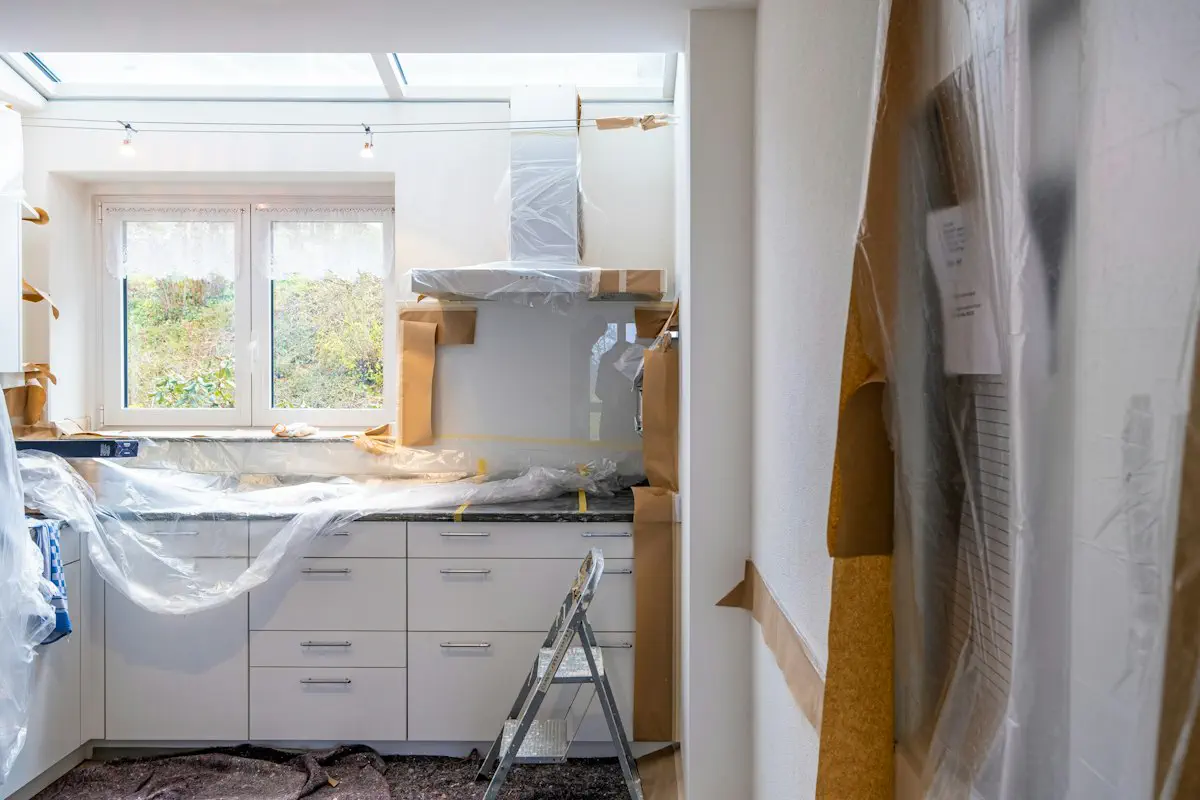
No, the Code civil du Québec does not require you to renovate a house before selling it, in Laval or in Montreal: its article 1718 has the property delivered in the condition it is in at the time of the sale. No official Quebec source puts a figure on what a renovation returns at resale, either.
What can be measured is time: the City of Laval announces 30 days for a renovation permit, and a single family home in Laval stayed on the market for 36 days on average in the third quarter of 2026.
The question calls for a percentage, and that is precisely what is missing. CMHC writes that “renovations will affect a home’s value,” as will changes to the neighbourhood and in the housing market, and it defines that value as a snapshot of what a property is worth “in relation to what similar properties are selling for.” It publishes no recovery rate.
The OACIQ says more in its seller’s guide, November 2017 edition. According to the guide, the cost of enhancement work can probably be recovered at the time of sale. For more specialized renovations, on the other hand, the guide says such work cannot guarantee that the selling price will rise enough to offset its cost, but will at the very least improve the chances of selling more quickly. None of these sentences rests on data published in the guide.
Centris and the APCIQ publish sales, median prices and selling times by territory, not by the condition of the homes sold. I found no official source stating what a new kitchen or a new roof returns at resale in Laval: a percentage without a source remains an opinion. The price ceiling that comparables set is explained in renovations and your home’s value.
The Code civil prescribes no work. Article 1716 requires the seller to deliver the property and to warrant both the right of ownership and its quality, warranties that exist by operation of law. Article 1718 adds that the property is delivered in the condition it is in at the time of the sale. The OACIQ, for its part, lists “the cost of any necessary repairs prior to the sale” among the expenses a seller should plan for.
What the law requires is the truth about the condition. Article 1726 releases the seller from warranting a latent defect known to the buyer, and an apparent defect. Article 1728 targets the seller who knew of the defect or could not have been unaware of it: in addition to returning the price, that seller must compensate the buyer for the damage suffered. The law therefore pushes toward disclosure, not toward renovation.
Some obligations follow the building, sold or not. The one with the firmest date concerns pools. Section 10 of the Règlement sur la sécurité des piscines résidentielles (Quebec’s residential pool safety regulation), up to date as of July 1, 2026, requires an installation that existed before November 1, 2010 to comply no later than September 30, 2027. The deadline targets the installation, not the transaction, and Quebec’s residential pool rules details what it covers. The Déclarations du vendeur sur l’immeuble form (the seller’s declarations, known as the DV) also asks, at D2.12, whether you have ever received a notice of non-compliance from an insurance company, the municipality or the government, and whether you remedied it.
The buyer sees your answers before even making a promesse d’achat (promise to purchase): according to the OACIQ, your broker must make the form available to any buyer interested in making one. The buyer can then make the promise conditional on an inspection, which the buyer’s broker has an ethical obligation to recommend. The questions on the DV form, version 06/2022, map out the points to check.
| Component | What the DV form asks |
|---|---|
| Roof | D8.2: the year the roof covering was installed; D8.3: the documents proving its replacement |
| French drain | D9.4: whether there is one, and an access to inspect and clean it |
| Backwater valve | D9.13: whether the building has one |
| Electrical | D10.5: whether the panel has been changed, and in what year |
| Heating oil | D3.3: whether a tank has ever existed; D12.4: whether the heating system includes one |
| Work | D14.4: major work, plans and specifications, permits issued |
A dated answer, backed by an invoice, closes a question. A “don’t know” leaves it open, and the buyer can hand it to their inspector. For a roof, the expected service life of a covering is in roof and window lifespan in Quebec.
The pre-sale inspection. The OACIQ describes its purpose: to know the condition of the property before putting it on the market, identify major repairs “and decide whether or not to make them.” The same text sets the counterpart: the broker must recommend that the seller provide the information in the report to any prospective buyer and disclose it in the Déclarations du vendeur. A report you order therefore becomes a document in the transaction, whether or not you make the repairs.
For interior renovation and for exterior renovation, the City of Laval publishes a table of the work that requires a permit. Here is an excerpt.
| Work | Permit in Laval |
|---|---|
| Painting | No |
| Renovating an existing kitchen or bathroom | No |
| Renovation that changes the dimensions, the number of rooms or the structure | Yes |
| Adding a bathroom or a bedroom | Yes |
| Roof, same material, insulation added | No |
| Roof, new material | Yes |
| Replacing the French drain | No (adding a drain: yes) |
| Doors and windows, same dimensions | No, except within 1.5 m of the property line |
| Electrical panel, wiring, plumbing | No |
The permit fee. The City publishes $92 for the first $20,000, plus $2.50 per $1,000 bracket or part of a bracket, on top of the base rate. The exact amount appears on the statement of account the City sends once the application is complete.
The timeline. Laval announces 30 days, an approximate timeline that only starts once all the required documents have been received, and that can run longer depending on the season, the complexity of the file or an approval such as a PIIA (plan d’implantation et d’intégration architecturale, a site planning and architectural integration program). The list of documents opens with a recent certificat de localisation (certificate of location), prepared by a land surveyor. Depending on the work, plans sealed by an architect or an engineer may be added. The City’s instruction is clear: “Wait until you have received your permit before starting your work.”
Who can do the work. No municipal permit does not mean the work is unrestricted. The Régie du bâtiment du Québec sets a rule with no exception: “At no time is a natural person allowed to carry out construction work on an installation intended to use gas, a petroleum equipment installation or an electrical installation without holding the appropriate licence.” The panel can therefore be changed without a permit in Laval, but by the holder of that licence, such as an electrical contractor in subcategory 16.
The cost of the work. No official source publishes the price of a kitchen or a roof in Laval: only written quotes give it. Set that figure next to the property’s estimated market value, for which the home value estimator gives a first order of magnitude.
All three routes share one fixed point: the DV form. Among the information to provide, the OACIQ lists “any repair or renovation work done, with documentation if possible.” The form also asks the seller to give the broker the invoices, warranties, plans, specifications, permits and reports that support the answers.
| Route | On the work site | On the DV form |
|---|---|---|
| Repair before listing | Quotes, permit if required, licensed contractor | Describe the work at D14.4 and D15, hand over invoices and permits |
| Disclose without repairing | No work | Describe the known defect at D15: the location, the year, the situation |
| Inspect first | Pre-sale report before going on the market | Disclose the report, then choose one of the other two routes |
What a disclosure changes. A disclosed defect becomes known to the buyer, and article 1726 does not require the seller to warrant a defect known to the buyer. The buyer can take it into account in the offer. No source measures the resulting price gap.
What an opened wall changes. A renovation undertaken in order to sell can reveal a problem you did not know about. From then on, you know about it, and article 1728 targets the seller who knew of the defect: what appears during the work goes into your answers on the DV form, and section D15 is where you explain how the situation was resolved. The form is broken down in the seller’s declaration in Quebec, and cleaning or painting, which belong to preparation, in how to prepare your home for sale in Montreal and Laval. For a clause that commits the seller to doing work before the deed of sale, have your notary read the text.
In the third quarter of 2026, a single family home stayed on the market for 36 days on average in Laval, 2 fewer than a year earlier. The table gives the same measure for each city in the territory.
| City | Centris territory | Days, Q3 2026 | Change over one year | Days, 4 quarters |
|---|---|---|---|---|
| Laval | Laval | 36 | -2 | 35 |
| Montreal | Island of Montreal | 51 | +4 | 49 |
| Longueuil | Le Vieux-Longueuil | 35 | +13 | 32 |
| Longueuil | Saint-Hubert | 29 | -5 | 31 |
| Longueuil | Greenfield Park | not published | not published | 34 |
| Brossard | Brossard | 43 | 0 | 43 |
| Terrebonne | Terrebonne | 37 | +8 | 30 |
| Terrebonne | Lachenaie | 34 | +5 | 34 |
| Terrebonne | La Plaine | 31 | +4 | 27 |
| Mascouche | Mascouche | 25 | -5 | 24 |
| Repentigny | Repentigny | 34 | +12 | 28 |
| Repentigny | Le Gardeur | 35 | +10 | 26 |
| Blainville | Blainville | 34 | +5 | 30 |
| Mirabel | Mirabel | 37 | +12 | 31 |
| Saint-Jérôme | Saint-Jérôme | 39 | +3 | 32 |
| Saint-Eustache | Saint-Eustache | 23 | -5 | 28 |
Source: Centris real estate statistics, single family home, average days on market, for Laval, the Island of Montreal, Le Vieux-Longueuil, Saint-Hubert, Greenfield Park, Brossard, Terrebonne, Lachenaie, La Plaine, Mascouche, Repentigny, Le Gardeur, Blainville, Mirabel, Saint-Jérôme and Saint-Eustache, third quarter of 2026, meaning July to September, and the “Cumul 4 derniers trimestres” column (last four quarters combined). Changes compare with the same quarter of 2025, in days. “Not published”: too few transactions, according to Centris. Centris publishes no total for the city of Longueuil, only for its three boroughs.
In Laval, the average varies from one neighbourhood to the next. Among the 8 neighbourhoods for which Centris publishes the quarter’s figure, it ranges from 27 days in Duvernay, 18 fewer than a year earlier, to 48 days in Sainte-Dorothée. The figures for Duvernay, for Sainte-Dorothée and for the 13 neighbourhoods tracked by Centris are brought together in the Laval real estate market by sector.
Across the region. The APCIQ puts the selling time for single family homes in the Montreal CMA at 40 days in the third quarter of 2026, a timeline it describes as having remained relatively stable.
An average does not tell you how many days your house will stay listed. It gives the order of magnitude to set next to the calendar of a renovation: the permit, then the duration written on the quote.
Should I renovate my kitchen before selling? The Code civil does not require it, and no official source puts a figure on what a new kitchen returns at resale. In Laval, renovating an existing kitchen does not require a permit as long as the dimensions, the number of rooms and the structure do not change.
Should I replace the roof before selling? The Code civil does not require it, but the DV form asks for the year the roof covering was installed (D8.2) and the documents for its replacement (D8.3). In Laval, a new material requires a permit; the same material with added insulation does not.
Are there mandatory repairs before selling a house in Laval? The Code civil provides for none: its article 1718 has the house delivered in the condition it is in at the time of the sale. Obligations attached to the building, such as the September 30, 2027 deadline for pools that predate November 1, 2010, apply whether it is sold or not.
Does a home renovation before the sale have to be disclosed? Yes. The OACIQ lists renovation work done among the information to provide, and question D14.4 of the DV form covers major work: describe it at D15, and state whether plans and specifications were prepared and whether the required permits were issued. Keep invoices and permits to hand over to your broker.
Renovating before selling in Montreal: is the timeline the same as in Laval? The announced timelines differ. The City of Montreal’s general procedure for renovating an interior announces, as an indication only and with no guarantee, 8 to 10 weeks of analysis once all the documents have been received; Laval announces 30 days. Your borough’s permit counter confirms the timeline that applies to you.
To go further, read renovations and your home’s value and the seller’s declaration in Quebec, and find out how to sell your house for the highest price in Laval and how long it takes to sell a house in Laval.
Torn between renovating and listing as is? I prepare a free comparative market analysis, with the sales in your sector, to set the cost of the work next to the estimated market value. Write to me. Service in French, English and Arabic.

Residential Real Estate Broker · RE/MAX DU CARTIER INC.
Contact GeorgesListing your house high to keep room for negotiation is a tactic that neither Centris nor APCIQ measures: neither …
A house that is not selling in Laval is diagnosed by comparing your listing with the sales in your neighbourhood: …
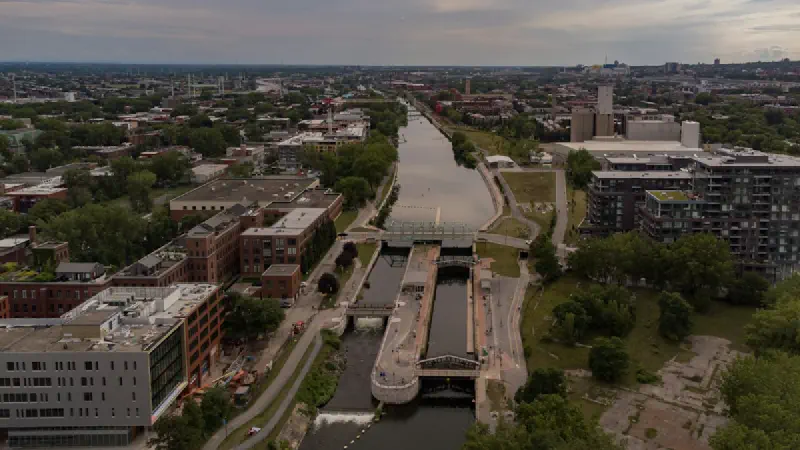
In the third quarter of 2026, Centris recorded 641 residential sales in the four boroughs of southwest Montreal: Le …