
Real Estate 101
What Changes for Quebec Homeowners in 2027?
Between now and the end of 2027, about a dozen dates affect Quebec homeowners, and several of them circulate with a …
Real Estate 101
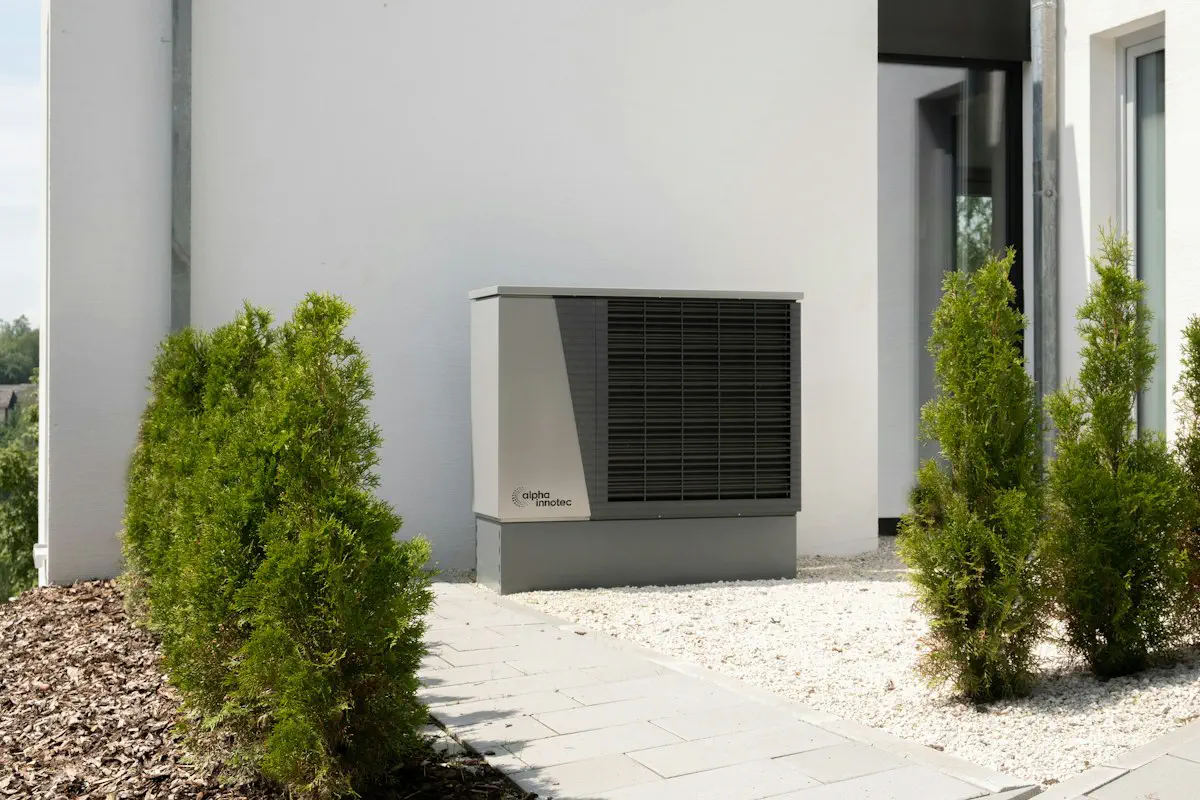
No one can describe the Quebec house of 2030. What we can do is read the regulations already adopted that will apply to a house built, renovated or bought between now and then. Most are in force, several have a deadline, a few are only projects. Here they are, since when they apply and to whom, in Montreal and Laval.
The texts already published that affect buildings, as of October 21, 2026:
| Rule | What it requires | Since when | Who is covered |
|---|---|---|---|
| Code de construction (Quebec’s construction code), Bâtiment, 2020 edition | Energy efficiency in section 9.36, passive radon stack | April 17, 2025 | New construction and alterations |
| Code de construction, Électricité, 2021 edition | Charging infrastructure carried over, extended to every space in buildings of 5 or more units | March 26, 2026 | Dwellings with parking |
| Règlement sur les appareils de chauffage au mazout (Quebec’s oil heating appliances regulation) | No oil-fired appliances; replacement without fossil fuel | December 31, 2021 and December 31, 2023 | Residential, up to 600 m² and 3 storeys |
| Montreal, by-law 23-046 | No combustion appliances in new construction | October 1, 2024 and April 1, 2025 | New buildings |
| Laval, by-law L-12964 | Annual tax on oil-fired appliances | May 8, 2023 | Laval owners |
| Cadre des milieux hydriques (the water environments framework) | New residences prohibited in exposed zones | March 1, 2026 | Flood zone, shore, littoral zone |
| Bill 31, section 94 | Zoning cannot prohibit an accessory dwelling unit, under conditions | August 21, 2024 | Detached single-family homes |
| Déclaration obligatoire de la performance environnementale (mandatory environmental performance reporting) | Annual declaration of energy consumed | January 1, 2027 and 2028 | Buildings with 50, then 25 or more units |
The floor dates from 2012. Since August 30, 2012, small residential buildings have followed Part 11, Energy Efficiency, of the Code de construction. According to the Régie du bâtiment du Québec (RBQ, Quebec’s building authority), it notably limits windows, doors and skylights to 30% of above-grade walls.
The 2020 edition moves these rules. The Code national du bâtiment 2020 modifié Québec (the 2020 National Building Code, as amended by Quebec) has been in force since April 17, 2025. According to the RBQ’s explanatory booklet, Part 11 is removed and its content “included and updated” in section 9.36, without the difference in performance being quantified. Regulations effective September 10, 2026 still allow the previous edition if work begins before October 17, 2027.
Radon enters the structure. A new Quebec requirement: a vertical passive radon vent stack in dwellings where at least 10% of the area of a wall, roof or floor separates a conditioned space from the ground, with space reserved for a fan if a measurement exceeds 200 Bq/m³, Health Canada’s threshold.
Electric vehicle charging. The Électricité chapter, 2021 edition, has been in force since March 26, 2026. It carries over the charging infrastructure for dwellings with parking in buildings of 4 units or fewer, and extends it to every space in buildings of 5 units or more. The previous version remains permitted for work begun before October 17, 2027.
Anything above this floor falls under voluntary programs, compared in the passive house standard set against the Code.
Across Quebec. The Règlement sur les appareils de chauffage au mazout covers residential buildings of no more than 600 m² and 3 storeys: bungalow, cottage, semi-detached, duplex, triplex.
Using an appliance already in place remains permitted.
In Montreal, gas too, in new construction. By-law 23-046 prohibits, in new construction, appliances that burn heating oil, natural gas, propane or biodiesel for heating, cooking or drying, gas ranges and indoor gas fireplaces included. It has applied since October 1, 2024 to buildings of no more than 3 storeys and 600 m² per floor, and since April 1, 2025 to all others. Existing buildings are not covered.
In Laval, a tax. By-law L-12964, in force since May 8, 2023, imposes $100 per year per appliance running entirely on oil and $50 per dual-energy system, whether used or not, until its dismantling has been declared. The City counts 5,800 oil heating systems.
The metropolitan by-law is on hold. On April 25, 2024, the Communauté métropolitaine de Montréal (CMM, the planning body for Greater Montreal) adopted by-law 2024-111, which would prohibit installing combustion heating in new buildings in member municipalities that have no by-law of their own. The published text bears the notation “not in force,” pending the ministerial approval required by section 31 of the Loi sur la performance environnementale des bâtiments (Quebec’s act on the environmental performance of buildings). No source consulted confirms this approval.
A house still heated with oil should be checked before the offer, insurance included: the steps are in the buyer’s guide.
Since March 1, 2026, the cadre réglementaire modernisé en milieux hydriques (Quebec’s modernized regulatory framework for water environments) has replaced the transitional regime. For a house:
The new maps replace the old ones sector by sector, and municipalities can be stricter. The address-by-address check is described in buying in a flood zone in Quebec.
An accessory dwelling unit can no longer be prohibited outright. Since August 21, 2024, section 94 of Bill 31 (2024, chapter 2) prevents an urban planning by-law from prohibiting an accessory dwelling unit if the house is single-family, detached, entirely residential and not a heritage property, located within the urbanization perimeter outside an area subject to public safety constraints, and if only one unit is created by subdividing or enlarging the house. Construction and parking standards still apply, and a municipality can exempt any part of its territory from the rule, which ceases to have effect on August 21, 2029.
Fewer referendums. Section 123.1 of the Loi sur l’aménagement et l’urbanisme (Quebec’s land use planning and development act) exempts from referendum approval a provision that allows accessory dwelling units in a residential zone, or a density increase limited to one third of the standard or targeting a zone that includes access to rail public transit, or an adjacent zone.
Projects outside the rules until 2029. Bill 31 also allows a municipality to authorize, by resolution, a project of at least three dwellings that departs from its planning rules. This temporary power was extended to February 21, 2029 by a regulation published in the Gazette officielle of April 22, 2026.
The permit and the costs published in Laval and Montreal are detailed in adding an accessory dwelling unit in Quebec.
From January to September 2026, CMHC counted 19,028 housing starts in the Montreal metropolitan area, Laval included. Only 910 were single-detached houses, or 4.8%, compared with 952 out of 19,331 a year earlier. For CMHC, a single-detached house is “a building containing only one dwelling, completely separated, on all sides, from any other dwelling or structure.”
These figures describe the construction sites of 2026, not the housing stock of 2030: the detached house remains marginal in them.
In prefabrication, the public program identified targets multi-unit buildings: component 3 of the Programme d’habitation abordable Québec (Quebec’s affordable housing program) funds highly prefabricated buildings of 24 or 36 units, with a target of 500 units in 2026.
The energy rating. The Règlement sur la déclaration obligatoire de la performance environnementale de certains bâtiments (Quebec’s regulation on mandatory environmental performance reporting for certain buildings), in force since July 8, 2026, requires an annual declaration of energy consumed starting in 2027 for buildings with 50 or more units, and starting in 2028 from 25 units. In a divided co-ownership, the syndicate of co-owners files it. No house belonging to a private owner is covered. The rating and the minimum standards await a second regulation.
Montreal’s thresholds. By-law 21-042, adopted on September 27, 2021, already requires buildings of 2,000 m² or with 25 or more units to report their energy consumption. The performance thresholds planned in the Plan climat (Montreal’s climate plan) are not incorporated into it.
The 2025 Code. A June 2026 brief to the Conseil des ministres (Quebec’s cabinet) mentions work to adopt the 2025 edition of the Code national du bâtiment. No date has been set.
The attestation of conformity. A November 2024 act provides for the inspection of work at key stages and an attestation of conformity. The draft regulation published by the RBQ on May 13, 2026 would apply it to residential buildings not covered by the plan de garantie des bâtiments résidentiels neufs (the guarantee plan for new residential buildings).
Does a new house delivered in 2027 necessarily follow the 2020 Code? No. If work began before October 17, 2027, the previous edition remains permitted. Have the edition specified in writing in the preliminary contract.
Can I keep my oil furnace until 2030? The provincial regulation does not prohibit its use, but it limits its repair after 20 years and prohibits replacing it with a fossil fuel appliance. In Laval, it costs $100 in tax per year. Ask for the insurer’s requirements in writing.
Can my city refuse a unit in the basement of my house? If the house meets the conditions of section 94, zoning cannot prohibit it, unless the City has exempted your sector. A permit is still required.
Will a house that complies with these rules be worth more? No official source consulted puts a figure on this effect. The direction of prices is the subject of another article in this series.
To round things out, read what Novoclimat certification buys and the climate resilience renovations required in Quebec.
Buying a new house, or a house still heated with oil, and want to know which rules apply at that address? Write to me. We check the Code, the zoning and the flood zone map before the offer. Service in French, English and Arabic.

Residential Real Estate Broker · RE/MAX DU CARTIER INC.
Contact GeorgesBetween now and the end of 2027, about a dozen dates affect Quebec homeowners, and several of them circulate with a …
The notice of meeting announces higher common expenses and nobody asked your opinion. It is probably legal. Since …

Nobody knows what Quebec’s inflation rate will be in 2027. Two public bodies publish a dated projection for …