Buyer's Guide
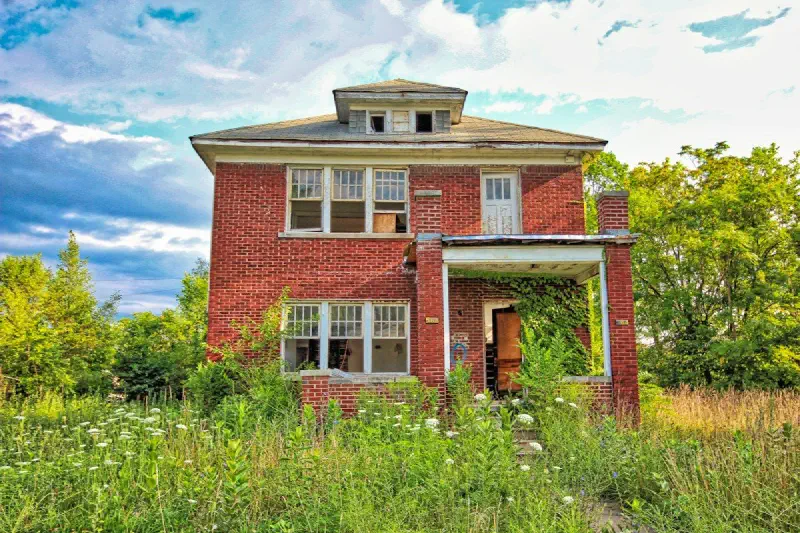
Hard to Insure Home in Quebec: What Actually Blocks the Deal
No Quebec law requires an owner to carry insurance. The lender almost always does. The result: an insurer saying no …
Buyer's Guide
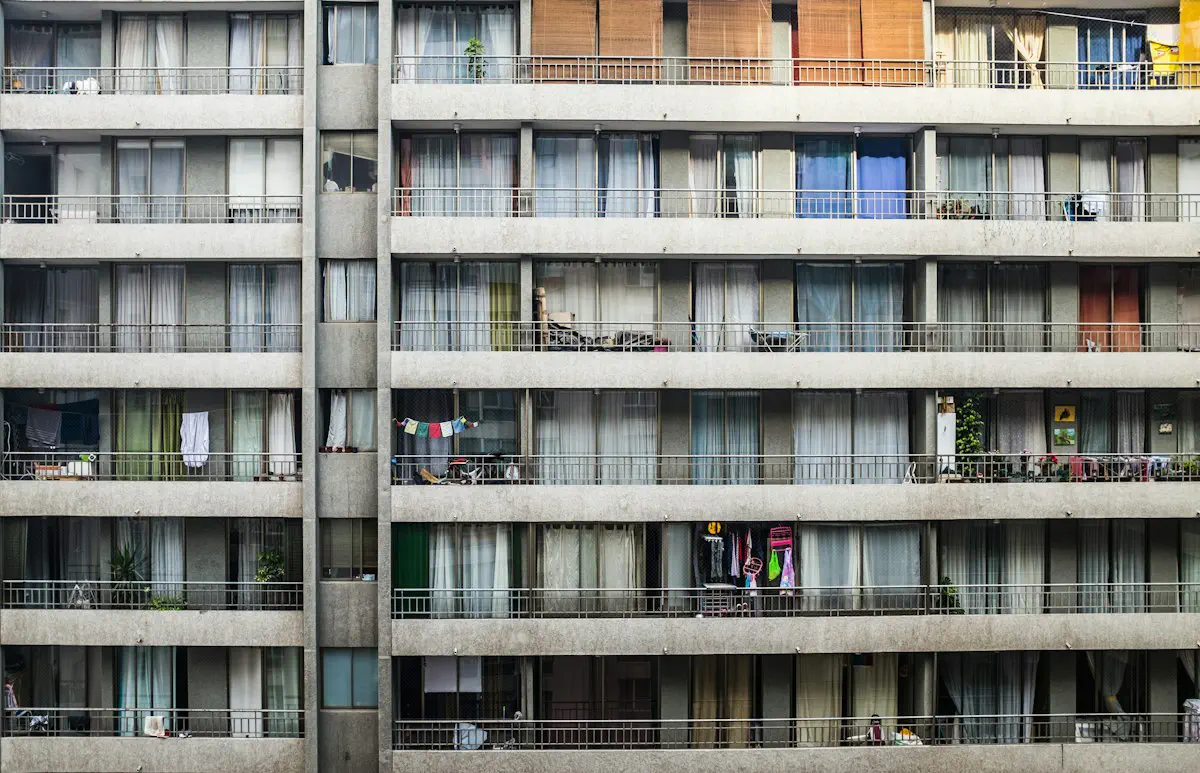
Noise is the one defect a buyer agrees not to check. You note the year of the roof, you ask for the contingency fund, and you walk out of a twenty minute visit on a Tuesday afternoon with no idea what you will hear on a Thursday at 11 p.m. Yet noise can be checked: it has a physical cause, a building rule, a clause in the declaration of co-ownership, and a precise recourse in the Civil Code.
Airborne noise is voices, the television, music, the dog. The sound travels through the air, hits the partition between the two dwellings and passes partly through it. It also goes around it: through the junctions of wall and floor, through the adjoining walls, through an electrical outlet, through a ventilation grille.
Impact noise is footsteps, a chair being dragged, a dropped object. The energy goes straight into the structure, which vibrates and radiates the sound further away. That is why adding drywall to the ceiling so often gives a disappointing result: the source is not in the air, it is in the floor of the unit above you.
The distinction decides who does the work. Airborne noise is corrected mostly at your place, impact noise mostly at the other person’s.
Chapter I, Building, of the Code de construction du Québec is made up of the National Building Code and the Quebec amendments. The edition based on the 2015 NBC came into force on January 8, 2022, the one based on the 2020 NBC on April 17, 2025, with a transition period the Régie du bâtiment has extended since.
The Code offers two ways to comply. The sound transmission class, the indice de transmission du son (ITS), accounts only for direct paths, through the wall or the floor separating two dwellings, and it is acceptable only with compliant adjoining construction. The apparent sound transmission class, the indice de transmission du son apparent (ITSA), introduced with the 2015 edition of the NBC, accounts for direct and indirect paths, so for the junctions and the adjoining surfaces. A wall that performs excellently in a laboratory can give a mediocre result if the junctions are badly built.
The Code targets airborne sound. The Garantie de construction résidentielle technical sheet on article 9.11, approved by the Régie du bâtiment, says it plainly: ITS and ITSA characterize the attenuation of sound in air. Nothing equivalent protects you from the footsteps over your head.
The Code applies to the work, not to the existing building. A 1925 triplex converted to divided co-ownership was never built to separate two households acoustically, and converting it made it compliant with nothing.
I am not giving you the required numerical value here: it depends on the edition of the Code applicable to the building. Ask the Régie du bâtiment or an acoustical consultant.
This is the clause that causes the most quarrels in co-ownership, and almost nobody reads it before the offer.
Article 1053 of the Civil Code allows the constituting act to contain any agreement concerning the private portions, including a penal clause. Article 1063 adds that each co-owner has free use and enjoyment of their private portion, on the condition of observing the by-laws of the immovable and of not impairing the rights of the other co-owners or the destination of the immovable. Article 1057 makes those by-laws binding on a tenant or an occupant as soon as a copy is given to them.
In practice, many declarations require carpet over a minimum proportion of the floor, an acoustic membrane under any rigid covering, or written authorization from the board of directors. So a buyer who dreams of pulling up the carpet for hardwood does three things before signing: reads the clause, asks the syndicate in writing whether the project is allowed, and checks whether the floor in the unit above was approved.
The syndicate’s leverage is serious. Under article 1080, where a co-owner’s refusal to comply with the declaration causes serious and irreparable injury, the court may enjoin them to comply, and order the sale of their fraction if they violate the injunction. These documents deserve the same attention as condo fees and the contingency fund.
Three sources can be checked on a map, before the visit.
The road. The road noise management policy of the ministère des Transports et de la Mobilité durable, published in March 2025, sets the intervention threshold at 65 dBA Lden on the ground floor or the first floor for existing road infrastructure, and recognizes 55 dBA Lden as an acceptable level. The corrective approach covers only sensitive areas whose permit was issued before March 1998 and that count at least 10 dwelling units. Translation: a noise barrier is neither automatic nor fast.
The train. A rail corridor is visible on any map, and freight runs at night. The policy above covers the road network, not the rail. Vibration is a problem distinct from noise.
The plane. Transport Canada publishes a noise exposure forecast system, the NEF contours, around airports. Any level above 25 will very likely bother people, the department advises against new residential development beyond 30, and above 35 complaints are numerous.
These markers are part of the portrait of a sector, as on the page about Laval.
These five moves add to the first visit checklist and take ten minutes.
| Source | What helps | What it involves |
|---|---|---|
| Airborne, party wall | Independent framing, insulation, drywall on resilient channels | Lost space, outlets and baseboards to redo |
| Airborne, point leaks | Sealing the outlets, replacing the recessed fixtures | Light work, real effect |
| Airborne, windows | Higher performing glazing, ventilation reviewed | High cost, permit possible |
| Impact, floor above | Membrane under the neighbour’s floor covering | Depends on the neighbour and the declaration |
| Impact, ceiling | Ceiling decoupled from the structure | Lost height, partial result |
| Corridor | Solid door, weatherstripping | Often a common portion |
No official source lets me put a price on this work: have it estimated by two licensed contractors. And in co-ownership, as soon as it touches a common portion or the structure, article 1063 sends you back to the by-laws of the immovable.
Article 976 of the Civil Code is the basic rule: “Neighbours shall suffer the normal neighbourhood annoyances that are not beyond the limit of tolerance they owe each other, according to the nature or location of their land or local usage.” Noise does not open a recourse because it bothers you, but because it is abnormal in that context. Éducaloi specifies that the disturbance must be continuous or repetitive, and serious.
The municipal route. In Montreal, the noise by-law, R.R.V.M. c. B-3, applied by the boroughs, declares a nuisance any noise that exceeds the maximum set by ordinance or that is specifically prohibited. In the codification in force in Plateau-Mont-Royal, article 9 prohibits, when it is heard outside or in another premises, noise from sound devices, shouting and uproar, and musical instruments between 9 p.m. and 8 a.m., at all times if they are percussion or electric. The complaint goes through 311 or the neighbourhood police station. In Laval, by-law L-12084 governs nuisances: renovation work is tolerated on weekdays from 7 a.m. to 7 p.m. and on Saturdays from 9 a.m. to 5 p.m.
If you are a tenant. Article 1854 requires the lessor to provide you with peaceable enjoyment of the dwelling throughout the term of the lease, and article 1860 forbids a lessee from disturbing the normal enjoyment of the other lessees. Article 1861 allows you, after reporting the disturbance to the common lessor and if it persists, to obtain a rent reduction or the resiliation of the lease, and damages from the lessor unless he proves he acted with prudence and diligence. The Tribunal administratif du logement (Quebec’s rental board) wants evidence: a log with dates and times, a registered formal notice with a deadline, witnesses.
If you are a co-owner. The Tribunal administratif du logement has nothing to do with your file. You go through the syndicate, which enforces the declaration, and if needed through the injunction of article 1080. Against a neighbour your declaration does not bind, it is the ordinary court and article 976. That call belongs to your lawyer.
Does the seller have to tell me the neighbour is noisy? The Déclarations du vendeur, the seller’s declarations, cover what the seller knows about the immovable. Ask the question in writing, through your broker: complaints, formal notice, a file with the syndicate? How a problem discovered after the sale gets qualified is for a lawyer to say.
Can I install hardwood in my condo? That depends on the declaration of co-ownership, not on your taste. Read the floor covering clause and ask the board of directors for written authorization before your promise to purchase, not after.
Is a new building necessarily quieter? It is built under a code that now accounts for the indirect paths of sound, which is real progress. But that requirement targets airborne sound. Footstep noise depends on the floor your neighbour chooses.
Can the syndicate have a non-compliant floor removed? The court may enjoin a co-owner to comply with the declaration where the refusal causes serious and irreparable injury, and order the sale of the fraction if the injunction is violated. That is article 1080.
To go further, read what you are really buying in co-ownership and the pre-purchase inspection checklist.
Torn between two buildings, with noise part of the equation? Write to me: we will schedule the visits at the right hours and read the declaration together.

Residential Real Estate Broker · RE/MAX DU CARTIER INC.
Contact GeorgesNo Quebec law requires an owner to carry insurance. The lender almost always does. The result: an insurer saying no …

Two 1998 houses on the same Laval street. One has a roof redone in 2019 and windows replaced in 2015, the other …
A forty year old maple in the back yard sells a photograph. It does not push a price up by a percentage I could …