
Buyer's Guide
New Build or Resale in Quebec: What Actually Differs
A buyer compares two listings: a project home at $500,000 in a neighbourhood still being built, and a 1998 house at …
Buyer's Guide
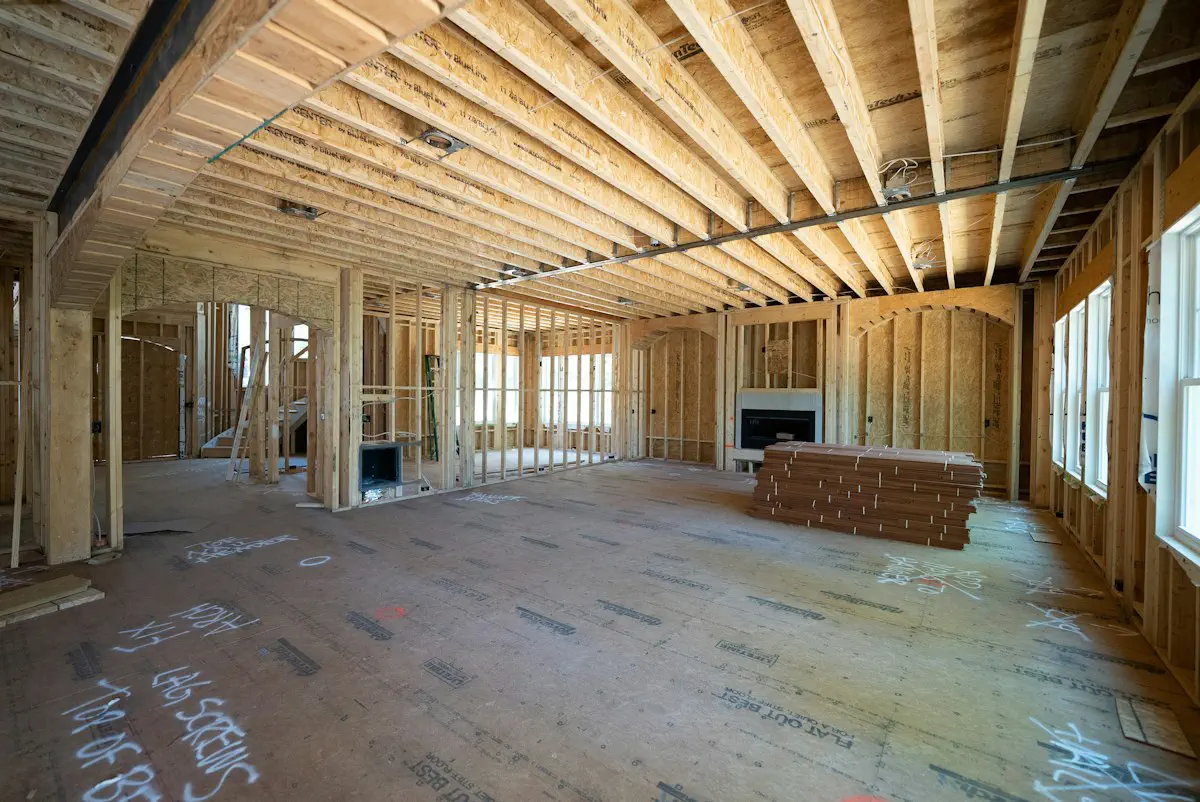
Behind every new home sold by an accredited builder in Quebec sits a mandatory warranty plan. It does not cover every building, it does not pay for everything, and it expires if you give notice too late. Here is its exact content, taken from the Règlement sur le plan de garantie des bâtiments résidentiels neufs (the regulation on the guarantee plan for new residential buildings) and from the documents published by Garantie de construction résidentielle (GCR), the organization that administers the plan.
Section 2 of the regulation (B-1.1, r. 8) gives the list. Outside divided co-ownership: the detached, semi-detached or row single-family house, and the multifamily building from the duplex up to the quintuplex. In divided co-ownership: the detached, semi-detached or row single-family house, and the multifamily building containing no more than 4 stacked private portions. Private parking and storage spaces do not count toward that total of four.
It is the exclusion list that produces the disappointments. GCR says it plainly: the condo tower with more than four stacked units is not covered, and neither is the conversion or renovation of a building, an addition, construction on existing foundations, a detached garage, or self-building. So the buyer of a condo on the eighth floor of a Montreal project has no GCR warranty at all. Ask in writing what protection the developer offers instead, and have it read before you sign.
The regulation also does not apply when the builder’s client is a non-profit organization, a cooperative or a housing bureau that receives, for that building, financial assistance from the Société d’habitation du Québec, the provincial housing corporation.
Section 17 is clear. Every covered building must be inspected before acceptance, jointly by the builder and you, using a pre-established checklist supplied by the administrator. You may be assisted by the person of your choice. GCR recommends a building professional: an architect, an engineer, a technologist or a building inspector.
What is at stake that day is simple. You and the builder identify what is left to finish and the apparent defects and poor workmanship to correct. You tick the “AVEC RÉSERVE” box (with reservations) on GCR’s inspection préréception form, the joint pre-acceptance inspection. You then agree on a time limit for that work, which cannot exceed 6 months. Photos and videos are recommended.
An apparent defect you do not note at that moment falls outside the warranty. The only exception provided in section 10: written notice within the 3 days following acceptance, and only as long as you have not moved in. That is the whole purpose of this inspection. It draws the line between what you accepted and what the builder still owes you. On choosing your inspector and what it costs, see what an inspection costs and when to do it.
Before acceptance, section 9 covers three things if the builder defaults: the deposits you paid, completion of the work, and relocation, moving and storage of your belongings if you cannot take acceptance on the agreed date.
After acceptance, section 10 organizes coverage by duration.
| What is covered | Period | Deadline to give written notice |
|---|---|---|
| Completion of the work | Noted at acceptance, or within 3 days if you have not moved in | Reasonable time following the agreed date for the end of the work |
| Apparent defects and poor workmanship | Same rule | Reasonable time following that same date |
| Non-apparent poor workmanship | Discovered within the year following acceptance | Reasonable time from discovery |
| Latent defects | Discovered within the 3 years following acceptance | Reasonable time from discovery |
| Design, construction and workmanship defects, soil defects | Appearing within the 5 years following the end of the work | Reasonable time from discovery, occurrence or first significant manifestation |
The words matter. For GCR, poor workmanship, the malfaçon, is work badly executed, of minor importance, that compromises neither the durability of the building nor the safety of its occupants. A latent defect, the vice caché, is a defect not apparent on visual examination, existing before acceptance, unknown to you at that moment, and serious enough to reduce the quality of the building. The five-year major defect is a serious defect, apparent or not, that can affect the durability of the building or the safety of its occupants.
The five-year warranty runs from the end of the work, not from acceptance. The two dates do not always coincide. Write down both.
| Item | Single-family house | Divided co-ownership |
|---|---|---|
| Deposits | $50,000 | $50,000 per fraction |
| Relocation, moving, storage | $6,000 | $6,000 per fraction |
| Completion and repair | Amount stated in the contract, not exceeding $300,000 | $200,000 per private portion, not exceeding $3,000,000 per building |
Relocation is reimbursed against receipts, with daily maximums for lodging and meals: $95 for one person, $125 for two, $160 for three, $190 for four people and more. For a multifamily building outside co-ownership, repair is capped at $200,000 multiplied by the number of dwellings.
The exclusions in section 12. Excluded, among others: defects in the materials and equipment you supplied and installed, repairs required by the normal behaviour of materials such as cracks and shrinkage, repairs made necessary by your own fault, by inadequate maintenance or by your own alterations, normal wear, force majeure, contaminated soil, parking and storage areas located outside the building, and any outdoor work such as the pool, landscaping, sidewalks, walkways and surface drainage. Negative grading of the lot, on the other hand, stays covered. Two of these exclusions, the normal behaviour of materials and force majeure, fall away if the builder failed to follow accepted practice or a standard in force.
That cap covers the building, not your total bill. Transfer duties, the notary and taxes come on top of the builder’s price: put numbers on them in the closing costs calculator before you settle your budget.
The regulation requires written notice to the builder, with a copy to the administrator, within a “reasonable time” from discovery. GCR specifies that case law sets that reasonable time at 6 months following discovery of the problem. A discovery made in January and reported only in October therefore starts out with a serious handicap, even if the defect itself is perfectly real.
Two habits prevent the worst. Give written notice as soon as you discover the problem, without waiting to find out whether the builder will cooperate, since that notice also serves to interrupt prescription. And for relocation tied to a delivery delay, the request must go out no later than 6 months after acceptance of the building, with the supporting receipts.
Section 19.1 provides a safety valve. A missed deadline cannot be raised against you if the builder or the administrator has itself failed in its own obligations, or if its representations led you to go past the deadline. That is an exception, not a plan.
The procedure in section 18 is a series of short deadlines.
Unhappy with the decision? You have 30 days from receiving it by registered mail to submit the dispute to arbitration. Within that same period the parties may instead agree to mediation before a mediator chosen from a list drawn up by the Minister of Labour. If mediation fails, the 30-day arbitration period starts again from the mediator’s notice.
When the beneficiary is the applicant, the costs of arbitration are borne by the administrator, unless you win on no aspect of your claim. The arbitrator may also award reimbursement of your reasonable and relevant expert fees if you win in whole or in part. The arbitration decision is final and without appeal.
Four checks fit on one page. Is the builder accredited with GCR and does it hold a licence from the Régie du bâtiment du Québec, the provincial building authority? Does the building fall within the categories in section 2? Have you received a duplicate of the duly signed warranty contract, knowing that section 138 releases you from your contractual obligations until you have it? And does the contract contain a clause that would reduce your rights, which section 140 prohibits, since a beneficiary cannot waive them by private agreement?
I ask for that duplicate of the warranty contract every single time before signing, because it is the document that carries the accreditation and licence numbers. Have the rest reviewed by your notary or your lawyer, as the article on the notary in Quebec, step by step points out.
On resale, the warranty follows the building. Sections 16 and 32 provide that it benefits every subsequent purchaser, for the term still left to run. A buyer taking over a two-year-old house therefore inherits the rest of the three-year protection on latent defects and the five-year protection on major defects. On the seller’s side, that relieves you of nothing: your seller’s declarations and the legal warranty of the Code civil du Québec keep applying in parallel.
My condo is on the fifth floor of a new building. Am I covered? No, if the building has more than four stacked private portions. Mandatory coverage stops there. Require from the developer a written description of the protection offered instead.
I found an infiltration 14 months after acceptance. Too late? Not necessarily. Non-apparent poor workmanship is limited to one year, but the latent defect covers three years and the major defect five years from the end of the work. What counts then is the seriousness of the defect and how quickly you give written notice.
The builder tells me the crack is normal. Is that true? The normal behaviour of materials is excluded, cracks and shrinkage included. But that exclusion does not apply if the builder failed to follow accepted practice or a standard in force. That is a question for an expert, not a matter of opinion.
Do I have to pay to open a file? Yes, $100 under the regulation, which is $114.98 taxes included at GCR. The fee is refunded to you if the decision goes your way, even partly, or if a settlement is reached.
To go further, read buying new construction in Quebec and eight real estate myths and the rule that contradicts each one.
A new project in view in Laval or Montreal? Write to me before the contrat préliminaire, the preliminary contract, is signed. I check the builder’s accreditation and prepare the inspection préréception with you.

Residential Real Estate Broker · RE/MAX DU CARTIER INC.
Contact GeorgesA buyer compares two listings: a project home at $500,000 in a neighbourhood still being built, and a 1998 house at …
On a Centris listing, the mention fits on one line: sold without legal warranty of quality, at the buyer’s …
You want to pull up the carpet and lay hardwood, replace the living room window, close in the balcony. In a house, …