Buyer's Guide
The Home Inspection Checklist, Item by Item
On inspection day, most buyers trail the inspector from room to room and nod. They leave with a report dozens of …
Buyer's Guide
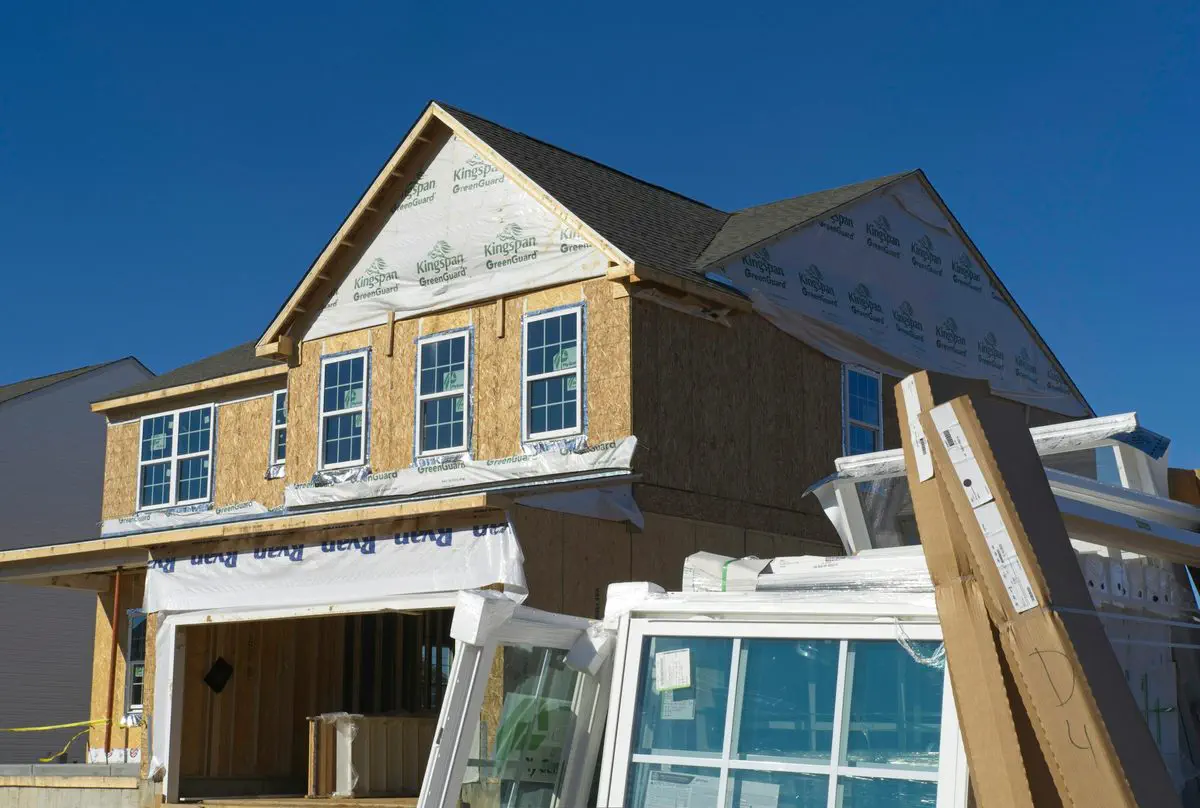
The brochure shows the finishes, rarely what protects you if the builder delivers late, delivers poorly or does not deliver at all. Those protections exist, with limits and deadlines. Here is what I check before a buyer signs.
The guarantee plan for new residential buildings is mandatory and administered by Garantie de construction résidentielle (GCR), an organization authorized by the Régie du bâtiment du Québec (RBQ), the provincial building authority. It covers single-family houses, duplexes to quintuplexes not held in co-ownership, and condos in buildings with no more than four units stacked on top of each other. A condo in a taller building is not covered: ask in writing what protection exists.
| What is covered | Condition |
|---|---|
| Deposits, up to $50,000, or completion of the work | Builder defaults before acceptance |
| Unfinished work, apparent defects and poor workmanship | Noted in writing at acceptance, or within 3 days if you have not moved in |
| Non-apparent poor workmanship | Discovered within 1 year of acceptance |
| Latent defects | Discovered within 3 years of acceptance |
| Design, construction or soil defects | Appearing within 5 years of the end of the work |
| Relocation, moving, storage, up to $6,000 | Late delivery, or home unlivable during corrective work |
For a house, repairs are covered up to the contract price, to a maximum of $300,000.
The limits. Exclusions include normal behaviour of materials (cracks, shrinkage), normal wear, lack of maintenance, your own modifications, force majeure, contaminated soil and anything outside the building, such as landscaping and an outdoor pool.
Every problem must be reported in writing to the builder, with a copy to GCR, within a reasonable time after you discover it. GCR considers six months reasonable for a non-urgent issue. Report too late and the claim can be refused.
Look up the licence in the RBQ licence holder registry: the builder needs subcategory 1.1.1 for houses and plexes, or 1.1.2 for condos. Then check its accreditation in GCR’s directory, which shows its record of inspections, claims and arbitrations.
Insist on the guarantee contract signed by the builder. Under the regulation, you are not bound by your obligations under the contract until that document is in your hands.
When a builder or developer sells a home to a person buying it to live in, the Civil Code requires a preliminary contract, with the right to withdraw within 10 days (article 1785). If the contract sets a withdrawal indemnity, it cannot exceed 0.5% of the agreed price (article 1786). For a condo, if the information memorandum (note d’information) is not given to you at signing, you can withdraw up to 10 days after receiving it. If you are buying to rent the property out, this right does not apply.
Use those 10 days: have the contract reviewed, compare inclusions with options, check the delivery date and, for a condo, whether the stated area is gross or net.
Before acceptance, you inspect the home with the builder, using GCR’s checklist. Bring someone with you: GCR recommends a building professional. Write down everything left to finish or fix, tick “avec réserve” (with reservations), take photos and check the extras you ordered. Look in particular at:
You agree on a date for that work, no more than six months later. An apparent defect not noted at acceptance, or within three days if you have not moved in, is not covered. In a condo, a professional chosen by the syndicate inspects the common portions. To choose an inspector, see what an inspection costs and when to do it.
If you cannot take possession on the agreed date, GCR can reimburse your relocation, moving and storage costs against receipts, with daily caps. Claim in writing from the builder, with a copy to GCR, no later than six months after acceptance. Force majeure is excluded.
For a condo, since August 14, 2025, your deposits must be fully protected, for example in a notary’s or lawyer’s trust account, and refunded if the unit is not delivered on the agreed date.
Renting with a 12-month lease? Notice of non-renewal must be given three to six months before the lease ends (articles 1942 and 1946 of the Civil Code), often before you have a firm date. Have a plan B.
Resale homes are exempt; new homes are not. Ask whether the advertised price includes the taxes and whether the rebates are assigned to the builder. In Quebec, Revenu Québec handles these rebates, GST included.
| Rebate | Amount | Based on price |
|---|---|---|
| GST new housing rebate | 36% of the GST, up to $6,300 | Reduced above $350,000, nil at $450,000 |
| QST new housing rebate | 50% of the QST, up to $9,975 | Reduced above $200,000, nil at $300,000 |
| First-time home buyers’ GST rebate | Up to 100% of the GST, up to $50,000 | Reduced above $1,000,000, nil at $1,500,000 |
The home must become your principal residence and you must be its first occupant (a relative can qualify for the regular rebates).
The first-time home buyers’ rebate is law: federal Bill C-4 received royal assent on March 12, 2026. It covers an agreement signed with the builder on or after March 20, 2025 and before 2031, for construction that starts before 2031 and is substantially completed and transferred before 2036. You must be at least 18, a Canadian citizen or permanent resident, and neither you nor your spouse or partner can have received it before or lived in a home either of you owned, in Canada or abroad, in the current year or the previous four. Quebec did not harmonize the QST.
The welcome tax applies to new homes too. Estimate it with the welcome tax calculator.
The information memorandum contains the budget forecast and a copy or summary of the declaration of co-ownership. The contingency fund share must equal 0.5% of the rebuilding value or follow a contingency fund study (article 1791).
The provisional fees trap. While the developer controls the syndicate, its budget sets your fees. If it underestimates by more than 10% what is actually spent in the first full fiscal year after the developer loses control, the developer repays the difference, but to the syndicate, and nothing below 10%. Compare with similar buildings and ask what is included.
Developers often use the same notary for every sale in a project, named in the preliminary contract. That notary is still bound to impartiality and must advise you too, but does not negotiate for you. Nothing stops you from having your own notary or lawyer review the contract during your 10 days.
For fees, ask for a written quote and add it to the closing costs calculator. See also the notary in Quebec, step by step.
The sales office works for the builder, whether it is staffed by employees or by a broker under contract with the builder. Since June 10, 2022, the same broker can no longer represent both buyer and seller in a residential transaction: the project’s broker cannot be yours.
My role: check the builder, read the contract during your 10 days, compare with resale in the area, prepare the pre-acceptance inspection and track the dates. Mention your broker on your first visit to the sales office, and settle their compensation in writing before you sign.
Found a new project you like? Reach out before you sign the preliminary contract, and we will read it together, clause by clause.

Residential Real Estate Broker · RE/MAX DU CARTIER INC.
Contact GeorgesOn inspection day, most buyers trail the inspector from room to room and nod. They leave with a report dozens of …

In Quebec, what people call a bidding war has a more precise name on the forms: a multiple promise to purchase …
A plex is two purchases in one: a home for you and a small rental business. It is neither a shortcut to wealth nor …