
Investment
Short Term Rentals in Quebec: The Rules
When you buy a property to rent out by the night, the profitability math comes last. What decides the project is …
Investment
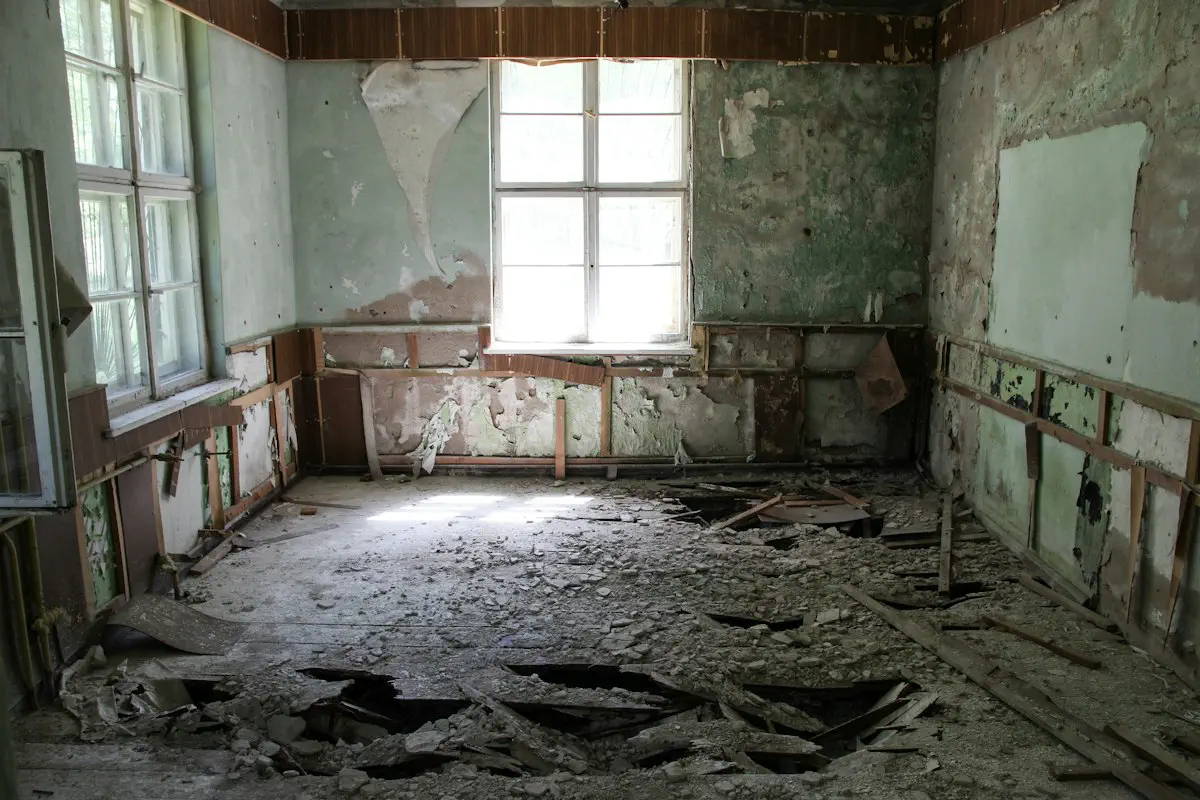
An abandoned house, a municipal auction, a price that looks ridiculously low: the tax sale gets passed around as a bargain. It is an enforcement procedure, and it leaves the former owner a full year to take the property back. Here is who sells, what gets paid on the spot, and when the successful bidder really becomes the owner.
Three regimes coexist, and they do not look alike.
In a city governed by the Cities and Towns Act. The treasurer draws up the statement of properties whose taxes remain unpaid, the council orders the clerk to sell them at public auction, and the clerk gives public notice within 30 days (sections 511 to 513). The notice appears twice in a newspaper circulating in the territory, the sale cannot take place until 15 days after the second publication, and the owner entered on the roll receives a notice by registered mail (sections 514 and 515).
In a municipality governed by the Municipal Code. It is not the municipality that sells, it is the MRC, through its clerk-treasurer. The law even sets the default date: the second Thursday of March, at 10 a.m., unless the MRC council decides otherwise by by-law (article 1026).
In Montreal. The city proceeds under sections 111 to 113 of Schedule C of its charter, which refer to sections 517 to 535 of the Cities and Towns Act. Before September 1, the treasurer prepares a notice to the last registered owner, with a formal demand to pay within 10 days. The list comes out in September, the auction follows in November: the 2026 sale is set for November 2, at 10 a.m., at Marché Bonsecours, with mandatory online pre-registration.
| Regime | Who sells | Date | The redemption is paid to |
|---|---|---|---|
| Cities and Towns Act | the city clerk | set by the council | the successful bidder |
| Municipal Code | the MRC’s clerk-treasurer | 2nd Thursday of March, 10 a.m. | the MRC |
| Montreal charter | the city clerk | set by the clerk | the successful bidder |
In Laval, the 2026 auction is set for November 19 at 10 a.m., in the municipal council chamber at 3131, boulevard Saint-Martin Ouest. Registration takes place on site the same day, between 8:30 a.m. and 9:45 a.m., without exception. Not every city holds a sale every year: Blainville holds its sale every two years.
The successful bidder must pay immediately, failing which the property is put back up for sale or the sale is adjourned (section 519 of the Cities and Towns Act, article 1034 of the Municipal Code). Since 2024, the council can provide for a payment period and remote bidding, but the decision must appear in the notice.
There is no minimum opening bid. On the other hand, if the adjudication price does not cover the taxes, interest and sale costs, the successful bidder pays the balance. Laval accepts bank drafts, bank money orders, certified cheques and cash, and refunds the surplus within 10 days.
The costs add up even before the auction. In Montreal, the tax sale notice adds $78 to the debt, and registering the prior notice in the Registre foncier (Quebec’s land register) adds 5% of the principal up to a maximum of $2,000.
Transfer duties are added on top: the Direction générale du registre foncier classifies this sale among transfers within the meaning of the Act respecting duties on transfers of immovables. The welcome tax calculator gives the order of magnitude, and the notary will confirm the base used. Blainville also specifies that GST and QST apply, except on residential buildings that are not new.
This is the point almost all the content in circulation skips over.
From the adjudication, the buyer is vested with the property and can take possession, but subject to the redemption that may be exercised within the following year, and without being able to remove the wood or the buildings during that year (section 521). For twelve months, the former owner or their legal representatives can buy the property back by paying the successful bidder the sale price, including the cost of the certificate of adjudication, with interest of 10% a year, a fraction of a year counting as a full year (section 531). The buyer cannot object.
Anyone can in fact exercise this redemption, but in the name of and for the sole benefit of the former owner (section 533). Under the Municipal Code, the redemption is paid to the MRC’s clerk-treasurer and not to the buyer (article 1057), and the MRC keeps 2.5% of the acquisition price for its fees (article 1059).
The final deed of sale only comes afterwards. When the one year period expires, the successful bidder is entitled to it on presenting the certificate of adjudication and proof of payment of the municipal and school taxes that fell due in the meantime (section 525). Earlier than that, the consent of the owner and of the prior or hypothecary creditors is required, and they must be parties to the deed.
During that same year, the action to annul the sale is prescribed by twelve months from the adjudication (section 530). Since 2024, section 534.1 allows the successful bidder to claim the cost of necessary repairs, with 10% interest, and to retain possession until paid. That does not make a renovation prudent: Val-d’Or recommends sticking to the repairs essential to preserving the property while the period runs.
The sale is a title transferring ownership and it purges the property of every hypothec (sections 528 and 529). It does not purge the rest. Section 529 reserves in particular special taxes not yet due, constituted ground rents and school taxes or assessments.
The legal information sheet of the Direction générale du registre foncier is even clearer: the legal cancellation only covers immovable hypothecs, the prior notice of sale, the adjudication, the hypothec on rents and their accessory rights. Every other real or personal right is not extinguished by the sale. In concrete terms: servitudes follow the property. Val-d’Or puts it in black and white, the successful bidder takes the property with every servitude, active or passive, apparent or unapparent.
If the redemption is exercised, the former owner recovers their right subject to the prior claims and hypothecs that charged the property on the day of the sale, less what was paid through the distribution of the proceeds (section 532).
Blainville answers bluntly: no, it is not possible to visit the properties with buildings put up for sale, and it is an acquisition at the buyer’s risk, whose right of ownership is precarious. Val-d’Or states the same rule differently: the successful bidder accepts the property without warranty and at their own risk, in the condition it is in at the time of the adjudication.
So there are no Déclarations du vendeur, no pre-purchase inspection, no financing condition, no listing broker across the table from you. It is one notch further than an ordinary sale without legal warranty, and a regime distinct from the foreclosure, which goes through the court.
What can still be verified before the auction is read on paper: the index of immovables at the Registre foncier, the assessment roll, the zoning and the public notices. The municipal tax bill explains where the debt that leads to the sale comes from.
An empty house is not necessarily in tax arrears. Many belong to an estate that no one has settled, and the myth has it that the Public Curator deals with them. That is not the case.
When all known heirs have renounced, or six months after the death when no heir is known or claims the succession, the State is seised of it (article 697 of the Code civil). That seisin is exercised by the Minister of Revenue (article 698), who acts as liquidator, draws up an inventory and publishes a notice in the Gazette officielle du Québec (article 699). An heir who establishes their capacity has 10 years to recover the amounts (article 701).
The Unclaimed Property Act makes the property traceable: for any immovable entrusted to its administration, the Minister must publish their capacity as administrator in the Registre foncier (section 17), and keeps a public register of such property (section 18). If you are inheriting rather than buying, the sequence is described in inheriting property in Quebec.
Every municipality must keep in force a by-law on the occupancy and maintenance of buildings (section 145.41 of the Act respecting land use planning and development). In case of dilapidation, it sends a written notice of work; if the work is not done, the Superior Court can authorize the city to carry it out and claim the cost, secured by a legal hypothec.
The council can then require the registration of a notice of deterioration in the Registre foncier, and it must publish the list of those properties on its website (sections 145.41.1 and 145.41.4). Sixty days after registration, if nothing has been done, the municipality can acquire the property by agreement or by expropriation when it has been vacant for the period set by by-law, when its condition presents a risk, or when it is a heritage property (section 145.41.5). An abandoned property can therefore change hands without going through an auction.
The trap for a buyer is in section 145.41.6: the fine for a repeat offence, whose maximum can reach $250,000, can be imposed regardless of a change of owner if the notice of deterioration was registered before the acquisition. The previous owner’s fault follows you.
In Montreal, registering a vacant building has been mandatory since January 1, 2026: $275 including the placard to be posted in plain view, annual renewal of $150, revocation at no charge. In Laval, by-law L-12950 does not target all buildings, but about 2,600 properties of heritage interest. Among other things, it requires the main water supply to be shut off in a vacant building. Fines range from $500 to $1,000 for a natural person, up to $125,000 for a repeat offence, and each day counts as a separate offence.
Do you buy below market value? No official source allows that claim. There is no minimum opening bid, but nothing caps the bidding either. The city announces the amount owed, not a discount.
Can I renovate during the redemption year? Section 521 prohibits you from removing the wood or the buildings. Since 2024, you can claim the cost of necessary repairs with 10% interest, but that reimbursement is the subject of a separate recourse.
Will my lender finance this? The price is payable immediately and the title remains precarious for a year. No source publishes a lender policy on this case: the question goes to a mortgage broker before the auction, not after.
Is it a good first purchase? No, and I say so without nuance: paying cash, without a visit, without a warranty, with a title that can be revoked for a year, is not an entry point into ownership. It is an operation for someone who can tie up the money for twelve months and absorb the loss.
To go further, read property taxes in Montreal and Laval and buying a foreclosure in Quebec.
A property on a tax sale list has caught your eye? Write to me: we read the index at the Registre foncier and the conditions of sale together before you make the trip.

Residential Real Estate Broker · RE/MAX DU CARTIER INC.
Contact GeorgesWhen you buy a property to rent out by the night, the profitability math comes last. What decides the project is …

The math looks simple: a well located lot, a building at the end of its life, a new house in its place. Except that …
You visit a 4 1/2 in the Plateau, listed $80,000 below a comparable condo two streets away. The listing says …