
Practical Guide
Home Generator in Quebec: The Rules
After a two day outage, the questions always come in the same order: how much does a generator cost, and does …
Practical Guide
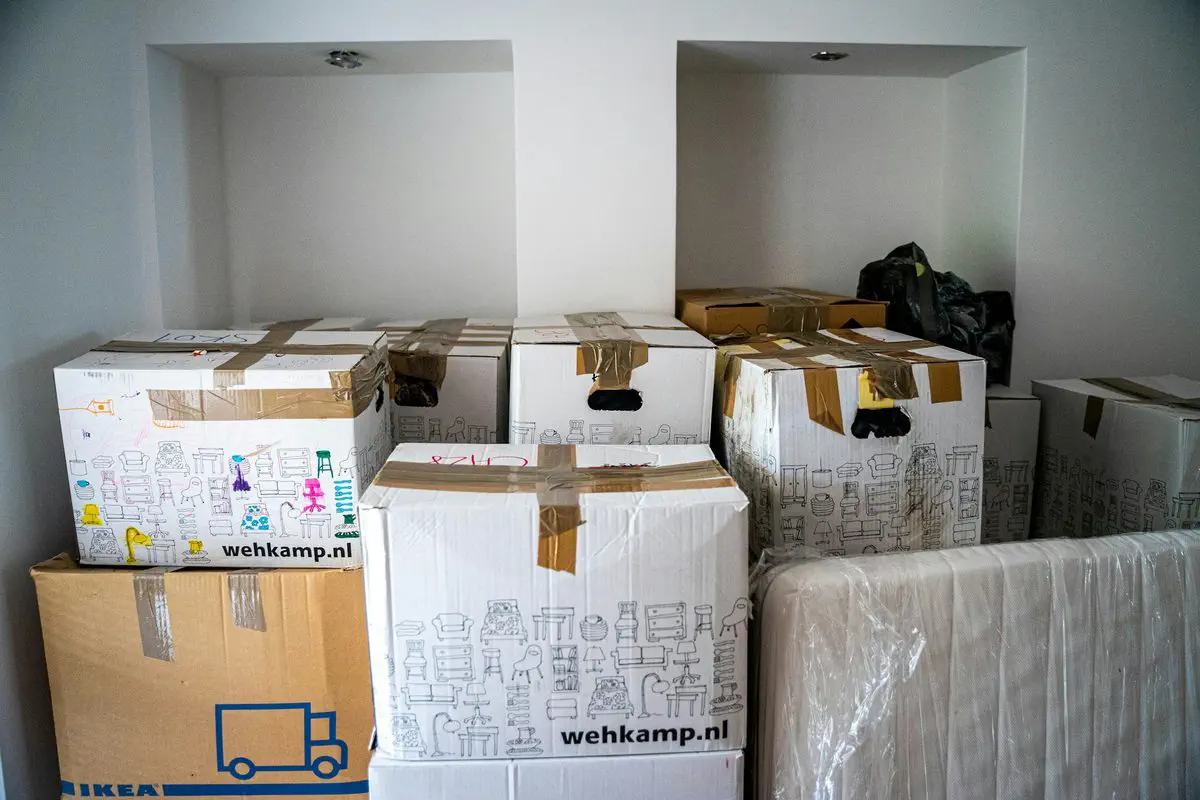
A move in Quebec is not just about boxes. It is a sequence of notices, legal deadlines and accounts to transfer, most of it planned months ahead. Here is the checklist to work through, organized by deadline, with every rule verified against the Tribunal administratif du logement, the Quebec government, Hydro-Quebec, Montreal and Laval.
Most residential leases in Quebec end on June 30. That is what makes July 1 the day thousands of households change address at the same time: movers, rental trucks and parking space are all scarce in the same week. Book your mover as soon as the possession date is confirmed, not when the boxes are packed. And if the date is negotiable, avoid the last week of June entirely.
If you are leaving a rented apartment, this is where everything is decided. A tenant who does not renew a lease must send the landlord a written notice, within the delays set by law.
| Type of lease | Notice period |
|---|---|
| Fixed term of 12 months or more | 3 to 6 months before the lease ends |
| Fixed term under 12 months | 1 to 2 months before the lease ends |
| Indeterminate term | 1 to 2 months before the desired end of the lease |
| Room | 10 to 20 days before the lease ends |
A July 1 to June 30 lease therefore has to be ended between January 1 and March 31. If you receive a rent increase notice, you have one month from receiving it to answer that you are leaving. Keep proof of delivery.
If you are leaving mid lease, assigning the lease is the cleanest route. You send the landlord a written notice with the assignee’s name, address and the intended assignment date. The landlord has 15 days to answer; no answer means consent. A refusal for serious grounds keeps the lease alive; any other refusal terminates it on the assignment date you named. The assignment must be free: you cannot charge the assignee anything, though the landlord may ask to be reimbursed for reasonable costs such as a credit check.
Same month: book the mover and confirm your notary.
The Quebec change of address service sends your new address in one step to seven departments and bodies: the CNESST, Elections Quebec, the ministere de l’Emploi et de la Solidarite sociale, the RAMQ, Retraite Quebec, Revenu Quebec and the SAAQ.
What it does not cover: the Commission de la construction du Quebec, the Curateur public, Epargne Placements Quebec, student financial assistance, which must be told within 30 days, the Quebec Parental Insurance Plan, crime victim compensation, and hunting and trapping certificates. Ottawa is not covered either: the Canada Revenue Agency and Service Canada are separate, as are your bank, your employer and your insurers. The SAAQ gives you 30 days to report the new address, and failing to do so can bring a fine.
Hydro-Quebec. The address change is free in your Customer Space; by phone it costs 25 $ plus taxes. Do it as soon as the date is known. You pick the switchover date yourself, and Hydro-Quebec can email you a reminder about a week before the move.
Internet and TV. The installation appointment is what fails, especially the week of July 1. Ask for the switch one or two days before possession, not on the day itself.
Canada Post. Mail forwarding redirects your mail to the new address for 4 or 12 months, up to a maximum of 12 months. It is a safety net, not an address change.
Home insurance. Your lender requires proof of insurance before releasing funds, and the policy has to take effect the day the deed of sale is signed. The notary checks that the building is insured against fire and other risks, that the mortgage creditor is named on the policy and that it carries the standard mortgage clause. Get it the day before to avoid a postponed signing.
School. If your child changes schools, register at the school service centre covering the new address. Mid year, first confirm with that centre that a spot is available, then notify the old one. If the child stays at the same school, a change of address notice is enough. Kindergarten registration at 4 or 5 usually runs from January to March. The school sector also affects resale value: see what it does to prices.
Parking the truck in Montreal. Each borough issues its own temporary public domain occupancy permit. It is free in some, Ville-Marie for instance, and chargeable in others: from 43 $ in Lachine, 51 $ before taxes in Cote-des-Neiges and Notre-Dame-de-Grace, 60 $ in Le Plateau-Mont-Royal. Issuing takes 24 hours to 5 business days. If the street has parking meters, bagging them and the lost revenue are billed separately, and no parking signs must be rented and installed 12 to 14 hours ahead. In Laval, request a sticker if your new street is reserved for residents, and check the truck route map: several streets are closed to heavy vehicles.
Bulky waste. In Montreal, ecocentres accept up to 12 m3 of construction debris and upholstered bulky items free each year, then 31 $ per cubic metre, with a maximum of 15 visits. Bring proof of residence: a tax bill, a home insurance certificate or a recent utility bill. Asbestos and household garbage are refused. In Laval, the ecocentre is free for residents on proof of residence, and some bulky items are picked up on your sector’s collection calendar.
Re read the contract and confirm the time with the mover. Unplug the fridge. Photograph your important furniture: if something is broken or lost, the proof is far easier to make. Confirm with the notary the signing time and the exact amount you have to bring.
Moving rates are not regulated: they vary with volume, floor, elevator access and above all the date. What protects you is the contract. The Office de la protection du consommateur recommends a written estimate, two or three quotes to compare, and civil liability coverage of at least one million dollars on the mover’s side. The contract has to name the pickup and delivery addresses, the planned date and time, the agreed price or hourly rate, and the total amount payable.
For a deal made by phone or online, the written contract must be given to you within 15 days. There is no 10 day cancellation window, except for the remedies provided for distance contracts, for example if the mover does not send you that contract in time or leaves out mandatory information: the Office de la protection du consommateur explains them. Avoid large deposits, and be wary of a mover who demands cash with no contract: with no paperwork and no payment trail, an inflated price on arrival or a broken piece of furniture becomes almost impossible to contest. A mover cannot charge more than the price written in the contract.
See also the ownership costs people forget and the closing cost calculator.
Planning a purchase in Montreal or Laval and want the possession date to fit the rest? Write to me and we will build the timeline together.

Residential Real Estate Broker · RE/MAX DU CARTIER INC.
Contact GeorgesAfter a two day outage, the questions always come in the same order: how much does a generator cost, and does …

Plenty of buyers arrive with a ready made sentence: this street is in a good school zone, so the value will follow. …

It is the most predictable unpleasant surprise in Quebec real estate. You signed at the notary, you moved in, …