
Real Estate 101
Renovating a Condo in Quebec: The Limit
You want to pull up the carpet and lay hardwood, replace the living room window, close in the balcony. In a house, …
Real Estate 101
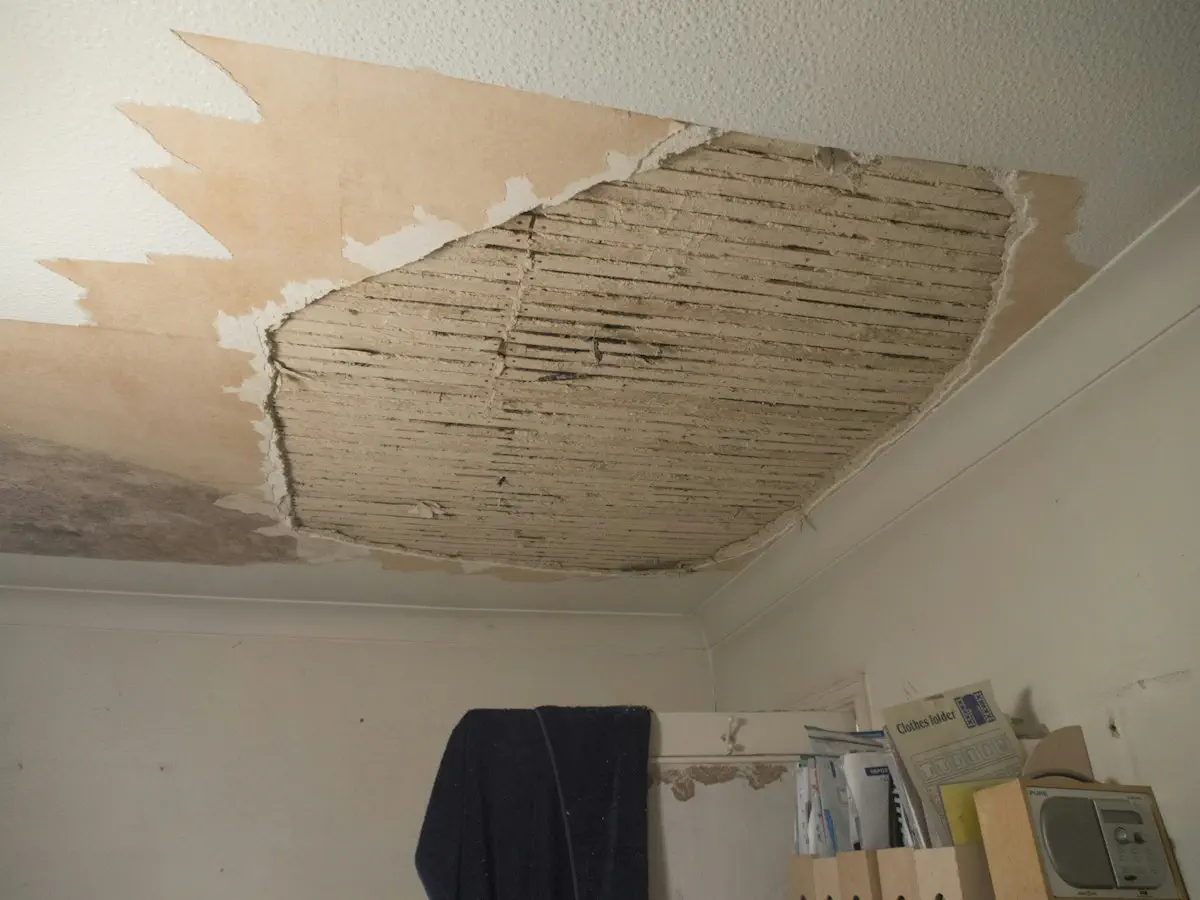
The water arrives in the spring, in a finished basement bought the previous fall. The first reflex is to call a contractor and have it repaired. That is often the exact move that kills the recourse. Before any work, there are four conditions to verify and one letter to send.
Article 1726 of the Civil Code of Québec sets the rule. The seller warrants that the property and its accessories are, at the time of the sale, free of latent defects, vices cachés, which render it unfit for the use for which it was intended, or which so diminish its usefulness that the buyer would not have bought it, or would not have paid so high a price, had he been aware of them. The second paragraph excludes two things: a latent defect already known to the buyer, and an apparent defect.
The OACIQ draws four characteristics from this, and they are cumulative. The defect existed at the time of purchase. It was unknown to the buyer. It was not apparent. It is serious enough that, had he known of it, the buyer probably would not have bought, or would have asked for a reduction in price. One condition missing, and the file collapses.
| Condition | What it requires | What defeats it |
|---|---|---|
| Hidden | Nothing reveals it on a serious examination | A visible trace on the day of the visit |
| Serious | It changes the price or the decision to buy | Normal wear, deferred maintenance |
| Prior | It already existed at signing | A breakdown that happened after the sale |
| Unknown | The buyer was unaware of it | A defect listed in the Declarations by the seller |
One point surprises sellers: the OACIQ writes that the fact the seller is unaware of the defect, or that the defect only shows up after the sale, does nothing to reduce the warranty. One clean exception remains, article 1731: a sale made under judicial authority gives rise to no warranty of quality.
An apparent defect, under article 1726, is one that can be discovered by a prudent and diligent buyer without the need to resort to an expert. Éducaloi draws the consequence: the law does not oblige you to hire an inspector, it obliges you to act with prudence, and not having an inspection done, or not having it done in a prudent and diligent manner, amounts to accepting the property with every defect that could have been detected.
The inspection is visual. The inspector does not open up walls. But he must draw your attention to anything that could justify a more thorough inspection, and it is that sentence in the report that decides the file later: if it is there and you did not follow up on it, the defect was flagged.
The OACIQ imposes four requirements on the professional a broker may recommend to you: professional liability insurance covering faults, errors or omissions, a recognized service agreement, a recognized standard of practice, and a written report. On the Régie du bâtiment du Québec certificate, be precise: the RBQ has been issuing it since 1 October 2024, and it will become mandatory for all inspectors on 1 October 2027. In 2026, an uncertified inspector is still practising legally. The rest is in pre-purchase inspection in Quebec: what it costs and when to do it.
Éducaloi defines the defect as a significant flaw that reduces the quality of the property and prevents the owner from using or enjoying it normally. Then it sets the real test: you have a recourse if the defect is serious to the point that you would have demanded a lower price had you known. That is a test on your decision, not on the size of the invoice. A defect that makes a basement uninhabitable passes it. A window at the end of its life on a 1975 house does not, because predictable wear is not a defect. No official source sets a minimum dollar amount, and be wary of anyone who quotes you one.
This is the most contested condition, because the burden of proof sits on you. Only one presumption exists in the Code, and it is narrow. Article 1729 applies to a sale by a professional seller: the existence of the defect at the time of the sale is presumed where the property malfunctions or deteriorates prematurely compared with identical property or property of the same type, unless the defect is due to improper use by the buyer.
Your seller still has to be one. Éducaloi puts in that category the individual who earns income from selling immovables on a regular basis, and the one who built the building in order to sell it. Not professional: the individual selling his own house, the person who sells immovables occasionally, the lender selling a foreclosure, and the liquidator of a succession.
In front of a private seller, then, nothing is presumed. Anteriority has to be demonstrated: the age of a crack, the nature of a stain, the date of an installation. That is a building expert’s work, and his report is the centrepiece of the file. No official source supports the claim that a defect appearing three or six months after the sale would be presumed to predate it.
Article 1739 is short and it decides everything. A buyer who ascertains that the property is defective must give notice in writing to the seller within a reasonable time after discovering it. Where the defect appears gradually, that time runs from the day the buyer could have suspected its seriousness and extent. One case is reserved: the seller may not invoke late notice if he knew of the defect or could not have been unaware of it.
How long is reasonable? Éducaloi answers that a reasonable time is assessed according to the circumstances, that you have to count the time needed to identify and measure the seriousness of the defect, and that generally a period of 6 months to a year will be considered reasonable, exceptionally longer where the defect shows up seasonally. That is room to get an expert opinion, not room to hesitate.
And here is the recurring mistake. Éducaloi is explicit: if you do not want to bear the cost of the work, do not start the repairs at your own expense. The seller must have the opportunity to verify the existence and seriousness of the defect, to see the damage, and to repair or replace. A basement redone before you wrote to the seller is destroyed evidence. One exception only: urgent repairs, where the defect is dangerous or risks seriously damaging the building or causing its loss.
You can also send a mise en demeure, a formal demand letter, rather than a simple notice. It contains the description of the defect, your demands, your conditions and the deadline to reply, and it is the prerequisite to a lawsuit. Note what your broker cannot do here: the OACIQ forbids him to give a legal opinion, on deadlines for example, and to draft a mise en demeure.
Éducaloi lists what the warranty can obtain depending on the situation: a reduction in price, reimbursement of work done or needed to remedy the defect, compensation for damage suffered in certain circumstances, or cancellation of the sale with return of the property and refund of the price paid.
Damages have their own article. Article 1728 provides that if the seller knew of the defect or could not have been unaware of it, he is bound, in addition to restoring the price, to make reparation for the injury suffered. His knowledge does not create the warranty, then, it enlarges the bill. To put a number on a price reduction, you need a value reference before subtracting the cost of the work: the property value estimator gives the starting point, the contractor gives the rest.
One last element is checked in the title. The OACIQ points out that an earlier sale made at the buyer’s own risk and peril breaks the chain through which the warranties are passed on: from that point, they are reset. Your recourse against previous owners therefore depends on the earlier deeds, and one sale without legal warranty anywhere in that chain is enough to end it.
Article 2925 sets at three years the prescription of a personal action whose period is not otherwise determined, and Éducaloi specifies the starting point for a vice caché: three years from the discovery of the defect, and not from the date of purchase. Article 2926 adds that where the injury appears gradually or later on, the period runs from the day the injury first appears. Those three years do not replace the notice under article 1739: they are two clocks, and the short one is the one that loses files.
The Small Claims Court (Cour des petites créances) hears claims of $15,000 or less, interest excluded, and Éducaloi gives as an example a claim against the seller for the cost of the work for a latent defect. You act alone there, without a lawyer, and you can reduce your claim to $15,000 to get in even if the work costs $21,000. Free mediation is offered. Above that, you need a lawyer, and no official source lets me put forward an average cost.
I had an inspection done and the inspector saw nothing. Do I still have a recourse? Yes, in principle. Éducaloi points out that an inspection does not guarantee the absence of a defect. Reread the report, though: if it recommended a more thorough check that you did not carry out, that sentence will be held against your diligence.
Can I do the work and send the invoice to the seller? That is the riskiest scenario. Éducaloi asks you not to start the repairs at your own expense, because the seller must be able to verify the defect, see the damage and repair it himself. Only urgent repairs are an exception.
The defect comes from the owner before last. The warranty is passed along the chain of sales, but an earlier sale made at the buyer’s risk and peril breaks it, the OACIQ notes. Ask the notary to check the earlier deeds before choosing who you act against.
To go further, read seven failures that derail a transaction and walking away: seven red flags you can verify on paper.
A doubt about a defect discovered after your purchase in Laval or Montreal? Write to me. I will look at your Déclarations du vendeur and your inspection report, and point you to the right professional.

Residential Real Estate Broker · RE/MAX DU CARTIER INC.
Contact GeorgesYou want to pull up the carpet and lay hardwood, replace the living room window, close in the balcony. In a house, …

A will written by hand can freeze an estate for weeks. Insurance sold by the lender repays the bank and pays the …
Two houses of the same age, on the same street in Laval, can show a gap of several hundred dollars per winter. It …