
Investment
Building a Real Estate Portfolio, Montreal
You buy the first building with your salary. You buy the second one with the rules. What makes a first plex …
Investment
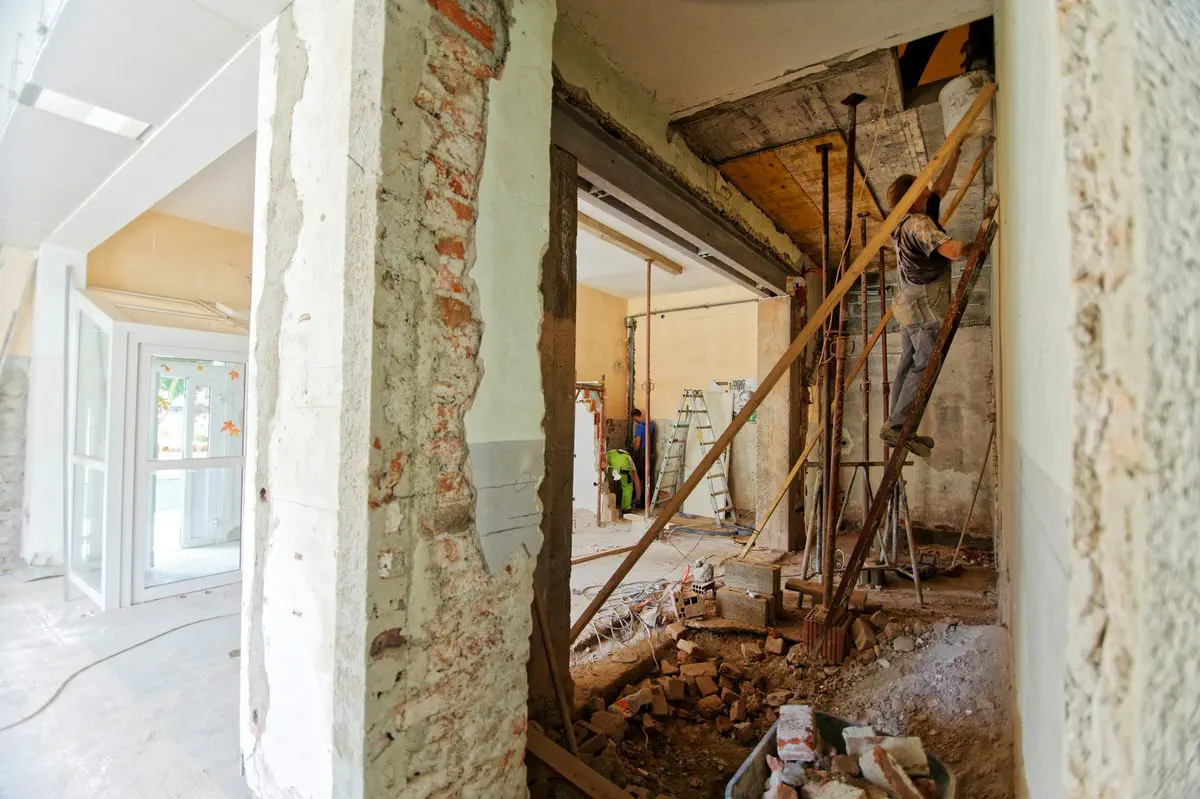
On television a flip takes three moves: buy low, renovate fast, sell high. No one shows you the tax line, no one shows you the GST, no one shows you the permit. Here is the complete calculation, with the tax rules and the rates checked at the source for 2026.
I am a broker, not a tax advisor. This is general information: have your project reviewed by an accountant before you sign anything.
For dispositions after 2022, the federal government applies a residential property flipping rule. The profit on a housing unit located in Canada, or on a right to acquire one, that you owned for fewer than 365 consecutive days is deemed to be business income. Not a capital gain.
Three consequences, all of them against you:
The rule has exceptions, and they are life events, not strategies: death, a person joining the household such as a birth, an adoption or an ageing parent, a marriage or common-law breakdown with at least 90 days of separation, a threat to personal safety, serious illness or disability, an eligible relocation for work, involuntary loss of employment, insolvency, and destruction or expropriation of the property. A job site that went wrong is not an exception.
Revenu Québec has harmonized: the same rule applies provincially since January 1, 2023, with the same list of exceptions.
This is the most expensive mistake I see. Past the 365-day mark the automatic rule stops applying, but the Canada Revenue Agency then looks at your intention at the time of purchase. Its position is plain: if you buy with the main intention of reselling, the profit is business income, and the principal residence exemption does not apply, because the intention was always to buy, improve and sell. The 365 days are a floor, not a free pass.
Reselling a previously occupied home is normally an exempt supply: no tax. But a residential complex that has been substantially renovated is given the same treatment as new construction. The sale becomes taxable, 5% GST and 9.975% QST on the sale price.
The test is the 90% test: generally, 90% or more of the interior of the existing building has to be removed or replaced. You do not have to replace the foundation, the interior and exterior supporting walls, the roof, the floors or the staircases to meet it. Only livable areas count, finished basements and finished attics included, never the garage or the crawl space.
On a $720,000 resale, crossing that line adds close to $108,000 of tax to the deal. You recover the tax paid on materials and labour through input tax credits and refunds, but the gap stays enormous, and you have to register for the GST and QST files. A buyer comparing your house “plus taxes” with an exempt resale next door will take the other one. A lot of projects break exactly there. An eligible first-time buyer can, however, recover the GST, not the QST: up to $50,000, in full up to a $1,000,000 price, then on a sliding scale up to $1,500,000.
The 2026 provincial brackets, indexed each year to Quebec’s consumer price index: 0.5% up to $62,900, 1% from $62,900 to $315,000, and 1.5% on the excess. A municipality may set a higher rate above $500,000, capped at 3%, except Montreal, which has broader powers.
What that means on a $720,000 property:
| City | 2026 bill |
|---|---|
| Montreal: 1.5% to $552,300, then 2% | $9,749 |
| Laval: 1.5% to $500,000, then 3% | $12,210.50 |
Above $552,300 Montreal keeps climbing in steps to 4%. Estimate your own case with the welcome tax calculator, and read the full welcome tax guide.
In Quebec, anyone who carries out or has construction work carried out for someone else must hold a contractor’s licence from the Régie du bâtiment. The owner-builder exemption is narrow: renovation, repair or maintenance of your own building, for less than $20,000, and it does not cover modification work such as moving a wall, nor electrical, gas or petroleum equipment work.
Working without a licence is an offence punishable by a fine. And an unlicensed worker gives you no licence security, which is precisely the bond that compensates a client who has suffered harm. Check every contractor in the RBQ register, keep written contracts and invoices. With no invoices, you have no expenses to deduct from the business income the tax authorities will assess.
Illustrative figures, to be replaced by yours. The rates are the 2026 ones. A Montreal house bought at $480,000 and resold at $720,000 after eight months.
| Item | Amount |
|---|---|
| Purchase price | $480,000 |
| Transfer duties, Montreal rates | $5,310.50 |
| Notary on the purchase | $1,800 |
| Pre-purchase inspection | $800 |
| Work, $120,000 plus 20% contingency | $144,000 |
| Renovation permit, Montreal | $1,176 |
| 8 months of carrying: interest, taxes, insurance, power | $19,200 |
| Broker’s remuneration at 5%, taxes included | $41,391 |
| Notary and location certificate on the sale | $1,500 |
| Total | $695,177.50 |
Profit before tax: $24,822.50. Taxed as business income, at a 40% combined marginal rate, about $14,900 is left. For eight months of construction, and already assuming a $240,000 gain that is anything but guaranteed.
The carrying line is the one people forget. It holds the interest on the loan for every month you own the building, the municipal and school taxes, which keep running whether anyone lives there or not, the insurance, which usually costs more on a vacant building under renovation than on an occupied home, and the electricity burned by the job site.
Three notes on that table. The permit follows the City of Montreal formula, cost of work divided by 1,000, multiplied by $9.80, with a minimum of $167.40 for a strictly residential building. The broker’s remuneration is set by no law: neither the Real Estate Brokerage Act nor the OACIQ imposes a rate, it is negotiated. Notary fees are not tariffed either, the Chambre des notaires has no fee schedule: they depend on the time, the complexity and the expertise, and the notary must tell you the approximate amount in advance. Ask for a written estimate, expect roughly $1,500 to $3,500. The rest of the costs are in the closing costs calculator and in the real cost of selling a home.
Going over budget. An open wall reveals aluminum wiring, vermiculite, a collapsed drain. A 20% contingency is not pessimism, it is the minimum.
The time it takes to resell. In August 2026, in the Montreal metropolitan area, APCIQ measured an average selling time of 42 days for single-family homes, 52 days for plexes and 62 days for condominiums, up 12 days year over year for that last category. Add the delay to the notarized deed: every extra month eats the margin and moves you dangerously close to the 365-day line.
A market that slows down. Your margin depends on a resale price you do not control. And remember that not every renovation creates value: a high-end kitchen in an entry-level sector does not come back.
Flipping is a business, not an investment. The tax authorities say so before I do. For most buyers, an income property held for the long run takes far less effort and far less paperwork.
Weighing a flip? Write to me and we will run the full calculation together, before you put in a promise to purchase.

Residential Real Estate Broker · RE/MAX DU CARTIER INC.
Contact GeorgesYou buy the first building with your salary. You buy the second one with the rules. What makes a first plex …
A triplex is not bought the way a house is. The asking price says nothing about real income, the rents in place …
Framing the question as a trade-off between price and square footage misses the point. A divided co-ownership and a …