
Finance
Mortgage Refinancing in Quebec: Is It Worth It?
Three requests land on the same desk under three different names: renew, transfer, refinance. Only one of those …
Finance
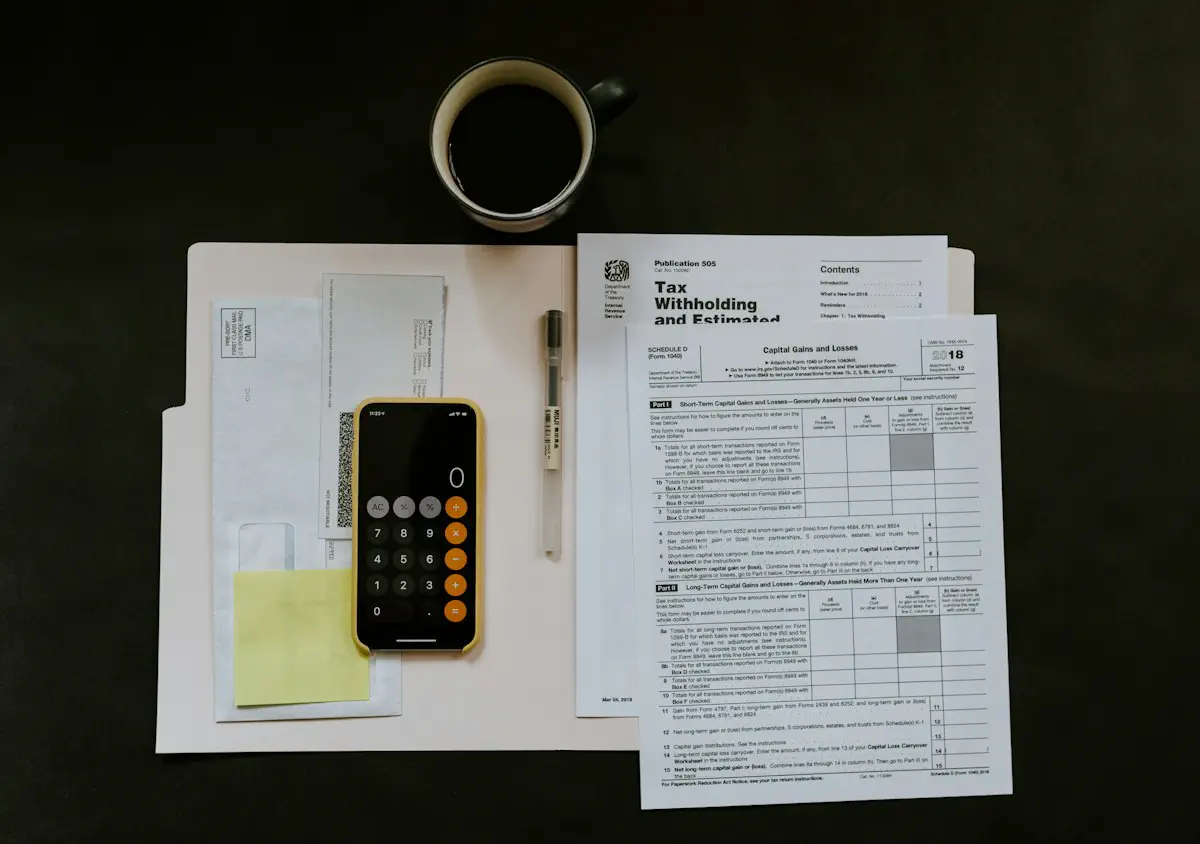
Selling your house tax free, deducting your mortgage interest, running a renovation through your expenses: three ideas that circulate, and only one of them holds. In Quebec you file two returns, and each administration has its own forms and its own penalties. Here is the dividing line between the house you live in and the building that pays you.
The exemption exists and it is generous. According to the Canada Revenue Agency, a property is your principal residence if it is a housing unit you own alone or with another person, that you, your current or former spouse, or one of your children lived in at some point during the year, and that you designate as such. The land counts up to half a hectare, that is 1.24 acres. Since 1982, only one principal residence can be designated per family unit, per year.
Reporting it, on the other hand, is not optional. For the 2016 and later tax years, the CRA grants the exemption only if you report the disposition and the designation on your income tax return: Schedule 3, and Form T2091(IND) as the case may be. A late designation costs the lesser of $8,000 or $100 per complete month of delay.
Quebec requires a second step, on its own form. You tick box 109 in Part A of Schedule G and you enclose Form TP-274. Failing to file the TP-274 brings a penalty of $100 per month, up to $5,000.
If part of the gain stays taxable, because the property was not your principal residence for every year you owned it, half of that gain goes into your income: the inclusion rate stays at 1/2 in the CRA’s capital gains guide.
The principle is short. An expense is deductible when it serves to earn income. The house you occupy produces none. So there is nothing to deduct: no mortgage interest, no principal repaid, no property taxes, no home insurance, and not the replacement of the windows or the furnace. The CRA in fact names these items in its list of non deductible expenses, even for an employee who works from home.
The American comparison comes up all the time. It is real: the IRS allows a deduction for the interest on a loan secured by the principal residence, within a debt limit of $750,000 for a home acquired after December 15, 2017. But the counterweight is paid at the sale: down there, the gain exclusion is capped at $250,000, or $500,000 for a couple filing jointly. Here, the exemption has no ceiling. The two systems cannot be cherry picked.
A salaried employee can deduct home office expenses, but only if the employer required work from home and if one of the two tests is met: having worked more than 50% of the time from that space for at least four consecutive weeks in the year, or using the space only to earn employment income and meeting clients there on a regular and continuous basis. You also need a Form T2200 completed and signed by the employer, and the detailed method is the only one available for 2023 and later years.
What a salaried employee can claim: electricity, heating, water, the share of those services in the condo fees, home internet access fees, maintenance and minor repairs, and rent if they are a tenant. A commission employee adds home insurance and property taxes. A salaried homeowner has no rent to allocate: the deduction is limited to the utilities and the maintenance, prorated to the area used.
In Quebec the mechanics are the same but the forms change: the TP-59 for employment expenses, together with the TP-64.3, the general employment conditions, which the employer has to complete. The Quebec test repeats the same threshold of more than 50% of the time, or exclusive use with regular and continuous meetings.
This is the distinction that decides whether your invoice cuts your tax this year or in twenty years. Revenu Québec puts it this way: current expenses serve to repair or maintain property that is complete in itself and do not provide a lasting benefit, whereas capital expenses serve to acquire property, add to it or improve it. The first come off rental income, the second are added to the capital cost and open the door to depreciation.
| Expense | Treatment | Why |
|---|---|---|
| Replacing all the windows | Current | Restores the original condition |
| Completely redoing the roof, the balconies, the plumbing | Current | Restoration, not improvement |
| Adding a fireplace or a garage | Capital | Increases the normal value |
| Repairing an old building before renting it out | Capital | Work tied to the acquisition |
| Transfer duties and legal fees on the purchase | Capital | Added to the cost of the property |
| New appliances | Capital | Separate property, not a part |
Two details new owners find out about late. If you do the work yourself, you deduct the cost of the materials, never the value of your labour. And the fees incurred to obtain the mortgage loan are deducted in equal portions over five years, not all at once.
The transfer duties do not vanish for all that: they raise the tax cost of the building and will reduce the gain on resale. Put a figure on the bill before the offer with the welcome tax calculator, then keep the receipt with the notarized deed.
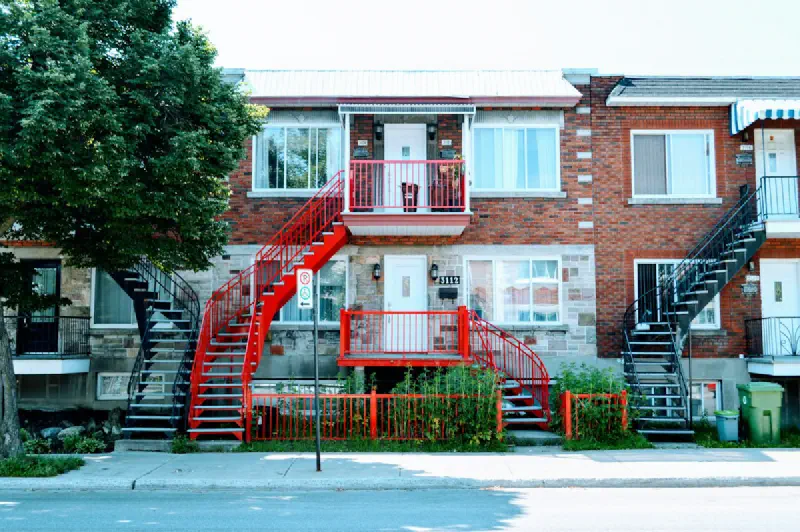
In an owner occupied duplex or triplex, the Revenu Québec rule comes in two steps. Costs relating only to the rented portion are deducted in full. Costs covering the whole building, taxes, insurance, roofing, are split between the rental portion and the personal portion on a reasonable basis of calculation, for example the area or the number of rooms occupied. Pick a method, write down the calculation, keep the same proration from one year to the next.
Renting one or two rooms to boarders does not make your house lose its principal residence status. On the other hand, you cannot claim capital cost allowance on the rented portion. CCA is optional in any case, and it can neither create nor increase a rental loss. On a plex you live in, claiming it is rarely a good idea: it is one of the moves that tip part of the building out of the exemption.
Special case: occasional room rental, during a festival for example, does not have to be included in your income if the rental period does not exceed 20 days in the year and you have no other room rental income. Income and expenses are reported on Form T776 federally and on the TP-128 in Quebec. For the non tax side of management, read what first time landlords need to know about rental management.
Every time the use of a property changes, the tax authorities consider that you sold it at fair market value and immediately bought it back for the same amount. A taxable gain can therefore appear without a cent changing hands. This is the case I see most often: a couple keeps the condo as a rental instead of selling it, and discovers the bill two years later.
For a partial change, the CRA does not trigger the deemed disposition if three conditions are met at the same time: the income producing use is ancillary to the main use as a residence, there is no structural change to the property, and no CCA is claimed on it. A home office or a rented room generally passes this test. A basement unit created with a separate entrance does not.
Two elections let you defer the deemed disposition. Subsection 45(2) covers the shift from personal use to rental use: you attach to your return for the year of the change a signed letter describing the property and asking that the subsection apply. Subsection 45(3) covers the opposite, a rental property returning to personal use, and it is impossible if CCA was deducted on the property after 1984. In both cases the property can be designated as a principal residence for up to four additional years, even without living in it, and you have to be resident in Canada during those years.
The Quebec point to remember. The election is made federally, and it then applies automatically to your Quebec return, under section 286.1 of the Taxation Act (Loi sur les impôts). Without an election filed with the CRA, no equivalent election is possible in Quebec. And if you convert your principal residence into property used to earn income, Revenu Québec asks for Form TP-274 with the return for the year of the change of use.
You do not have to attach supporting documents to your Quebec return, but you do have to keep them: a deduction can be denied if you are not able to produce them. Capital expense invoices serve instead to establish the cost of the property, and Revenu Québec can check them at the time of disposition, sometimes twenty years after the work.
The minimum to file per building: the notarized deed and the statement of adjustments, the transfer duties receipt, every renovation invoice marked current or capital, the leases and the RL-31 slips, the T2200 and the TP-64.3 if you are claiming an office, and a copy of any 45(2) or 45(3) election letter.
One last word, and it is a serious one: the rules above are general, and a single detail in your file can flip the result. Have your specific situation validated by an accountant before you file.
I am selling my house and the whole gain is exempt. Do I still have to report it? Yes, on both sides. The CRA grants the exemption only if the disposition and the designation appear on your return, on Schedule 3. Quebec requires box 109 of Schedule G and the TP-274. Forgetting costs $100 per month, up to $5,000 in Quebec.
Can I deduct my mortgage interest if I rent out the basement? You can deduct the portion relating to the rented part, calculated on a reasonable basis such as the area or the number of rooms. The personal portion stays non deductible.
I redid the kitchen in my rented unit. Current or capital? It depends on the result, not on the invoice. Putting the kitchen back to its original condition is a current expense. Replacing it with a better kitchen is an improvement, so a capital expense that is added to the cost.
I am moving and keeping my condo as a rental. What do I need to do right away? Have the property appraised as at the date of the change of use, and decide with your accountant whether you file the subsection 45(2) election with this year’s return. The election is not easily recovered, and Quebec follows the federal decision.
To go further, read Quebec first time buyer tax benefits and the honest guide to income plexes in Montreal and Laval.
Torn between keeping your property as a rental and selling it? Write to me. We go through your building’s numbers together, and I tell you when it is time to call the accountant.

Residential Real Estate Broker · RE/MAX DU CARTIER INC.
Contact GeorgesThree requests land on the same desk under three different names: renew, transfer, refinance. Only one of those …
You visit a 4 1/2 in the Plateau, listed $80,000 below a comparable condo two streets away. The listing says …

Almost everybody believes they have “home insurance.” Almost nobody knows whether the loss most likely …