
Practical Guide
Snow Removal and Owner Liability in Quebec
A delivery driver slips in your driveway. A sheet of ice breaks off your cornice and dents the car parked beside …
Practical Guide
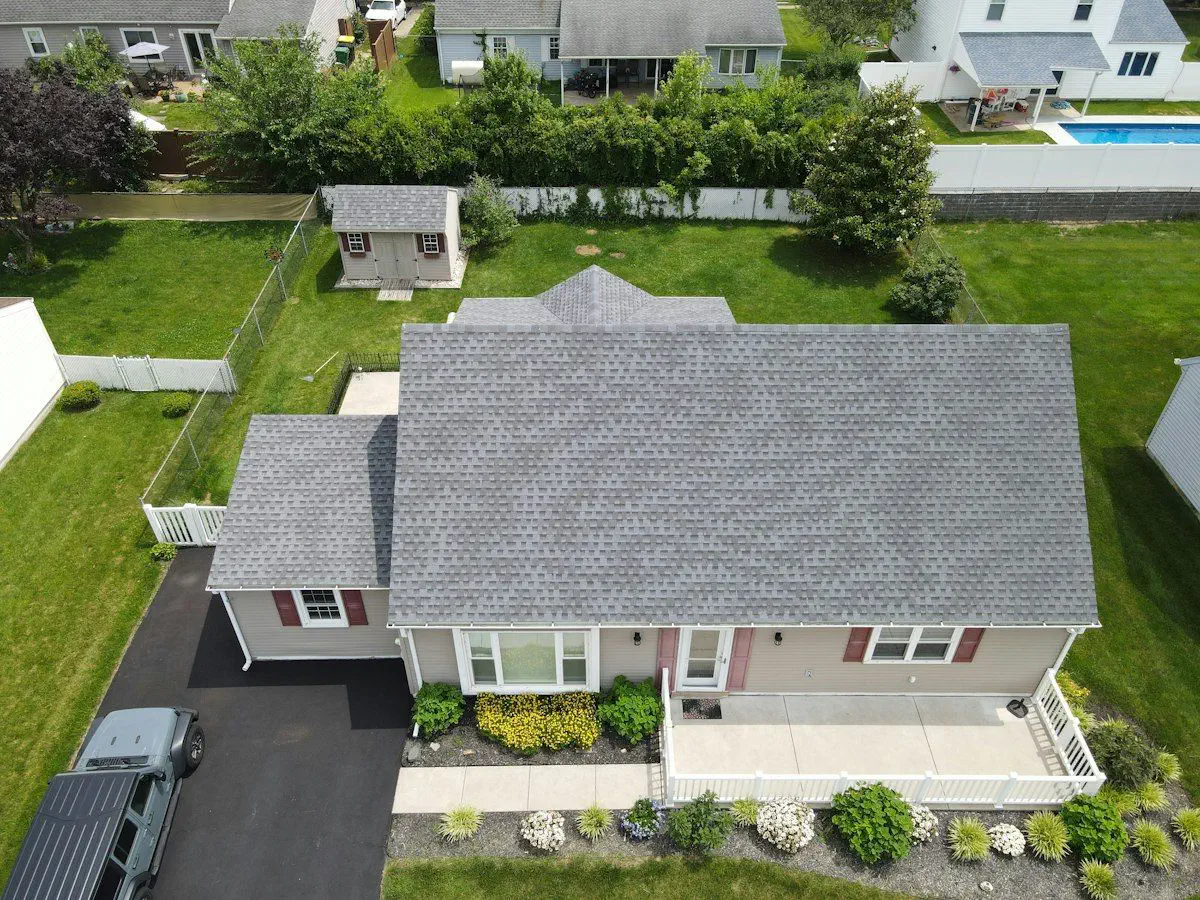
The rule is everywhere: set aside 1 to 3 % of your home’s value every year for maintenance. It gives you an amount. It never tells you which year the flat roof membrane gives out, or which morning the water heater empties itself into the basement. That is why careful owners still get caught. Here is the other method: a replacement calendar, component by component, with what the climate here changes on every line.
No Quebec or Canadian public body publishes that percentage. It circulates, it reassures, and it stays silent on the one question that costs money: the date.
The legislator did settle the matter in one specific case. Since August 14, 2025, the Quebec regulation on divided co-ownership requires syndicates to have a maintenance logbook drawn up and a contingency fund study produced, with three years and one day to get there. When Quebec wanted a reserve to be taken seriously, it did not impose a percentage: it imposed a dated inventory. The co-ownership side is covered in condo fees and the contingency fund.
The owner of a single family home has no comparable obligation, and nothing stops them from giving themselves the same tool. Here we are talking only about the building: the notary, the taxes, the insurance and the condo fees are handled in the hidden costs of homeownership.
The most complete source comes from the SCHL (Canada Mortgage and Housing Corporation). Its replacement planning manual contains an appendix drawn from a survey of building professionals across Canada, on the real service life, not the theoretical one, of more than 230 components.
Two caveats, which the SCHL states itself. The survey covered mid rise and high rise residential buildings, not bungalows. And the table “should not be substituted for informed decision making”: actual service life varies with design, installation, materials and maintenance.
| Component | Service life | Source |
|---|---|---|
| Asphalt shingles | about 20 years | SCHL, materials guide |
| Standing seam metal roof | about 40 years | SCHL, materials guide |
| Flat roof membrane, modified bitumen | 17 to 27 years, median 22 | SCHL, appendix F |
| Flat roof membrane, single ply | 14 to 23 years, median 19 | SCHL, appendix F |
| Metal flashing | 18 to 29 years, median 24 | SCHL, appendix F |
| Air source heat pump | 11 to 17 years, median 14 | SCHL, appendix F |
| Standard electric water heater | about 10 years | Hydro-Québec |
| Vinyl operable windows | 13 to 22 years, median 18 | SCHL, appendix F |
| Metal operable windows | 18 to 26 years, median 22 | SCHL, appendix F |
| Masonry cladding | 27 to 42 years, median 35 | SCHL, appendix F |
| Stucco cladding | 17 to 25 years, median 21 | SCHL, appendix F |
| Caulking | 8 to 13 years, median 11 | SCHL, appendix F |
Two lines are missing, and that is deliberate. The weeping tile and the asphalt driveway. No official source consulted publishes a service life for those two items in a single family home. What can be verified, on the other hand: the date of the last invoices and, for the weeping tile, a camera inspection recording that shows the whole run.
Freeze and thaw. Ouranos defines the event simply: the air temperature rises above and then falls back below 0 °C within 24 hours. In the extreme south of Quebec, between 1981 and 2010, those days clustered in October, November, April and May, at a rate of 5 to 25 days a month. Each cycle takes up the water that got into a crack, a joint or a bead of caulking, and puts it to work. That is why caulking is the shortest line in the table.
Snow and ice. The Régie du bâtiment du Québec (Quebec’s building authority) is blunt: the weight of ice combined with accumulated snow risks weakening roofs. It recommends leaving roof snow removal to specialized firms so the waterproofing membrane is not damaged, and it names symptoms visible from inside: cracks on walls, doors that stick.
Road salt. Quebec’s environmental management strategy for road salts puts it plainly: most de-icing salts are chloride based and, carried in water, they can penetrate the concrete cover and start corrosion. Your garage slab, your steps and the bottom of your foundation get a dose every winter, brought in by tires.
Water that stays. The Bureau d’assurance du Canada (Insurance Bureau of Canada) recommends cleaning gutters and downspouts at least once a year, extending downspouts at least six feet from basement walls, and keeping a grade that carries water away from the foundation. Three nearly free gestures that protect the most expensive lines in the table.
Hydro-Québec puts the service life of a standard two element water heater at about 10 years, and that of an ECOPEAK model at about 12 years.
It is the only component in the house whose end of life is both dated and almost always liquid. A roof gives you warning. A heat pump gives you warning. A tank in the basement gives you none: it perforates.
The Bureau d’assurance du Canada in fact lists the water heater in its prevention checklist, along with the electrical panel, the heating unit and the oil tank, to be raised above anticipated flood levels. In Quebec, insured catastrophic losses have averaged more than $877 million a year over the past five years.
The concrete step: find the nameplate, note the year of manufacture, put the replacement date in your calendar, and replace on the date rather than after the damage. In Montreal, flood protection work in a building of 1 to 5 dwellings is subsidized by RénoPlex, for example $600 per backwater valve installed under an existing slab.
On a new home. Section 12 of the Règlement sur le plan de garantie des bâtiments résidentiels neufs, the regulation governing the new home warranty plan, lists what is not covered. You will find there “repairs made necessary by a fault of the beneficiary, such as inadequate maintenance”, “deterioration resulting from normal wear and tear of the building” and “normal behaviour of materials such as cracking and shrinkage”. The same section excludes outdoor parking spaces, landscaping, sidewalks, walkways and the surface water drainage system of the lot. On a new home, the driveway and the grading are yours from day one.
On the insurance policy. You have to give your insurer every relevant piece of information and tell it promptly about any situation that increases the risk. Otherwise the consequences are the same as for a misrepresentation, and the insurer may adjust the premium or end the contract. A roof at the end of its life, an oil tank, a 15 year old water heater: these are facts, not details. Your damage insurance representative remains the only person who can tell you what your policy covers.
Hence the practical rule: keep the dated invoices. Nothing obliges the owner of a single family home to keep a maintenance logbook. It is still what separates a documented claim from a discussion.
The method fits in one line: for each component, the replacement cost divided by the number of years left. You add it up, and you set that amount aside every year.
The SCHL uses a reference cost of about $75 per square metre for asphalt shingles, close to $10,500 for a 140 square metre roof, with a normal service life of 20 years. A new roof: about $525 a year. The same roof at 15 years: about $2,100 a year for five years. The percentage does not see that difference. The calendar does.
The same example clarifies the choice of material. A prefinished standing seam metal roof costs about $120 per square metre, so about $16,800, but with 40 years of normal service life it calls for only one replacement over 60 years instead of two: about $33,600 against about $31,500 over the cycle. A much higher entry price, a comparable cost over the long run.
The SCHL specifies that these amounts are relative measures at the national scale and that costs vary with the local market. The method is sound; the figures you have to get in writing from contractors in your area. And the calculation starts from the value of the building to be replaced, not from the municipal assessment. Estimate your property’s value first, then work from there.
One last point, borrowed from the preventive maintenance guides of the Société d’habitation du Québec (Quebec’s public housing corporation): the annual preventive inspection has the explicit objective of reaching the service life of the components. The durations in the table are a ceiling, not a promise.
A seller acting in good faith does not have everything. They almost always have more than what they offer up on their own.
These documents turn the table above into a dated calendar for this particular house. What the inspector looks at, item by item and when to do the pre-purchase inspection complete the exercise.
Is 1 % of the value a year enough? Impossible to confirm: no public body publishes that percentage or validates it. On a recent house where everything is five years old, it will probably be too much. On a 1985 house whose roof, windows and weeping tile reach the end of their lives together, it will be far short.
My water heater is 11 years old and works perfectly. Do I have to change it? Hydro-Québec puts the service life of a standard two element model at around 10 years, and a working unit gives no signal before it perforates. Planned replacement costs the price of the unit. Emergency replacement costs the unit, plus the floor, plus the deductible.
How often does a weeping tile need replacing? No official source consulted publishes a service life for a Quebec single family home, and there is no question of inventing one. What can be verified is the current condition, by camera inspection, and the history of basement infiltration.
Does redoing the roof before selling come back in the price? Not automatically, and nobody can guarantee you a recovery percentage. What I see in the field: a roof at the end of its life gets negotiated, and it changes the answer some insurers give. What you recover and what you do not sorts that out.
To go further, read the hidden costs of homeownership and condo fees and the contingency fund.
Torn between repairing now and leaving the bill to the next owner? Write to me. We look at your replacement dates before we set a price.

Residential Real Estate Broker · RE/MAX DU CARTIER INC.
Contact GeorgesA delivery driver slips in your driveway. A sheet of ice breaks off your cornice and dents the car parked beside …

A wood fireplace is not a simple amenity. It is an appliance that gets declared to the city, an emission rate you …

A major renovation is not planned on the price of the cabinets. It is planned on two calendars: the one for the job …