
Buyer's Guide
The Real Cost of Buying Your First Home in Quebec
Everyone tells you what the house costs. Nobody tells you what buying it actually costs. The pattern repeats …
Buyer's Guide
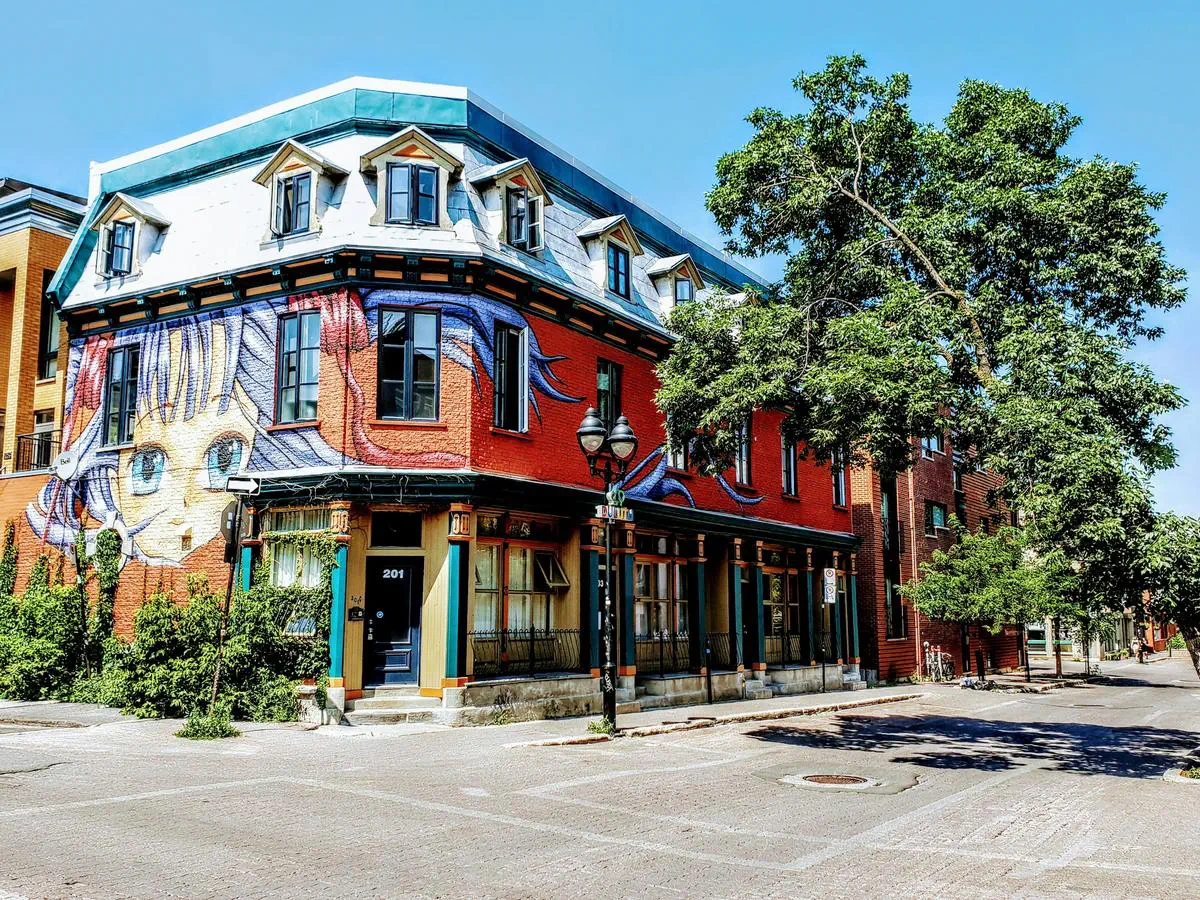
The word heritage covers everything and says almost nothing. A 1910 house with no legal status, a building cited by a municipality and a building classified by the minister are three completely different files: different authorizations, different timelines, and very different consequences if work was done without permission. Here is what actually changes, and where to verify each point yourself before you write an offer.
The Cultural Heritage Act sets out several statuses, and they are not equivalent.
A classified heritage immovable is classified by the Minister of Culture and Communications. This is the most demanding regime. Around a classified immovable, the minister can also set a protection area, which binds the immediate neighbours even when they carry no status of their own.
A cited heritage immovable is cited by a local municipality, an RCM or an Indigenous community, through a citation by-law. Control over the work then belongs to that municipality, not to the ministry.
A building inside a heritage site. The site may be declared by the government, classified by the minister, or cited by a municipality. Old Montreal and Mount Royal are declared heritage sites. Your building may carry no status of its own and still be regulated simply because it sits inside the perimeter.
A building that is merely old, or inventoried. This is the most common case. Since 2021, RCMs must produce and adopt an inventory of buildings built before 1940 that have heritage value, with a deadline set at April 1, 2026. Being in the inventory, the government specifies, does not create obligations under the Cultural Heritage Act. Municipal regulation, on the other hand, may well apply.
For a classified property, a building in a protection area, or a building in a classified or declared heritage site, you need authorization from the Ministry of Culture and Communications before acting. The list of covered acts is broad: altering, restoring, repairing, modifying, demolishing, moving, excavating, building, and even changing a sign. For the total demolition of a main building, the opinion of the Conseil du patrimoine culturel du Québec is mandatory, which lengthens the response time.
For a cited immovable or a cited heritage site, the control measures belong to the municipality or Indigenous community that issued the citation. The question goes to the permit counter, not to Quebec City.
In Montreal, another layer applies: the site planning and architectural integration programme, known as PIIA. It covers facade changes, extensions, new construction and signage in the designated sectors. The urban planning advisory committee reviews the project and makes a recommendation; the borough council approves or refuses and may impose conditions. The City states that processing a permit application with PIIA takes roughly two to four months, after which you still have to obtain the permits themselves. That delay gets planned, not improvised.
This is the first thing I check on a protected building. Carrying out work without the required authorization exposes the owner to a fine or to an order to restore the property, and the cost of that restoration is secured by a legal hypothec. Authorization after the fact exists, but the ministry describes it as exceptional.
Translated for a buyer: a window replaced, a cornice removed or brick painted over without authorization by the previous owner does not leave with him. Ask for the authorizations and permits, in writing, for every visible intervention.
The Répertoire du patrimoine culturel du Québec lists elements carrying a legal status and those appearing in inventories. Start there, then confirm with the municipality or the borough, because citation, PIIA and demolition by-laws are municipal. Three possible answers, three very different files: protected, inventoried, or simply old.
The Ministry of Culture and Communications supports restoration through the Programme d’ententes en patrimoine. One of its components targets owners of classified property and of buildings located in a classified or declared heritage site. Eligible expenses cover professional fees, technical studies such as a building health record, restoration and preservation work, and related archaeological work. Excluded: renovation, extensions, building mechanical systems, energy insulation, and any work carried out without ministerial authorization.
The City of Montreal runs its own assistance program for restoring and renovating heritage buildings, with a minimum job cost of $5,000 and a licensed contractor requirement. And one rule that costs people dearly: the work must not be carried out or even started before the subsidy is obtained. A buyer who starts the job the month he takes possession loses his eligibility.
So the sequence is fixed: confirm the status, get the authorization, apply for the grant, and only then start. On the broader question of which work is worth doing at all before a resale, see the renovations that do not add value.
It is not less useful than elsewhere, it is longer. The standard items are set out in the pre-purchase inspection checklist, item by item. For an older building, add these.
Asbestos. Before 1990 it was used mainly for thermal insulation, soundproofing and fireproofing, and it also turns up in vinyl-asbestos tiles and asbestos-cement pipe. Left intact it releases no fibres; the risk appears when it is disturbed. Have it tested before any major renovation.
Vermiculite. The vermiculite from the Libby mine, sold under the Zonolite brand until 1990, can contain asbestos, and Health Canada considers it reasonable to assume it does.
Lead paint. Before 1960, paint could contain up to 50 per cent lead. The danger is the dust: no sanders, no heat guns, no blowtorches.
The lead water service line, in Montreal. Buildings of fewer than 8 units built before 1970 are the most likely to have one. The City publishes an address by address map, and replacing the private portion is mandatory under by-law 20-030, within 24 months of the notice of non compliance.
Stone foundation. After a century, the stone is rarely the problem: it is the mortar that moves, and repointing calls for a compatible mortar, not modern cement. Have it looked at by someone who has seen one before.
Wood structure. Original beams, joists and studs are read through water marks, old repairs, and openings widened without reinforcement.
Old wiring. A period installation, or aluminum wiring, can lead the insurer to require a certificate of compliance from a master electrician.
Finally, note that the Régie du bâtiment du Québec provides a procedure for equivalent or different measures for heritage buildings, with a dedicated form. That is the way out when compliance with the Code would collide with conservation.
The Cultural Heritage Act uses 1940 as the threshold for the RCM heritage inventories. Before shopping for a policy, assemble the file: legal status or inventory listing, citation by-law, notice of classification, then photos and invoices for the big items already redone, roof, heating, plumbing.
Replacement cost is not an amount, it is a condition. Your policy generally provides compensation without depreciation being taken into account, but only if the item is actually replaced or the house rebuilt on the same piece of land. Otherwise, the compensation equals the value of the property at the time of loss, minus depreciation. And for an older building, rebuilding identically with traditional materials and methods does not cost the same as rebuilding with contemporary ones. That conversation belongs with the insurer before the purchase, not after the loss. The rest of the expenses nobody sees coming are in the hidden costs of ownership.
Have a specific address in mind and no idea whether it is classified, cited, inventoried or simply old? Send it to me and I will check the status and the applicable regulation before you make an offer.

Residential Real Estate Broker · RE/MAX DU CARTIER INC.
Contact GeorgesEveryone tells you what the house costs. Nobody tells you what buying it actually costs. The pattern repeats …

It is the most predictable unpleasant surprise in Quebec real estate. You signed at the notary, you moved in, …

Qualifying and being ready are two different things. A lender measures your repayment capacity at one precise …