
Buyer's Guide
Bill 16 and Condo Documents in Quebec
A seller tells you his co-ownership has neither a maintenance logbook nor a contingency fund study. In 2026 he is …
Buyer's Guide
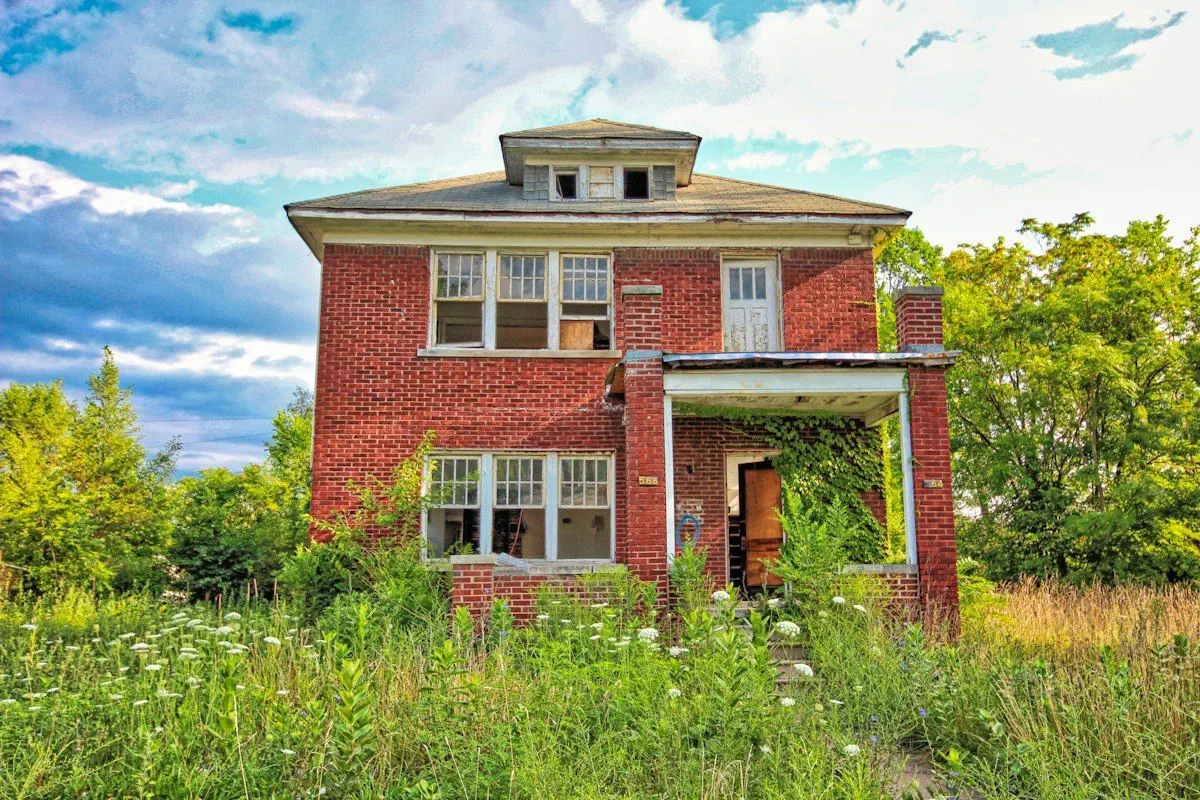
No Quebec law requires an owner to carry insurance. The lender almost always does. The result: an insurer saying no to one specific address collapses the buyer’s financing, often days before signing. Here is what makes a Quebec insurer hesitate, and what can be verified before you file a promise to purchase.
The Bureau d’assurance du Canada (the insurance industry’s national association) is clear on both counts. First: “There is no legal obligation to hold home insurance, the consumer being free to buy this type of insurance or not.” Then: “several mortgage lenders require their borrowers to hold home insurance.”
The consequence is simple. Your financing condition does not hold if the institution receives no proof of coverage in force on the date of the notarial deed. It is not the mortgage that gets refused: it is a missing document that derails it.
And help arrives late. The BAC’s Centre d’information sur les assurances, its consumer information service, steps in only after you have approached “five direct insurers or brokers,” and its agents “will not step in to negotiate a premium for you.” Five documented refusals inside a financing period of a few days is mathematically tight.
Heating oil is the heaviest file, because it touches the soil and not only the building. Fewer than 200,000 Quebec households still heat with oil, according to the Quebec government.
What the regulations already prohibit. Installing an oil fired appliance in new residential construction is prohibited. In an existing building of no more than 600 square metres and three storeys or fewer, replacing one with an appliance running on another fossil fuel is prohibited too. Substantial repairs, such as replacing the combustion chamber or the heat exchanger, are prohibited on an appliance more than 20 years old and on a water heater more than 10 years old. The removal must be declared online by the professional who carries it out.
The belief to correct. Many buyers go looking for a provincial permit or attestation for the tank. There is none. The Régie du bâtiment du Québec (Quebec’s building board) writes that “equipment of less than 10,000 litres in a single family home is not considered high risk petroleum equipment.” No operating permit, no mandatory certificate of compliance. The insurer’s questionnaire is therefore the only real filter.
The real risk is in the soil. The environment ministry points out that the minister can order the characterization of land and its rehabilitation, and that municipalities keep a list of contaminated sites. A tank that was removed says nothing about what leaked before.
The mandatory Déclarations du vendeur sur l’immeuble form, the seller’s declarations on the property, asks the questions for you: D3.3 on an underground or above ground tank, D3.4 on a spill into the soil, D5.3 on a spill in the basement, D7.2 on a smell of heating oil, D12.4 on the presence of a tank and its year.
Two questions on the form target the electrical installation directly. D10.2 asks whether there have already been problems related to electricity, and gives the example of a “fuse or breaker that trips repeatedly.” D10.5 asks whether the electrical panel has ever been changed, and in what year.
No official source lets me claim that a Quebec insurer automatically refuses a home with aluminum wiring or a fuse box. What the BAC does write is that the age of the building goes into the premium calculation, and that you must “inform your insurer of major renovation work, in particular work involving electricity, plumbing and heating.” The insurer does not judge a material in the abstract: it judges what you can prove.
And the proof exists. Electrical installation work is reserved to a contractor holding subcategory 16, who must declare to the Régie du bâtiment du Québec the work covered by chapter V, Electricity, of the Construction Code. Ask for the licence number and the work declaration: that is the piece that turns “the panel was redone around 2015” into a verifiable fact.
Water is the leading cause of home insurance claims, the BAC writes. That is why plumbing and the roof dominate the questionnaires.
Poly-B, with the nuance it deserves. No Quebec regulation prohibits polybutylene piping, and no official source puts a figure on a refusal rate. What is verifiable: the new edition of chapter III, Plumbing, of the Construction Code has been in force since July 11, 2024, it tightens the requirement for certified plumbing products and prohibits asbestos based piping. An insurer asking the question is looking for a material, a year and an invoice, not an opinion.
The roof. The form is precise: D8.1 on the type of covering, D8.2 on its year of installation, D8.3 on the documents that attest to it, D8.6 on regular ice buildup at the roof edge. A “do not know” answer to D8.2 is a signal: a covering with no date is a covering at the end of its life until proven otherwise.
Add D9.1 on plumbing problems, D9.6 on the year of the water heater, D9.13 on the backwater valve, D4.1 on water infiltration and D4.2 on a leak that caused damage.
The first premium is paid before you take possession, like the other costs that get added to the purchase price: the closing costs calculator gives you the order of magnitude of the rest.
The wood stove. In Montreal, by-law 15-069 requires every solid fuel appliance to be declared within 120 days and prohibits using an appliance that is neither EPA certified nor compliant with the CSA B415.1-10 standard with emissions of no more than 2.5 g/h of particulate. In Laval, by-law L-12792 goes into more detail: the declaration must state the make, the model, the installation date, the manufacturing date, the emission rate in g/h and the certification (section 4.1). Installing a non certified appliance or one above 2.5 g/h is prohibited (section 5), and as of October 1, 2026, using one becomes prohibited above 7.5 g/h (section 6). Fines run from $100 to $4,000 (section 12). Question D12.9 g) of the form, “Does it comply with the applicable regulations?”, is therefore not decorative.
The flood zone. Question D2.9 addresses it head on. The modernized regulatory framework has replaced the transitional regime since March 1, 2026, and the new generation maps are being published progressively. On the insurance side, flood protection is an optional endorsement: in a flood zone, the cost can be higher or the protection may not be offered at all. The building remains insurable against fire, theft and vandalism.
The empty house. Éducaloi points out that the law sees no aggravation of the risk in leaving your principal residence “for a period of 30 consecutive days or less,” nor in work lasting 30 days or less. Beyond that, you have to notify. Between the signing at the notary and your actual move, that detail gets declared.
This is the point buyers discover too late. The BAC puts a “Claims experience” heading into the premium calculation that combines the “crime and fire rate of the area where the home is located” and the “number of claims made by the insured.” The building’s record and your own both count. Credit information is used by most insurers as well, with a consent you have the right to refuse.
On the building side, three questions on the form say it all: D2.12 on a notice of non compliance received from an insurance company, D2.13 on a refusal to insure the property in whole or in part, D2.14 on a refusal to indemnify. Add D14.1 on damage suffered from an ice storm, wind, a flood or a fire.
An inaccurate answer has a price. Éducaloi puts it this way: in the case of false declarations, “your insurer will not have to compensate you” if it shows that you deliberately lied or that it would have refused the risk; otherwise the indemnity is reduced. The other signals that can be read on paper are in walking away from a property.
| Item | Form question | Document to demand |
|---|---|---|
| Oil tank | D3.3, D12.4 | Removal invoice, soil study |
| Electrical panel | D10.5 | Work declaration, RBQ licence |
| Plumbing | D9.1, D9.6 | Invoices, year of the water heater |
| Roof | D8.2, D8.3 | Roofer’s invoice and warranty |
| Wood stove | D12.9 | EPA or CSA certificate, city declaration |
| Flood zone | D2.9 | The municipality’s flood maps |
| Insurance refusal | D2.13, D2.14 | Details written in D15 |
The order matters more than the list. Get the Déclarations du vendeur before you draft, not after. Then call your insurer with the address, the year of construction, the heating source, the year of the roof covering and the year of the panel: a verbal quote in twenty minutes beats a refusal in five days. Finally, ask for the existing inspection reports, provided for in D13.1 and D13.2.
The pre-purchase inspection remains essential, but it answers a different question. It describes the condition; the insurer decides on a risk. What the inspector looks at, item by item, is detailed in the pre-purchase inspection checklist, and what you can spot from the very first visit is in what to check before you fall in love.
My insurer is refusing the house I am buying. Do I lose my loan? You lose the proof the lender demands, which often amounts to the same thing, the BAC confirming that several lenders require it of their borrowers. Treat the refusal as a deadline problem: you need another insurer before your financing condition expires.
The seller had the oil tank removed. Is that settled? Not necessarily. The removal must be declared online by the professional, but that says nothing about the soil, and the minister can order the characterization of a site and its rehabilitation. Ask for the removal invoice and, if a spill is declared in D3.4 or D5.3, a soil characterization.
How many insurers do I have to call before asking for help? Five. The BAC’s Centre d’information sur les assurances asks for approaches to five direct insurers or brokers before stepping in, and it does not negotiate the premium on your behalf. Keep the names and the dates.
My future wood stove is not certified. What am I risking? It depends on the city. In Montreal, using an appliance that is not EPA or CSA B415.1-10 certified and emits more than 2.5 g/h is prohibited. In Laval, installing such an appliance is already prohibited and using one becomes prohibited on October 1, 2026, with fines from $100 to $4,000.
To go further, read buying in Laval: sectors, taxes and checks and the hidden costs of homeownership.
A house you love, but an insurer who hesitates? Write to me before you file your promise to purchase: we go through the documents to demand from the seller together.

Residential Real Estate Broker · RE/MAX DU CARTIER INC.
Contact GeorgesA seller tells you his co-ownership has neither a maintenance logbook nor a contingency fund study. In 2026 he is …
Noise is the one defect a buyer agrees not to check. You note the year of the roof, you ask for the contingency …
The house across the street is listed at $749,000, so you conclude yours is worth about the same. Yet two …