
Buyer's Guide
Catchment School and School Tax in Quebec
Plenty of buyers arrive with a ready made sentence: this street is in a good school zone, so the value will follow. …
Buyer's Guide
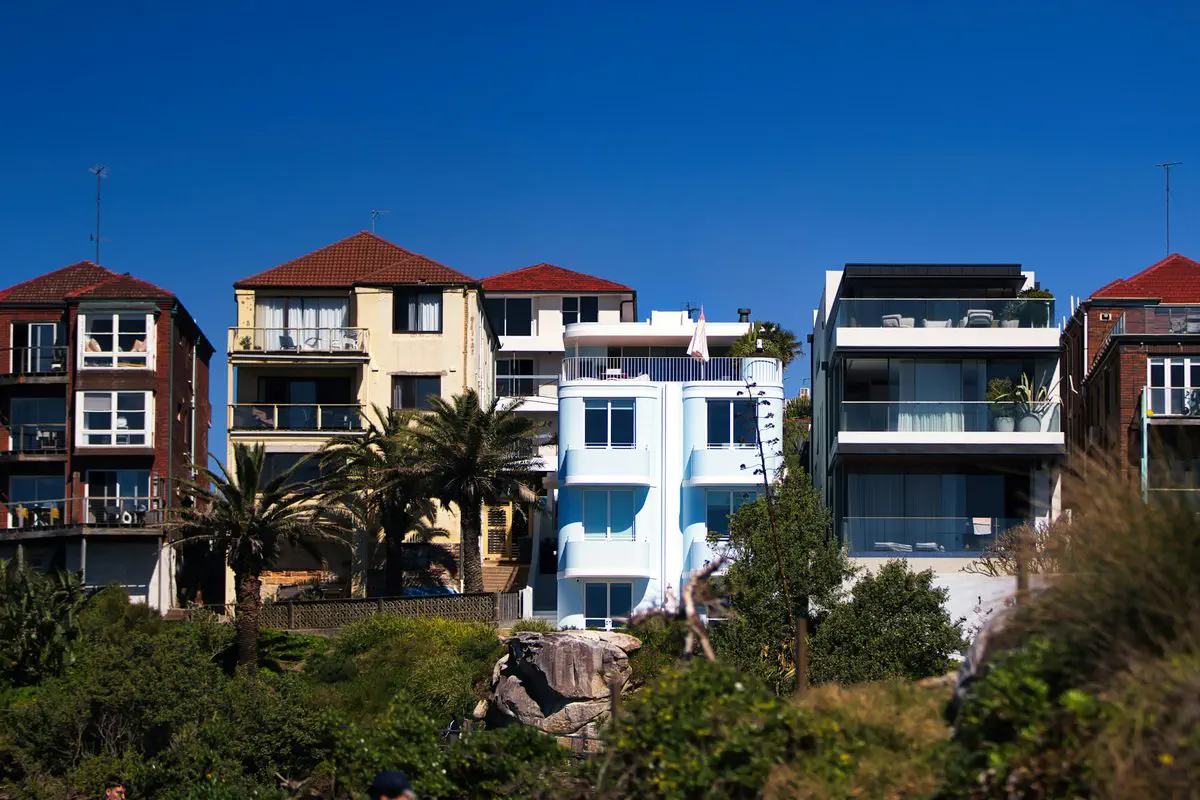
Framing the question as a trade-off between price and square footage misses the point. A divided co-ownership and a freehold house do not give you the same ownership right, do not impose the same obligations, and do not look the same to your lender.
Article 1038 of the Civil Code is the starting point: divided co-ownership of an immovable is established by the publication of a declaration under which ownership of the immovable is divided into fractions. Article 1047 says what the fraction contains: your private portion, the share of the common portions attached to it, and where applicable the right to use common portions for restricted use.
What falls on the common side surprises most buyers. Article 1044 presumes it: the ground, the yards, the balconies, the access ways, the stairways and elevators, the parking and storage areas, the cellars, the main walls of the buildings, common equipment such as central heating and air conditioning systems, and the pipes, including those that run through private portions. The balcony outside your living room is not yours the way a lot would be yours.
Article 1041 adds the keystone: the relative value of each fraction, set according to the nature, destination, dimensions and location of the private portion. That value fixes your share of the expenses and your weight at the general meeting.
In a house, the question does not arise. The land, the roof, the furnace and the pipes are entirely yours, along with the bill and with nobody to share it.
Article 1052 splits it in three: the constituting act of co-ownership, the by-laws of the immovable and the description of the fractions. The constituting act defines the destination of the immovable and of its portions, determines the relative value of each fraction and the method used to establish it, the share of the common expenses and the number of votes (article 1053). The by-laws of the immovable contain the rules on the enjoyment, use and maintenance of the portions, the rules on the operation of the co-ownership, and the procedure for assessing and collecting contributions (article 1054).
Article 1063 draws the consequence: you use and enjoy your private portion and the common portions freely, on condition that you observe the by-laws and do not impair the rights of the other co-owners or the destination of the immovable. Pets, flooring, short-term rental: the answer is in those documents, not in your preferences. And if you lease your unit, article 1065 requires you to notify the syndicate within 15 days, with the tenant’s name, the term of the lease and the date you handed over a copy of the by-laws.
This is the subject matter of Coproprié-T, developed by RE/MAX Québec with CondoLegal.com.
Article 1064 allocates them: each co-owner contributes to the common expenses in proportion to the relative value of his fraction, and co-owners who use common portions for restricted use bear alone the maintenance and ordinary repair costs of those portions. The declaration may provide a different allocation for major repairs and replacement of those same portions.
The contingency fund, the self-insurance fund, the maintenance logbook, the fund study and the documents the seller and the syndicate owe you have their own guide on this site. Read it before you compare two monthly figures.
A house has no common expenses. It has the same expense lines, with no schedule and nobody funding them ahead of time. That cost of ownership exists in both cases: the co-ownership makes it visible, the house leaves it to your discipline.
Article 1073 gives the syndicate an insurable interest in the whole immovable, including the private portions. It must insure the entire immovable against usual risks, excluding improvements made by a co-owner where those improvements can be identified against the description of his portion. The amount insured must allow reconstruction and must be appraised at least every five years, and the government regulation reserves that appraisal to a member of the Ordre des évaluateurs agréés du Québec.
That same regulation sets the floor for your own policy: under article 1064.1, each co-owner must carry liability insurance of at least $1,000,000 where the immovable has fewer than 13 fractions used or usable as dwelling units or for operating an enterprise, and $2,000,000 where it has 13 or more.
Article 1074.2 completes the picture: amounts the syndicate spends on deductibles cannot be recovered from the co-owners otherwise than through their contribution to the common expenses. A high deductible is therefore a collective cost. The owner of a house has one policy, one deductible, and nobody to share a claim with.
Each co-owner has a number of votes proportional to the relative value of his fraction (article 1090). Decisions are made by a majority of the votes of the co-owners present or represented, including decisions amending the by-laws of the immovable (article 1096). Three quarters of the votes are needed for work to alter, enlarge or improve the common portions and for the apportionment of its cost, and for an acquisition or alienation of immovables by the syndicate (article 1097). Three quarters of the co-owners representing 90% of the votes are needed to change the destination of the immovable (article 1098).
In other words, you can be outvoted on an expense you will pay anyway, and the remedy is narrow: article 1086.2 lets you ask the court to annul a board decision that is biased or made in contempt of the co-owners’ rights, within 90 days. The owner of a house never votes. He decides, and he carries the result alone.
CMHC includes 50% of condominium fees in the gross debt service and total debt service calculations, ratios it caps at 39% and 44%. The minimum down payment on an insured loan is 5% of the first $500,000 and 10% of the remainder, for a property value below $1,500,000, with a maximum amortization of 25 years, or 30 years for a first-time buyer or a new build. A house at the same price has no condo fee line, but its taxes and heating go into the same ratios. Run both scenarios from pre-approval onward.
In the Montreal CMA in August 2026, QPAREB reported an average selling time of 42 days for single-family homes and 62 days for condominiums, and a median price up year over year by 3% for single-family homes and 4% for condominiums.
Those are market conditions at one moment, across an entire region. They do not rank the two products and say nothing about your building or your horizon.
There is no good property type in the abstract. There is a buyer, a situation and four honest questions.
Torn between a condo and a house in two specific areas? Write to me: we read the declaration of co-ownership on one side, the inspection record on the other, and compare what is actually comparable.

Residential Real Estate Broker · RE/MAX DU CARTIER INC.
Contact GeorgesPlenty of buyers arrive with a ready made sentence: this street is in a good school zone, so the value will follow. …
Buying in Laval is not buying into a uniform suburb. It is buying on a 246 square kilometre island that, according …
On television a flip takes three moves: buy low, renovate fast, sell high. No one shows you the tax line, no one …