
Real Estate 101
Pets Banned in a Quebec Condo: Where the Rule Actually Lives
You have visited the condo twice. You like the courtyard, the light, the parking spot. Nobody has said a word about …
Real Estate 101
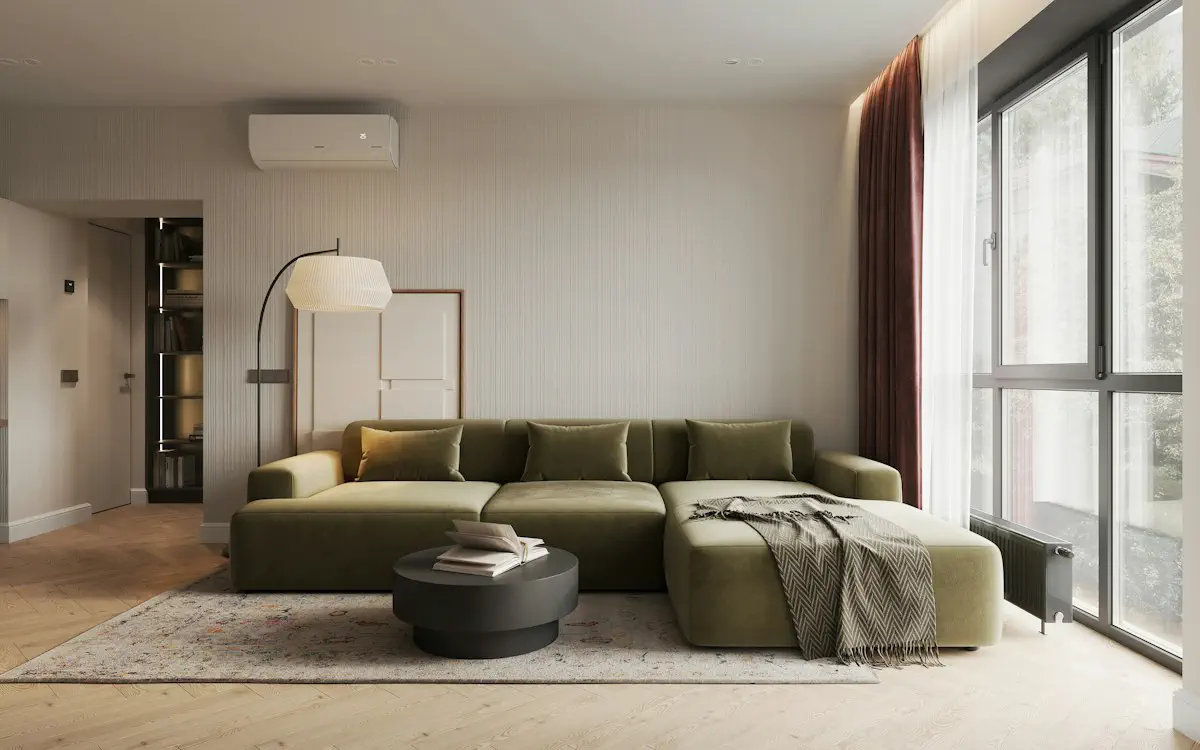
You want to pull up the carpet and lay hardwood, replace the living room window, close in the balcony. In a house, you call a contractor and check the municipal permit. In a divided co-ownership, one question comes before the budget: who owns the thing you are about to touch. The answer changes from one building to the next, and it sits in your déclaration de copropriété (the deed of co-ownership registered against your building).
The Code civil du Québec (Quebec’s Civil Code) sets out two definitions. Article 1042: a partie privative (private portion) is the part a determinate co-owner owns and has exclusive use of. Article 1043: a partie commune (common portion) belongs to everyone and serves for common use.
Between the two sits a third category, the one buyers discover too late. The second paragraph of article 1043 provides that certain common portions may serve the use of only some co-owners or of a single one, and that the rules governing common portions apply to these parties communes à usage restreint (common portions for restricted use). Your balcony, your storage locker, your parking space can therefore be yours to use and everyone’s to own. Article 1064 draws the financial conclusion: those who have the use of a partie commune à usage restreint alone contribute to its maintenance and its day-to-day repairs.
Article 1044 then lists a series of presumptions. Presumed to be common portions are the ground, the yards, the balconies, the stairways, the parking and storage areas, the main walls and structural framework of buildings and the pipes and conduits, including those passing through private portions.
A presumption can be rebutted. What settles the question in your building is the descriptive statement of fractions, which contains the cadastral description of the private and common portions (article 1055). The principle is the one set out in what you are actually buying in a co-ownership: you buy a fraction, not four walls.
The floor covering. The finished floor is generally private, but the slab carrying it is part of the structural framework, presumed common. Many declarations impose a minimum acoustic rating or a percentage of the surface that must stay covered. Those clauses hold: article 1056 allows restrictions justified by the destination of the immovable, its characteristics or its location. Sound insulation is one of them.
The window. It appears nowhere in the list in article 1044. No presumption places it on either side: your declaration decides, and both solutions exist in Quebec. Until you have read the descriptive statement, nobody can tell you who pays for your window.
The balcony. That one is named in article 1044 and presumed common, most often for restricted use. A replaced railing, a resurfaced floor, an added glass structure all touch a partie commune, even if you are the only person who ever sets foot on it.
| Element | Presumed status under the Code civil |
|---|---|
| Balcony | Partie commune (art. 1044) |
| Parking, storage | Partie commune (art. 1044) |
| Structural framework, slab, frame | Partie commune (art. 1044) |
| Pipes, even inside your unit | Partie commune (art. 1044) |
| Partition between two units | Presumed common wall (art. 1045) |
| Window | No mention: the declaration decides |
| Finished floor covering | Private, subject to the by-laws |
Under article 1052, the declaration comprises three documents: the act constituting the co-ownership, which defines the destination of the immovable and of its portions (article 1053), the by-laws of the immovable, which set the rules on enjoyment, use and maintenance of the private and common portions (article 1054), and the descriptive statement of fractions. The clauses on floors, windows, work site hours and prior written consent live in the by-laws.
Article 1063 closes the loop: each co-owner uses and enjoys his partie privative freely, on condition that he observes the by-laws of the immovable and does not impair the rights of the other co-owners or the destination of the immovable. Article 1062 adds that the declaration binds the co-owners and their successors from the moment it is registered. You never signed yours. It applies anyway.
No article of the Code requires authorization for every renovation. It is the by-laws of the immovable that create that obligation, and most of them do so as soon as the work touches a common portion, the structure, the acoustics, the plumbing or the façade.
A request that gets processed quickly contains six things: the exact description of the work, the plans, the name and licence number of the contractor, the work site dates, proof of insurance and the list of common portions affected. Send it in writing and keep the written answer. In any event, the board must send the minutes of its decisions to the co-owners within 30 days (article 1086.1).
If the work amounts to a transformation, an enlargement or an improvement of the common portions, the board no longer decides alone: article 1097 requires three quarters of the votes of the co-owners present or represented. To join two adjoining units, article 1100 is explicit: possible without the general meeting, but with the consent of your hypothecary creditor and of the syndicat (the legal entity formed by all co-owners), followed by amendment of the declaration and of the cadastral plan, at your expense.
A refusal is not always final. Article 1086.2 allows a co-owner to ask the court to annul a board decision that is biased or made in contempt of the co-owners' rights, within 90 days. The same deadline applies to a decision of the general meeting (article 1103), on pain of forfeiture. That is a lawyer’s question, not a broker’s.
The structural framework is presumed common. Partitions and walls that are not part of it and that separate a private portion from a common portion or from another private portion are presumed to be common walls (article 1045). Even the interior wall you believe is yours is rarely yours alone.
The municipality then applies its own grid, independent of the co-ownership. In Montreal, a permit is required if the work touches the foundations, modifies the structure of the dwelling, modifies a wall, load-bearing or not, or increases the floor area: $9.80 per $1,000 of work, minimum $167.40 for residential. In Laval, an interior permit is required as soon as there is a change to the dimensions of the rooms, the number of rooms or the structure: $92 for the first $20,000, plus $2.50 per $1,000.
The Building Act is blunt. Its article 46 prohibits carrying on the activities of a building contractor without holding the required licence, and the Régie du bâtiment du Québec (Quebec’s building board) publishes the register of licence holders. Éducaloi puts it this way: without a licence, the contractor is operating illegally. Check the number before the deposit, not after.
The regulation establishing various rules for divided co-ownership (CCQ, r. 8.01) has been in force since 14 August 2025. Every syndicat must have a carnet d’entretien (maintenance logbook) drawn up and obtain a study of the fonds de prévoyance (contingency fund), with three years and one day to do it the first time.
The logbook describes the common portions, the materials and the equipment, estimates their remaining useful life, then lists the major repairs and replacements to plan for over at least 25 years. It is revised every 5 years, or every 10 years for a building of 8 private portions or fewer, 3 storeys or fewer above ground, or none of whose common portions are inside a building. The study of the fonds de prévoyance builds on that logbook, recommends the amount to have on hand at the start of each year, and is likewise obtained every 5 years.
Why this concerns your kitchen: that document is what announces the roof, the elevator or the façade, and therefore the possible special assessment. The figures to ask for are detailed in condo fees and the contingency fund. If the work is aimed at a sale, start from the current value of the unit: the value estimator gives you a starting point, not a price.
Three mechanisms catch up with undeclared work.
Insurance. Article 1073 requires the syndicat to insure the whole of the immovable, private portions included, excluding improvements made by a co-owner to his portion where they can be identified. And article 1070 requires the register of the syndicat to contain a description of the private portions precise enough for those improvements to be identifiable. Your renovation becomes your insurance risk the moment it departs from the baseline description.
The sale documents. Article 1068.1 requires the seller to give the promisor-buyer an attestation from the syndicat on the state of the co-ownership, produced within 15 days of a request. The regulation fixes its minimum content: fonds de prévoyance, contributions and financial statements for the past 3 years, insurance, claims over the past 5 years affecting the unit sold, work planned over 10 years, pending litigation and amendments to the declaration over the past 3 years.
The form. The Promise to Purchase for a divided co-ownership published by the OACIQ (Quebec’s real estate regulator) provides, at clause 9.1, for a condition allowing examination of the declaration, the by-laws, the minutes, the insurance policy, the financial statements and the description of the private portion. That is where unauthorized work surfaces: the description no longer matches what the buyer is walking through.
Finally, article 1080 allows the syndicat or a co-owner to apply for an injunction and, where there is a refusal to obey it, the court may order the sale of the fraction. The act constituting the co-ownership may also provide for a penal clause (article 1053).
Can I rip out the carpet and lay hardwood? That depends on the by-laws of the immovable, not on the Code civil. Many declarations require an acoustic underlay of a minimum rating or a percentage of covered surface. Read the by-laws before you buy the material: article 1063 obliges you to comply with them.
Can the syndicat force me to undo everything? It may ask the court to enjoin you to comply with the declaration where the refusal causes serious and irreparable injury (article 1080). Restoration to the former state is one possible outcome. Have a lawyer assess your file: the result depends on the facts and on the exact wording of your declaration.
Who pays to replace my window? There is no general answer. The window is not in the list in article 1044, and the split depends on the descriptive statement and the by-laws of your building. Ask for the full declaration and have your notary read the clause.
I closed in my balcony without asking anyone. Is that a problem at sale time? Probably, since the balcony is presumed to be a partie commune by article 1044. The syndicat’s attestation, the minutes and the description of the partie privative examined by the buyer are likely to reveal it. Better to regularize before listing than to negotiate under pressure while the documents are being reviewed.
To go further, read what your renovations really add to the value and the seven signals you can verify on paper before buying.
Torn between renovating your condo and selling it as is? Write to me: we will read the déclaration de copropriété, the latest minutes and the syndicat’s attestation together before deciding.

Residential Real Estate Broker · RE/MAX DU CARTIER INC.
Contact GeorgesYou have visited the condo twice. You like the courtyard, the light, the parking spot. Nobody has said a word about …
The water arrives in the spring, in a finished basement bought the previous fall. The first reflex is to call a …
Behind every new home sold by an accredited builder in Quebec sits a mandatory warranty plan. It does not cover …