
Buyer's Guide
Buying a Home in Winter in Quebec: The Blind Spots
In January 2026, in the Montreal metropolitan area, APCIQ counted 2,364 residential sales, the thinnest month of …
Buyer's Guide
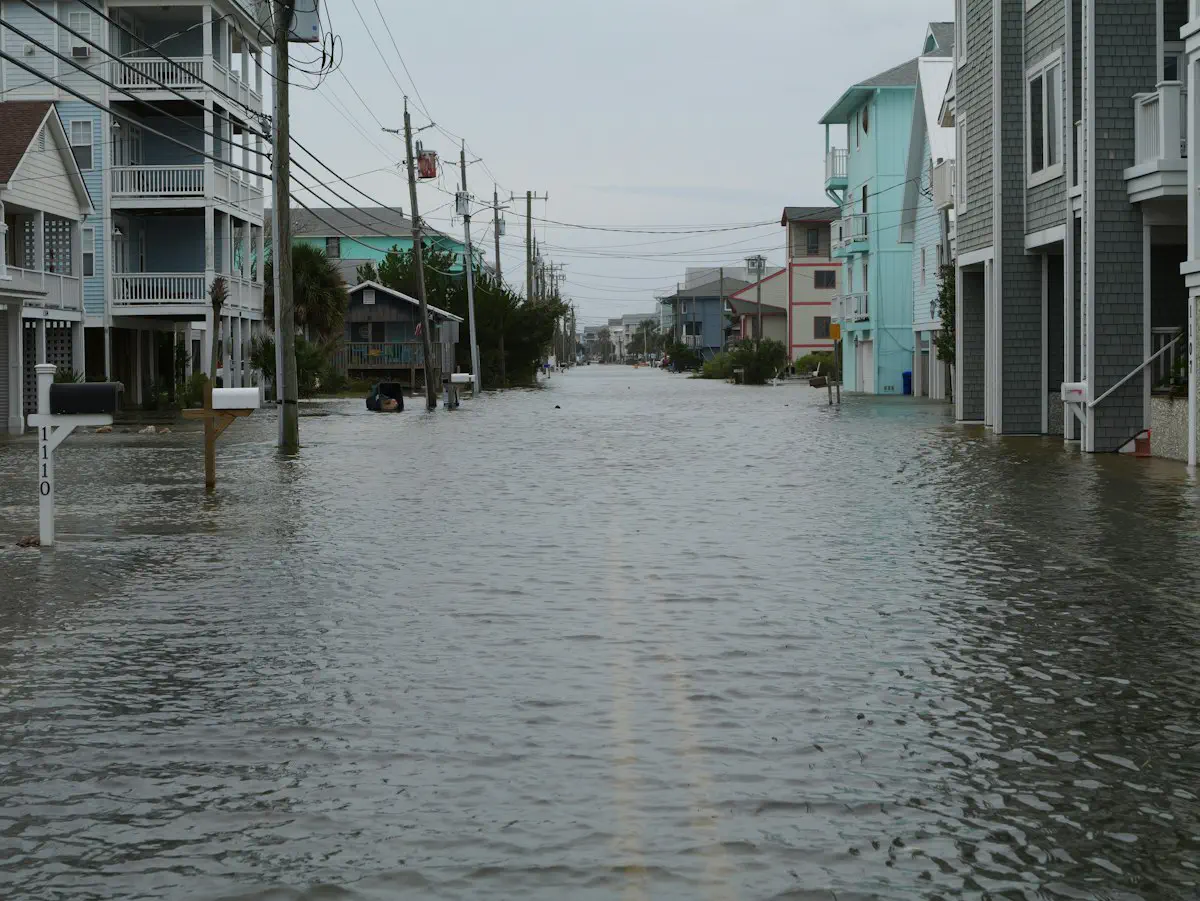
Quebec has replaced the old split between 0 to 20 year and 20 to 100 year zones with a framework built on levels of flood exposure. The new regime is in force, but the new mapping is being released piece by piece. Two generations of maps therefore coexist, and an address can be classified differently six months from now. Here is what the map decides, what it does not decide, and the checks to make before you file a promise to purchase.
The cadre réglementaire modernisé pour la gestion des milieux hydriques (Quebec’s modernized regulatory framework for managing water environments) has replaced the former transitional regime for flood zones, shorelines and littoral areas since March 1, 2026. It rests on three regulations, one of which carries a title that says everything about the period we are living through: Règlement concernant les règles transitoires applicables en cas de changement à la délimitation des zones inondables et des zones de mobilité. The government wrote an entire regulation to govern what happens to projects already in motion when the map changes under your feet.
The transition is not finished. The ministry calls this the largest revision of flood zone mapping in Quebec’s history. The work covers several hundred municipalities in southern Quebec, led by the ministère de l’Environnement (Quebec’s environment ministry) under the INFO-Crue project and by eight municipal communities judged particularly vulnerable. The government page tracking the work in progress, updated on July 31, 2026, announces no firm date: the planning could change, and new maps are added to the interactive map as they come into force. The framework therefore applies to both generations of maps. Verify which of the two governs the address you are looking at.
The old mapping knew only two categories. The new one adds more and changes the criterion.
| Old generation | New generation | |
|---|---|---|
| Categories | High flow (0 to 20 years), low flow (20 to 100 years) | Low, moderate, high, very high |
| Criterion | Recurrence only | Frequency crossed with water depth |
| Additions | None | Ice jam zones, protected zones with residual risk, mobility zones |
Frequency is expressed as a probability over 25 years: frequent flooding above 70 per cent, moderately frequent from 20 to 70 per cent, infrequent from 7 to 20 per cent. Depth is read in three steps: 0 to 30 cm, more than 30 up to 60 cm, and more than 60 cm above ground. A sector flooded frequently under more than 60 cm of water falls into very high intensity, as do ice jam zones, which are classified there automatically. Protected zones with residual risk are the lands behind a protective structure: protected, not risk free.
What the map does not do. It does not draw the precise boundary on your lot, and the old generation data is provided for information only, with no legal value. The government’s interactive map, at zonesinondables.mrnf.gouv.qc.ca, serves to locate a sector: the boundary that applies to a given lot is confirmed with the municipality or the MRC, and nowhere else. It also says nothing about the condition of the drain, the foundation or the backwater valve: that is the job of the pre-purchase inspection.
An exposed zone is not a frozen zone. The government is explicit: repair and maintenance of a building are permitted throughout water environments. Redoing a roof, changing the windows, renovating the interior: none of that depends on the exposure level.
Beyond that, the requirements rise. For major work, replacing a foundation for example, the building must be adapted to withstand the flood risk, and the opinion of a competent professional is required to confirm the result is safe. Rebuilding a residential building is permitted only under certain conditions, which vary with the environment. A destroyed house therefore does not automatically get rebuilt as it was.
The permit, for its part, stays municipal. The municipality issues it, verifies that the prescribed measures are respected, and can impose rules stricter than the provincial minimum. A verbal answer at the counter is worth nothing in a financing file: ask for it in writing.
This is where many files go off the rails. The Bureau d’assurance du Canada (Insurance Bureau of Canada) defines flooding, in insurance terms, as the overflow of a natural body of water that reaches your property. That protection is not in the base policy. It exists as an endorsement, offered by some insurers only, under certain conditions, after an assessment of the risk specific to your situation.
Three kinds of water, three treatments. Sewer backflow, seepage through the ground and the overflow of a watercourse are distinct risks, covered by distinct protections. An owner who believes they are protected because they hold a water damage endorsement can discover the opposite on the morning of the flood. Have your insurance broker name all three, and get written confirmation before your inspection period runs out.
When the endorsement is not offered, the building generally remains insurable for the usual risks, fire first among them: it is the flood coverage that disappears. What is left then is the financial assistance program of the ministère de la Sécurité publique (Quebec’s public security ministry), which pays amounts set by expense category and according to the water height reached, room by room. That is neither an insurance indemnity nor replacement value.
Let me be precise about what I can demonstrate. No Quebec law obliges a financial institution to refuse a loan in an exposed zone, and no public government source lets anyone say which lender refuses which sector: each institution sets its own underwriting policy and changes it without notice.
What is verifiable is the mechanism. The mortgage creditor decides which insurance protections it considers sufficient for its security. If the flood endorsement is refused at the address, the question travels straight up into the loan file. Hence the only safe method: get the insurer’s written answer before you lift your financing condition, never after. Test the full scenario with our mortgage calculator and keep a margin for a higher premium.
The mandatory Déclarations du vendeur sur l’immeuble form (the seller’s declarations on the immovable) is used when a brokerage contract on a mainly residential immovable of fewer than 5 dwellings, excluding divided co-ownership, is signed with an individual. Eight lines on it speak directly about water.
| Line | What the seller declares |
|---|---|
| D2.9 | That the immovable is in a flood zone, as a public law restriction |
| D2.12 | A notice of non compliance received from an insurer, the municipality or the government |
| D2.13 | That an insurer has already refused to insure the immovable, in whole or in part |
| D2.14 | That an insurer has already refused to indemnify damage |
| D3.6 | That water periodically accumulates on the land |
| D4.1 and D4.2 | Water infiltration and leaks that caused damage |
| D9.12 and D9.13 | Wastewater drainage problems and the presence of a backwater valve |
| D14.1 | Damage suffered following a flood, ice storm, wind or fire |
Read D2.13 twice: a past refusal to insure is the most direct signal that an insurer has already judged this address. The form also provides that a positive answer to the questions on restrictions may make a new certificat de localisation (location certificate) necessary.
The declarations are made to the seller’s knowledge: someone who genuinely does not know about a flood that happened before their time is not lying. Educaloi recalls that a defect is latent only if it was not apparent, if it was unknown to the buyer and if it existed at the time of purchase, and that defects a prudent and diligent buyer could have detected are not warranted. And if the sale is made without legal warranty, at the buyer’s own risk, your recourse for a latent defect disappears, unless you can show the seller knowingly hid the truth. That mention must appear in the promise to purchase and in the deed of sale.
Seven steps, in this order, before the offer.
In Laval and on the North Shore, where the Mille-Îles and Prairies rivers shape entire sectors, these seven steps often weigh more than negotiating the price.
Can I still renovate a house in a flood zone? Yes. Repair and maintenance of a building are permitted throughout water environments. It is major work, such as replacing a foundation, that requires adaptation to the risk and the opinion of a competent professional. The permit is requested from the municipality, which can be stricter than the province.
If the house is destroyed, can I rebuild it? Not automatically. Rebuilding a residential building is permitted only under certain conditions, which vary with the environment. Ask the planning department before you buy, not after.
Does my home insurance cover flooding? Not in the base policy. The overflow of a watercourse is covered by an endorsement, offered by some insurers only and after an assessment of the risk at your address. Sewer backflow and seepage through the ground are separate protections.
Does the seller have to tell me the house has already flooded? The Déclarations du vendeur form asks them expressly, to their knowledge: damage suffered following a flood (D14.1), water infiltration (D4.1), refusal to insure by an insurer (D2.13). Require the form completed and dated, and keep it.
Will the map change again? Probably. The work covers several hundred municipalities and no firm date has been announced. A Quebec regulation is in fact devoted to the transitional rules that apply when the boundary changes.
To go further, read the checks specific to Laval, sector by sector and the seven signals that justify walking away.
An address you like, but the map worries you? Write to me with the lot number: I make the calls to the municipality and the insurer before you write an offer.

Residential Real Estate Broker · RE/MAX DU CARTIER INC.
Contact GeorgesIn January 2026, in the Montreal metropolitan area, APCIQ counted 2,364 residential sales, the thinnest month of …
“Reprise de finance”, the everyday Quebec term for a foreclosure, appears nowhere in the Civil Code. It …

The question comes up every month: can someone who is neither a Canadian citizen nor a permanent resident buy in …