Buyer's Guide
Buying in a Flood Zone in Quebec: The Checks to Make First
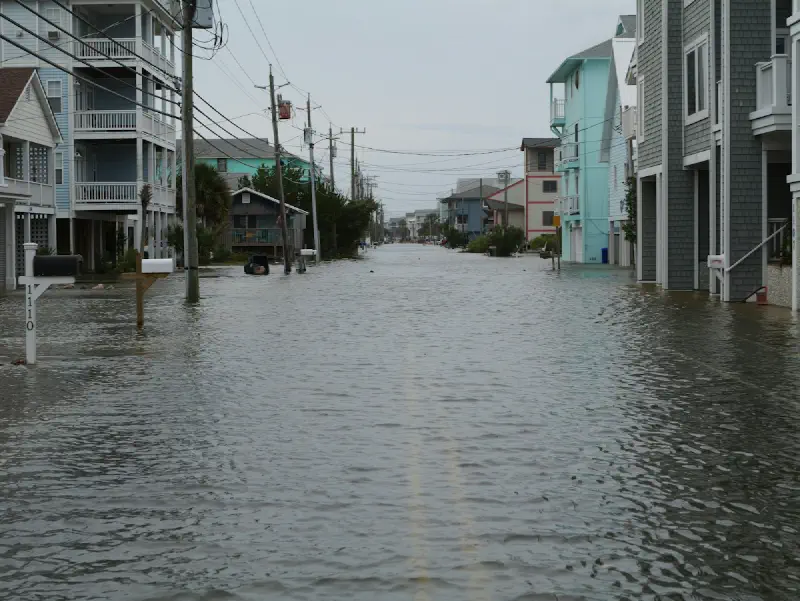
Quebec has replaced the old split between 0 to 20 year and 20 to 100 year zones with a framework built on levels of …
Buyer's Guide
“Reprise de finance”, the everyday Quebec term for a foreclosure, appears nowhere in the Civil Code. It is the common word for the result of two distinct procedures, each with its own articles and its own deadlines. Knowing which one brought the property to market changes your title, your recourses and what you have to verify before you sign a promise to purchase.
Article 2748 of the Civil Code lists the four hypothecary rights of a creditor whose debtor is in default and whose claim is liquid and exigible: to take possession of the property to administer it, to take it in payment of his claim, to have it sold under judicial authority, or to sell it himself. That last right is reserved, by article 2784, to a creditor holding a hypothec on the property of an enterprise.
For a house, a condo or a small plex, two realistic scenarios are left: taking in payment, followed by a resale by the institution that has become owner, or a sale under judicial authority. Both produce a Centris listing. They do not produce the same contract. Educaloi adds a reminder in passing: default is not only a missed payment. The loan contract may provide for others, such as the obligation to keep the house insured.
Nothing starts without publication. Article 2757 requires the creditor to file at the registry office a prior notice, together with proof that it was served on the debtor. The step is therefore public and dated in the Registre foncier (Quebec’s land register).
Article 2758 sets out what the notice must contain: state any default, recall the right to remedy it, state the amount of the claim in capital and interest, name the hypothecary right the creditor intends to exercise, describe the property, and call on the person concerned to surrender the property before the period allotted expires.
| Property covered by the notice | Period to surrender |
|---|---|
| Immovable property | 60 days |
| Movable property, hypothec accessory to a consumer contract | 30 days |
| Movable property, other cases | 20 days |
| Taking possession to administer | 10 days |
The period runs from the registration of the notice, and article 2749 forbids the creditor from exercising his right before it expires. For a house, that is 60 days, not 30 and not 90.
This period is not a fatal countdown. Article 2761 lets the debtor, or any other interested person, defeat the creditor’s right by paying what is owed to him or by remedying the default, and by paying the expenses incurred, until the property has been taken in payment or sold. The practical consequence: a property under prior notice is not a foreclosure yet, and it can go back to its owner up to the last moment.
Taking in payment. Where the default has not been remedied within the period, article 2781 provides that the creditor takes the property in payment by the effect of the judgment in surrender or by a voluntarily consented deed, and that this judgment or deed constitutes his title of ownership. Article 2783 adds the detail that concerns you: the creditor becomes the owner from the registration of the prior notice and takes the property in the state it was in at that time.
Two safeguards exist. Article 2778 requires the creditor to obtain the court’s authorization where the debtor had already discharged one half or more of the secured obligation at the time the prior notice was registered. Article 2779 lets the debtor or subsequent creditors require a sale rather than a taking in payment, on precise conditions.
Sale under judicial authority. Under article 2791, it is the court that designates the person charged with selling, determines the conditions and charges of the sale, states whether it is made by agreement, by call for tenders or by auction, and may fix a reserve price. That person must be independent of the interested parties and, under article 2793, acts in the name of the owner while disclosing his quality to the buyer.
| Taking in payment, then resale | Sale under judicial authority | |
|---|---|---|
| Who sells | The institution, now owner | A person designated by the court |
| Source of title | Judgment in surrender or consented deed | Deed of sale under judicial authority |
| Legal warranty of quality | Excluded by a clause in the contract | Set aside by article 1731 |
| Subsequent hypothecs | Extinguished under article 2783 | Purged under article 2794 |
The third row is the most badly understood. In a sale under judicial authority, the absence of warranty does not come from a negotiable clause: article 1731 states that such a sale gives rise to no obligation of warranty as to the quality of the property sold. There is nothing to negotiate. Article 2794 adds that it purges real rights to the extent provided in the Code of Civil Procedure.
The Declarations by the seller of the immovable form has been mandatory since July 2012 for the sale, by a natural person, of any chiefly residential immovable of fewer than five dwellings. The OACIQ specifies that for a seller that is a legal person it is only strongly recommended, and it cites financial institutions repossessing a building as its example.
Translate that: the seller has never lived in the building, knows neither the age of the roof, nor the year of the French drain, nor the history of water infiltration, and the law does not require him to fill in the form that would ask those questions. You are buying with no history.
Then add the exclusion of warranty. Where it goes through a clause, article 1732 lets the parties reduce its effects or exclude it entirely, and article 1733 deprives the seller of that protection if he failed to disclose defects he knew of, except where the buyer buys at his own risk from a non professional seller. How far that exception reaches against a financial institution depends on the seller’s status and on the text signed: that is a question for a lawyer or a notary before the promise, not after. The full mechanism is in sale without legal warranty in Quebec.
From the Blais v. Laforce and Tremblay v. Immeubles Perron ltee rulings the OACIQ draws a clear consequence: a buyer who buys with a complete exclusion will not be able to turn against the previous owners, even if they had sold with the legal warranty. The chain is cut.
The building has often been empty for months. The Insurance Bureau of Canada is blunt: most policies exclude frozen pipes and water damage if the dwelling is vacant, even where that vacancy is authorized. Standard policies cover the freezing and bursting of pipes on condition that they are in the heated portion and that reasonable measures were taken to maintain heat there. Nobody insures the past.
In a condo, arrears follow you. Article 1069 is explicit: a person who acquires a fraction of a divided co-ownership, including by the exercise of a hypothecary right, is bound to pay, with interest, all the common expenses due at the time of acquisition. The way out is in the same article: the prospective buyer may ask the syndicate for a statement of the common expenses due, and he is then bound to pay only if the statement is provided to him within 15 days of the request. Ask for it in writing, early. What to read in the other documents is in condo fees and the contingency fund.
The former owner may still be there. Article 2765 provides that the court orders forced surrender after noting the claim, the default, the refusal to surrender voluntarily and the absence of a valid cause of opposition, and that the judgment fixes the time limit and the manner. Ask the occupancy question before you sign, and have the answer written into the promise.
The inspection stops being a formality. With no seller’s declaration and no warranty, anything not found before signing will be yours. The OACIQ invites the buyer not to hesitate to call on experts to inspect the property before purchase in this type of transaction. On an empty building with no electricity, plan a longer window: the services often have to be turned back on to test the plumbing and the heating. Costs and timing are in home inspection in Quebec: what it costs and when to do it.
What I cannot state: no official source lets anyone say that a lender or an insurer automatically refuses a foreclosure. The question comes up every time all the same, and it gets settled before the offer. Put it to the lender and the insurer at the same time, with the address and the type of sale, then keep a margin for the work: the real ceiling gets calculated first, with the affordability calculator.
On the title side, Educaloi describes the examination the notary carries out: check the previous deeds, make sure the property does belong to the seller, reveal a seizure for unpaid taxes or a right of way. The Registre foncier gives the legal history: who bought and sold, when, at what price, and the hypothecs registered. The rest is in the notary in Quebec, step by step.
No official source sets an average discount on a foreclosure in Quebec, and a percentage read somewhere else is worth nothing here. The honest calculation fits in three lines: the price of a comparable property sold with the warranty, minus the written estimate of the work you will carry alone, minus the value of the recourse you are giving up.
The third line is the hardest to put a number on and the one most often forgotten. It is worth little if the inspection is complete and the building simple. It is worth a great deal if the inspector flags an area he could not examine: the discount no longer compares to known work, but to an open risk.
Can I buy during the 60 day period? The owner stays the owner for as long as the property has not been taken in payment or sold, and article 2761 lets him defeat the recourse by paying what is due and the expenses. As long as nothing is concluded, your offer targets an ordinary sale, not a foreclosure.
Does the bank have to hand me a seller’s declaration? Not necessarily. The OACIQ specifies that for a seller that is a legal person the form is strongly recommended, and it expressly targets financial institutions repossessing a building. Ask at least for the sections on water supply and sewer services.
Does a sale under judicial authority wipe out the hypothecs? Article 2794 provides that it purges real rights to the extent provided in the Code of Civil Procedure. That is not a general warranty of clear title: it is exactly what the notary’s title examination has to confirm before signing.
Can I put an inspection condition in my offer? Nothing in the Civil Code forbids it, but the conditions of sale are set by the seller, and by the court in a sale under judicial authority, under article 2791. Ask for those conditions before you draft.
To go further, read walking away: seven red flags you can verify on paper and sale without legal warranty in Quebec.
Looking at a foreclosure in Laval or Montreal? Write to me. We check the type of sale, the documents available and the conditions imposed before we talk about price.

Residential Real Estate Broker · RE/MAX DU CARTIER INC.
Contact GeorgesQuebec has replaced the old split between 0 to 20 year and 20 to 100 year zones with a framework built on levels of …

The word tiny house names no recognized type of property in Quebec. It covers two objects the law treats in …

Your tax bill went up and the value entered on the roll looks disconnected from reality. Contesting it is a right, …