Practical Guide
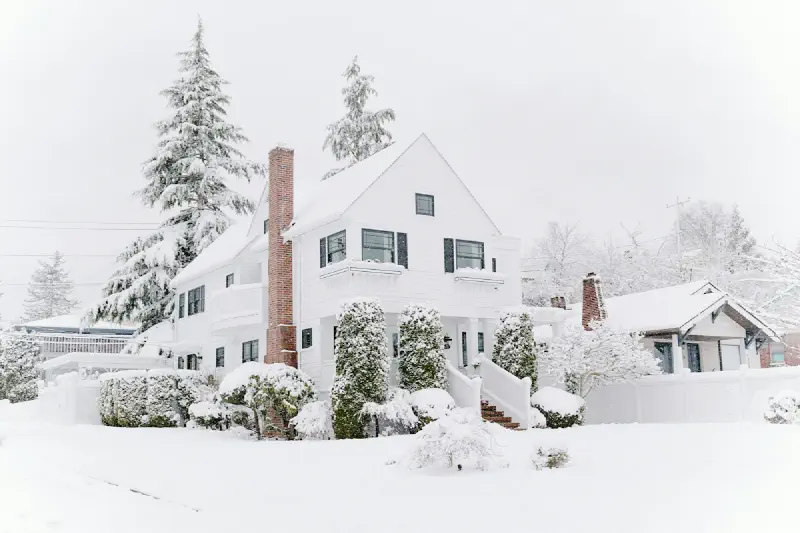
Winter Home Maintenance in Quebec: What Insurers Require
A list of good winter habits does not stand up to a claims adjuster. What does stand up is the small number of …
Practical Guide

Your mother wants to stay in her house. The three front steps have become an obstacle, and so has the bathtub. The real question is not whether grab bars exist: it is which public dollar pays for what, on what conditions, and in what order you have to move. Four distinct measures apply in Quebec, and three of them pay for no work at all.
They get mixed up because they all talk about staying at home. They do not finance the same thing.
| Measure | Who | What it pays for | How much |
|---|---|---|---|
| Tax credit for home-support services for seniors, Revenu Québec | 70 and over | Services, never work | 40% of eligible expenses in 2026 |
| Tax credit for the purchase or rental of property to help seniors live independently longer, Revenu Québec | 70 and over | Named items, installation included | 20% of the portion above $250 |
| Home accessibility tax credit, Canada Revenue Agency | 65 and over, or eligible for the disability tax credit | Lasting renovations | On a maximum of $20,000 of expenses per year |
| Programme d’adaptation de domicile, Société d’habitation du Québec | A handicapped person, no age criterion | The adaptation work itself | Up to $50,000 under option 1 |
Remember the order: the Société d’habitation du Québec (SHQ) grant is applied for before the job site opens, and the tax credits are claimed afterwards, on your income tax return.
The home-support credit pays for no work. That is the most expensive mistake of the file. The tax expenditure compendium of the ministère des Finances is explicit: recognized services do not include “a service relating to construction or repair work”. A ramp, a rebuilt shower, a wall moved: none of it belongs to this credit. What it pays for are personal-assistance services and the upkeep of the dwelling and the grounds.
The rate, set at 35% in 2021, has risen by 1 point a year since 2022 and reaches 40% in 2026. The annual ceiling on eligible expenses is $19,500 for an independent senior and $25,500 for a senior recognized as non-independent, a status that must be certified by a physician or a specialized nurse practitioner using form TPZ-1029.MD.A. The credit is reduced by 3% of every dollar of family income above $72,465 in 2026, then by 7% above $117,395. It is refundable: you receive it even with no tax payable. Reference: Loi sur les impôts, article 1029.8.61.5.
The second Quebec credit buys objects. The one for the purchase or rental of property intended to help seniors live independently longer also targets people 70 and over, and is worth 20% of the portion above $250 of the amounts paid during the year, installation costs included. The list is closed and it surprises people: a walk-in bathtub or a curbless shower, a chair mounted on a rail to climb a staircase, a hospital bed, an emergency call device, a walker, a non-motorized wheelchair. With 14,463 claimants in 2023 against 537,971 for the home-support credit, it is the most overlooked of the four. Reference: article 1029.8.61.101.
This one does pay for work, but two words have to be read carefully.
A qualifying individual is a person who is 65 or older at the end of the year, or a person eligible for the disability tax credit. The ceiling is $20,000 of eligible expenses per year and per eligible dwelling, against $10,000 from 2015 to 2021. The renovation must be of a lasting nature and integral to the dwelling, and routine maintenance is excluded.
The important word is non-refundable. This credit reduces federal tax payable: a senior who pays no tax gets nothing from it, even with $20,000 of invoices. That is the opposite of the Quebec home-support credit. On the other hand, that is the opposite of the Quebec home-support credit.
One change takes effect this year, and it cuts against you. Through the 2025 tax year, the same expense could be claimed twice, as a medical expense and as a home accessibility expense. It was one of the rare exceptions to the rule against double claiming. The 2025 federal budget ends that as of the 2026 tax year: you now have to choose one or the other. Be careful if you check this yourself, because the Canada Revenue Agency page for line 31285 still showed the old rule in the autumn of 2026. It was not wrong, it covered the 2025 tax year.
The calculation carries to line 31285. For the 2026 tax year the rate applied is 14 percent, so a maximum credit of $2,800 on the $20,000 expense ceiling. That rate is revised from year to year: check it for the year that concerns you. I am a broker, not a tax specialist: have an accountant validate your case before you spend.
This is the only one of the four measures that pays for the ramp and the shower with no threshold. Its 2026-2027 normative framework was authorized on June 30, 2026 and the program ends on June 30, 2027. Registrations, which had been suspended, have been open again since August 12, 2026.
First trap: this is not a program for seniors. The eligible person is a handicapped person within the meaning of the Loi assurant l’exercice des droits des personnes handicapées, that is, a person with an impairment resulting in a significant and persistent disability. No age threshold. You also have to be domiciled in Quebec and hold Canadian citizenship or permanent residence.
Second trap, the calendar. Under option 1, with the support of an occupational therapist and an accredited inspector, the help reaches $50,000 per eligible person, plus $10,000 per additional handicapped person in the same household. But work carried out before the certificate of eligibility is issued is not eligible, and processing “may take several months”. Under option 2, you choose from a closed list, the help is $12,000 for outside access and $12,000 for the interior, the analysis takes a few weeks, and only one method of reimbursement is possible per application: work not yet carried out, or work carried out up to 12 months before the application was received. That is the program’s only retroactive window.
Three details sink files. Renovation work is not eligible, only adaptation work. A stair lift is eligible under option 2 only on the recommendation of an occupational therapist, must meet standard CSA B355-19, and cannot follow a curved path. And the total of all public assistance, tax credits included, cannot exceed 100% of the recognized total cost. The help remains conditional on the availability of funds.
In Montreal, stop looking for the City program: Quebec did not renew its agreement and the City has not accepted new applications since April 1, 2025. Everything now goes through the SHQ’s PAD.
This is where the ramp gets stuck. The SHQ finances a 1:12 slope: clearing a 90 cm stoop calls for roughly 11 m of run, which almost always falls outside the permitted zone.
In Montreal, a permit is required to build, alter or replace an exterior staircase or one of its components, and the City specifies that a staircase must generally sit at least 1.2 m from the property line. If the structure encroaches on City property, you also need a permit for permanent occupancy of the public domain. Inside, the permit becomes required as soon as the work touches a wall, load-bearing or not, or changes the dimensions, the division or the use of the rooms: $9.80 per $1,000 bracket, minimum $167.40 for residential.
In Laval, the permit table is clear. “Addition of an access ramp for persons with reduced mobility”: permit required, and the City itself points to the PAD. A permit is also required to build or modify a balcony, a stoop or a gallery in a front yard, a side yard or a yard facing a street, to modify a staircase, and to add a bathroom. Renovating an existing bathroom requires none. Fee: $92 for the first $20,000 bracket, plus $2.50 per $1,000 bracket, announced turnaround of 30 days.
When the ramp does not respect the setback, the minor exemption remains. In Montreal, you have to prove that the by-law creates significant inconvenience or serious harm, and file a certificate of location and a land surveyor’s site plan. The study fees are non-refundable, and the PAD normative framework expressly excludes “costs related to minor exemptions”. That invoice is yours.
Two last checks. In a co-ownership, Montreal requires a letter of authorization from each of the co-owners or a resolution of the syndicate in the permit file: the full logic is in what a co-owner may actually renovate in a condo. And for a stair lift, a rail-mounted patient lift or a vertical platform lift, the Régie du bâtiment du Québec requires licence subcategory 14.2, contractor in elevating devices for handicapped persons. A general contractor’s licence does not cover it, and the PAD even refuses the owner-builder licence. The transition period for residential devices covered by standard CAN/CSA-B613 ended, for that matter, on July 13, 2025. How to verify: choosing a renovation contractor.
No official source allows me to put a number on the effect of an adaptation on a Quebec home’s selling price. What I can say is more useful.
Discreet adaptations read as maintenance: handrails, grab bars, lowered thresholds, relocated switches, lighting. Heavy adaptations are another debate. A curbless 60 by 40 inch shower that replaces the only bathtub shrinks the buyer pool. A ramp that occupies the whole front changes how the building reads. An adapted house is still a house; a house stripped of its character is a house whose work someone will have to undo.
Three points sellers discover late. The SHQ may require the owner to undertake to return a piece of specialized equipment if, within five years of the help being paid out, that equipment is no longer required by the person it was installed for: the stair lift is not necessarily for sale with the house. If you choose a more expensive solution than the one the SHQ considers simple, functional and lowest in cost, the difference is on you. And the minor exemption does not fix everything: Montreal specifies that it can serve to legalize a construction error only if a permit had been issued in the first place.
The honest calculation holds in two columns. On one side, the cost of the work less the grant and the credits, plus the permit, plus the annual home-care services. On the other, the net proceeds of the sale and the full cost of a single-storey dwelling. Start from the current value with the home value estimator, then compare with the guide for seniors selling the family home.
My mother is 74 and has trouble walking. Does she qualify for the PAD? Not automatically. The PAD does not rest on age but on a significant and persistent disability within the meaning of the law. The home-support credit, for its part, opens at 70 with no disability condition, but it pays for no work.
Can we start the work and apply for the grant afterwards? Under option 1, no: work carried out before the certificate of eligibility is issued is not eligible. Under option 2, there is a window for work carried out up to 12 months before the application was received. When in doubt, file before you start.
Do grab bars need a permit? No, that work touches neither a wall nor the division of the rooms. But adding a bathroom in Laval, modifying a staircase or installing a ramp in a front yard does require one, and whoever does the work must hold the appropriate Régie du bâtiment licence.
To go further, read what your renovations really add to the value and what a co-owner may renovate in a condo.
Torn between adapting the family home and selling it? Write to me. We build both columns before deciding.

Residential Real Estate Broker · RE/MAX DU CARTIER INC.
Contact GeorgesA list of good winter habits does not stand up to a claims adjuster. What does stand up is the small number of …

The shed you buy at the hardware store fits in a box, and nobody at the cash asks for your address. Your address is …
Nothing stops someone from calling themselves a home inspector tomorrow morning in Quebec. The trade has started to …